
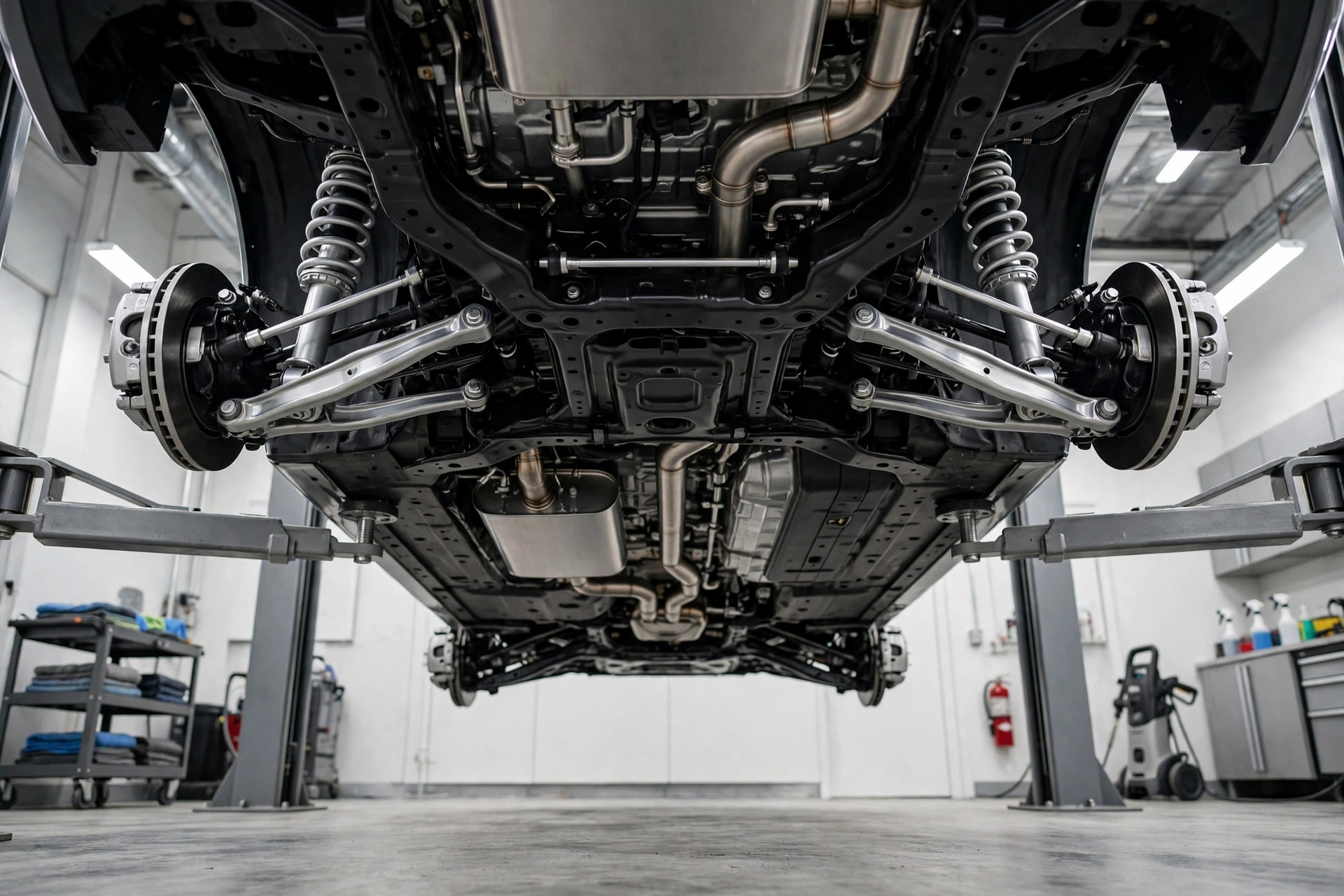
If you want the points most show car owners leave on the table, detail the undercarriage — this guide explains what to clean, why judges care, how to do it safely, and when the extra work actually pays off. Who should care is anyone entering a judged show, because where the underside is scored, almost nobody else has prepared for it. A clean underside will not win a show by itself, but in a close class it is often the difference between first and second.
Ask a hundred show car owners what they detailed before the last event, and maybe five will mention the undercarriage. That is exactly why it matters. At any show where the underside is judged, the undercarriage is the category with the least competition and the most available points, because almost nobody prepares for it.
Undercarriage judging varies enormously. At local cruise nights, nobody looks underneath, while at regional judged shows, judges may crouch with a flashlight or slide a mirror under the car. At concours events, cars go on lifts and every component is examined, so find out how your target shows handle the underside before investing serious effort.
This guide covers the full spectrum, from the quick clean that satisfies a mirror check to the concours-level detail that survives a lift inspection. The undercarriage itself is simply everything beneath the body, yet it tells judges more about honest maintenance than any polished panel. Treat it as a category in its own right, not an afterthought.
Why the Underside Matters
Judges read the undercarriage as a truth serum. Anyone can detail the paint, but the underside shows how the car is really maintained: whether leaks are fixed or tolerated, whether the frame is solid or patched, whether the owner cares about the parts nobody sees. A clean underside tells the judge the whole car is honestly kept, and that impression lifts scores in every other category.
It is the hardest place to fake care, which is why it counts. The competitive math is compelling. In a class of ten cars, all ten will have detailed exteriors and interiors, perhaps three will have detailed engine bays, and usually only one has touched the undercarriage.
If the show judges the underside at all, that one car starts with an advantage the others cannot close on show morning, because undercarriage work cannot be rushed. It is preparation that has to happen in the garage, weeks before. The core techniques carry over from any good complete car detailing guide, applied to the parts of the car most owners never touch.
There is also a preservation argument that has nothing to do with trophies. Cleaning the underside forces you to inspect it, and inspection catches the rust, the weeping seals, and the tired bushings before they become expensive. Many owners discover their first serious rust bubble during a show-prep undercarriage clean, so the detailing is the excuse and the inspection is the value.
Small precision tools help in tight seams underneath, much as Foam Detailing Swabs for Car Interiors: Cleaning Seams You Cannot Reach help inside the cabin. The principle is identical in both places. Reach what others skip, and clean it properly.
Inspect Before You Clean
Get the car safely in the air first: a lift is ideal, while quality jack stands on solid ground are the realistic option for most owners. Never work under a car supported only by a jack. Once underneath, do a full inspection before cleaning anything.
Look for active fluid leaks, rust, damaged lines, loose heat shields, and worn bushings. Cleaning first and inspecting second wastes effort, because anything you find will need fixing that disturbs the fresh detail. Document what you find with photos.
The before photos help you track what was addressed, and they are useful if a judge asks about the car’s history. Note the condition of the frame or unibody, the floor pans, the suspension components, the exhaust system, and the fuel and brake lines. This inventory becomes your work list, ordered by what judges will see and what affects the car’s health.
Fix mechanical issues before detailing. A freshly detailed underside with an active oil leak is worse than a dirty one, because the leak will recontaminate everything and the judge will see both the leak and the wasted effort. Seal the leaks, replace the weeping gaskets, and then detail, because the order is always: repair, then clean, then protect.
Your inspection should cover, at minimum:
- Active fluid leaks around seals and gaskets.
- Rust on the frame or unibody, floor pans, and suspension components.
- Damaged fuel and brake lines, loose heat shields, and worn bushings.
- The full exhaust system, from front to back.
Cleaning Methods That Actually Work
Start with degreasing. A quality citrus or petroleum-based degreaser, applied to a dry underside and allowed to dwell, dissolves years of road film and oil mist. Agitate with brushes: stiff brushes for the frame, softer brushes for painted and coated surfaces, and detail brushes for tight areas around suspension pickups.
Then pressure wash, keeping the nozzle at a safe distance from seals, bearings, and electrical connections. Work methodically, section by section, so nothing gets missed. For heavy buildup, steam cleaning is the professional choice.
Steam lifts grease without the chemical runoff of degreasers and reaches into crevices that brushes cannot. Many detailing shops offer undercarriage steam service, and for a concours preparation it is money well spent. If you are doing it yourself, a consumer steam cleaner with a detail nozzle handles everything except the worst caked-on areas, which may need a second degreaser pass.
Rust needs a decision, not just cleaning. Surface rust on the frame can be treated with a rust converter and then painted with a chassis paint or undercoating. Structural rust needs proper repair before any cosmetic work.
Judges at serious shows know the difference between treated surface rust and hidden structural problems, and they will probe suspicious areas. Honest treatment of minor rust scores better than thick undercoating slathered over problems, which judges read as concealment. The same patience applies to family-car chores like How to Clean Under Child Car Seats: Crumbs, Stickiness, and Protector Mats: hidden areas reward whoever bothers to look.
Suspension, Frame, and Exhaust
Suspension components are the visual focus of most undercarriage judging, because they are what the eye lands on. Clean control arms, springs, shocks, and sway bars thoroughly, then decide on the finish: factory-correct finishes for stock classes, clean black or detailed colors for modified classes. Replace obviously worn bushings while you are in there.
Fresh bushings look better and the car drives better, which is the kind of two-for-one that smart preparation is built on. Detail-oriented owners even refinish small visible hardware such as center-lock wheel hardware to show judges that no corner of the underside was skipped. The frame or subframe should be clean and uniformly finished.
Touch up chips in the chassis paint, make sure the finish is consistent, and check that no wiring or lines are hanging loose. Judges look at how tidy the underside is as a system: secured lines, proper clips, no zip-tie repairs. The tire and wheel detailing and wheel area connects here too, because the inner wheel wells and the back sides of the wheels are visible in the same glance as the suspension.
The exhaust system deserves its own attention. Clean and polish visible exhaust components, from the headers or manifolds back to the tips. Stainless systems can be polished to a shine, while mild steel systems should be clean and uniformly finished, often with high-temp paint.
Check the hangers and mounts, because a crooked exhaust is visible from across the show field. It suggests the whole underside was neglected. Finish this section only when lines are secured, finishes are uniform, and nothing hangs loose.
Presenting the Underside on Show Day
At shows where the underside is judged, presentation matters. Many competitors place large inspection mirrors under the car so judges can see the underside without crawling. Position the mirrors to show the cleanest, most detailed areas: the front suspension, the exhaust, the rear axle.
Clean the mirrors themselves, because a dusty mirror defeats the purpose. Some shows provide lift time for concours classes, and if yours does, make sure the car is positioned and the underside is wiped down before the judges arrive. Keep the car positioned to show the underside well.
If mirrors are allowed, angle the car so light reaches underneath. Avoid parking over oil spots from previous cars, which can transfer to your tires and suggest leaks you do not have. A clean piece of cardboard or a drip tray under the engine area is accepted practice at many shows and signals to judges that you are confident about leaks, because you would not advertise a drip.
Do a final underside check on show morning. The drive in always adds some dust, and a quick wipe of the visible lower panels, exhaust tips, and the areas around the wheels takes minutes. The brake dust removal guide habits you built for the wheels apply here, because the lower edge of the car is one continuous visual band that should look finished from the rocker panels down to the tires.
Match your effort to your shows. If your events never judge the underside, a basic clean for your own satisfaction and rust prevention is plenty, while if judges use mirrors, the visible areas need to be genuinely clean and tidy. If your target is concours with lift inspections, the underside needs the full treatment: every component cleaned, finished, and correct, so ask organizers specifically how the underside is handled before committing to the big job.
The cost-benefit curve favors the middle. A thorough DIY clean with degreaser, brushes, and touch-up paint costs little and transforms the underside from embarrassing to respectable, while the jump to concours-level, with steam cleaning, component refinishing, and hardware detailing, costs real money or real weekends. Whatever level you choose, maintain it season after season, because the owners who win underside points year after year are the ones who never let it get bad in the first place.
Related posts:

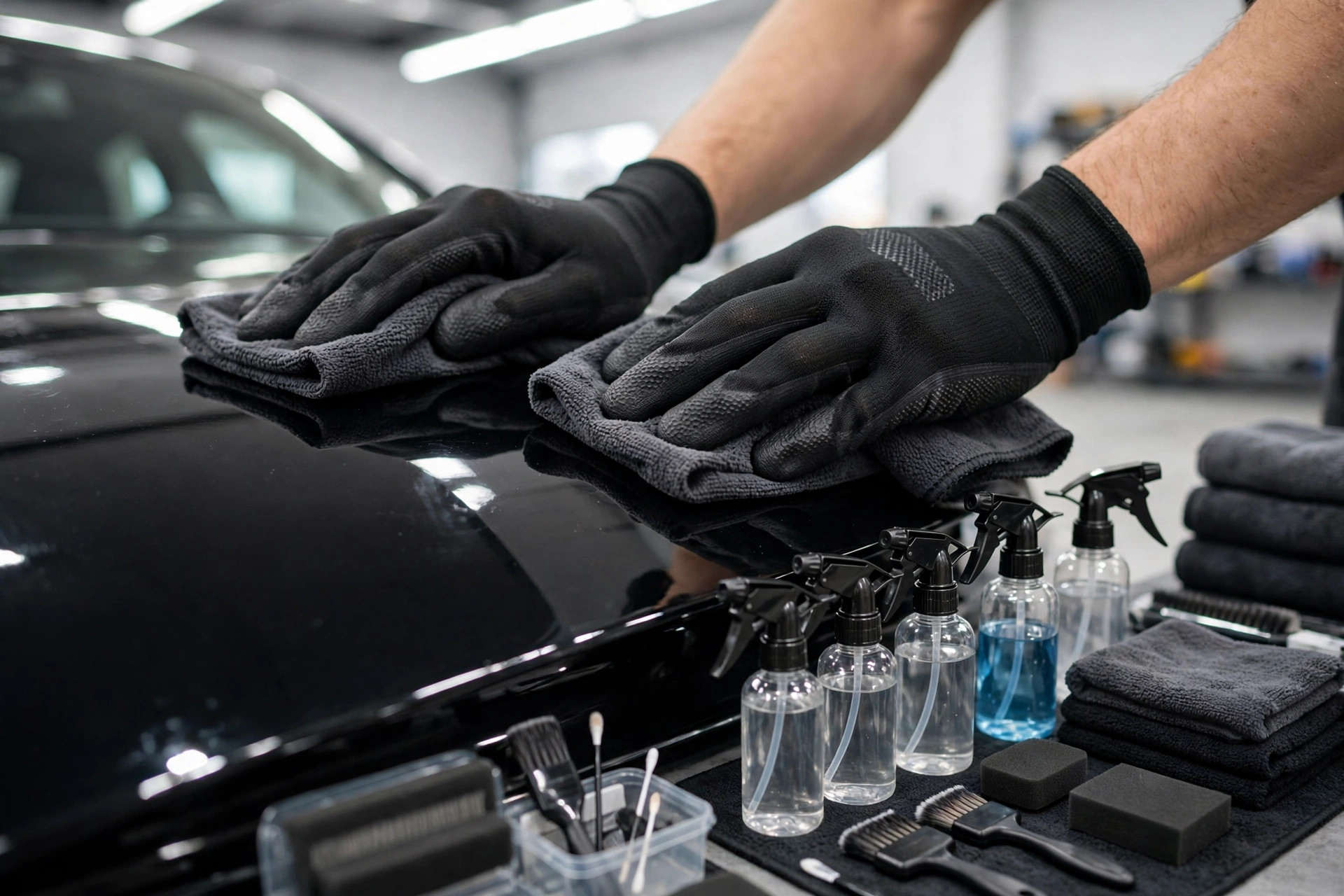

Cars like these are part of a bigger Detailing & Car Care story — Show Car Display Tips: Stands, Mirrors, and Presentation Boards tells the next chapter.
Found this useful? Pass it on to a friend who would appreciate it too.

