

- What Foam Swabs Are and Why Detailers Hoard Them
- Swab Types: Foam, Cotton, and Pointed Tips
- The Jobs They Own: Seams, Emblems, and Drains
- Technique: Damp, Not Wet, and Always a Fresh Tip
- Limits: What Swabs Cannot Fix
- Building a Precision Kit on a Budget
What Foam Swabs Are and Why Detailers Hoard Them
Open a professional detailer’s kit and you will find, alongside the expensive polishers and extractors, a bag of what look like oversized medical swabs. Foam detailing swabs, cotton swabs the size of lollipop sticks, pointed precision tips, these humble tools handle the final five percent of an interior detail, the grime in seams so tight that brushes splay uselessly against them. It is the difference between a car that looks clean and a car that looks detailed.
The problem they solve is access. Car interiors are assembled from dozens of panels with millimeter gaps between them, and those gaps are dust magnets with no cleaning access designed in. Around the shifter boot, along the edges of the infotainment screen, in the recessed lettering of badges, inside the channels of seatbelt buckles, dirt accumulates where no cloth, brush, or vacuum nozzle can reach. A swab is simply a handle thin enough to enter the gap with an absorbent tip that carries cleaner in and dirt out.
What surprises first-time users is how much dirt comes out of gaps that looked clean. Run a damp foam swab along the seam of a center console in a three-year-old car and the tip comes up gray. That grime was always there, invisible in normal light, contributing to the vague dinginess that makes an interior feel old. Precision tools do not just clean; they reset the details that the eye reads as newness.
Swab Types: Foam, Cotton, and Pointed Tips
Foam swabs are the workhorse. The foam tip is firm enough to scrub lightly, absorbent enough to carry cleaner, and, crucially, lint-free, so it does not leave fibers behind in the seam. They come in various tip shapes: paddle tips for flat seams, pointed tips for corners, and round tips for holes and recesses. For interior work, a mix of paddle and pointed tips covers nearly everything. Buy them in bulk; they are consumables.
Cotton swabs, the big industrial kind, are softer and more absorbent than foam, which makes them better for delicate jobs like cleaning around instrument needles or lifting liquid from a spill in a crevice. The downside is lint: cotton leaves fibers, so they are wrong for jobs where fibers would show, like black piano trim. Use cotton where absorbency matters more than lint, foam where the finish must be perfect.
Pointed precision tips, sometimes sold as detailing picks with foam or microfiber covers, handle the extreme cases: the tiny gap around a start button, the recessed screws under trim caps, the channel inside a door handle. They are also the tool for applying protectant precisely, getting dressing into a seam without slathering the surrounding panel. A handful of these turns frustrating jobs into satisfying ones.
The Jobs They Own: Seams, Emblems, and Drains
Panel seams are the signature job. The gap where the dashboard meets the A-pillar trim, the line between console pieces, the edge of the glovebox door, all collect a dark line of grime that reads as wear. A foam swab dampened with all-purpose cleaner, run along the seam with light pressure, lifts it in one or two passes. Work in short sections and flip or replace the swab when the tip grays; a dirty swab just relocates grime.
Emblems, badges, and recessed lettering are the second specialty. Interior badges have tiny recessed areas around each letter where polish-like grime builds up. A pointed foam swab with a drop of cleaner traces each letter, and the transformation is disproportionate to the effort; clean badging makes the whole interior look newer. The same technique works on the textured lettering of shifter gates and drive mode selectors.
Drain-adjacent and hinge areas round out the list. The channels around the sunroof opening, the hinge recesses of the center console lid, the tracks that seatbelts retract into, all are swab territory. These spots also reveal problems early: a swab that comes up with greenish residue near a sunroof channel is telling you about moisture before it becomes a leak stain. Precision tools are diagnostic instruments as well as cleaning ones.
Technique: Damp, Not Wet, and Always a Fresh Tip
The cardinal rule is damp, not wet. A swab should carry just enough cleaner to loosen grime, never enough to drip into the seam. Drip liquid into a panel gap and it wicks behind the trim, where it can spot, corrode clips, or reach wiring. Dampen the tip, then squeeze or roll it on a cloth to remove excess before it touches the car. You can always add a second damp pass; you cannot un-flood a seam.
Rotate to a fresh tip constantly. The economics favor it: swabs cost pennies, and a loaded tip stops cleaning and starts smearing. For a full interior detail, expect to use dozens. Professionals buy them by the hundred and think nothing of discarding a swab after one seam. Amateurs try to make five swabs last the whole car and wonder why the last panels look worse.
Match the motion to the geometry. Along a seam, use a dragging motion with the swab slightly angled, letting the tip flex into the gap. In a recess, use a gentle twisting motion, like cleaning an ear, to let the tip contact all sides. Around an emblem, trace slowly; rushing skips the recesses that are the whole point. And always finish with a dry swab pass to lift any remaining moisture and check your work; the dry pass often reveals grime the wet pass loosened but left behind.
Limits: What Swabs Cannot Fix
Swabs cannot fix damage, and it is worth stating plainly. A scratched piano-black panel, a worn button legend, a seam gap that has widened from a broken clip, none of these yield to precision cleaning. Swabs reveal the true condition under the grime, which is valuable, but they do not restore. If the seam is dirty because the panel is loose and flexing, the fix is a clip, not a swab.
They are also inefficient for large areas, by design. Cleaning a whole dashboard with swabs would take hours and hundreds of tips; that is brush and cloth work. Swabs are the finishing tool, deployed after the broad cleaning is done, for the details that broad tools cannot reach. Using them too early wastes tips on dirt that a cloth would have removed in seconds.
Finally, swabs cannot reach behind panels, and some grime lives there. The dust inside a door panel, behind the dashboard, inside the headliner, is beyond any hand tool. If an interior still smells or looks dusty after a thorough detail including precision work, the remaining dirt is probably somewhere no swab goes, and that is normal. Perfection is not the goal; the visible, touchable surfaces are.
Building a Precision Kit on a Budget
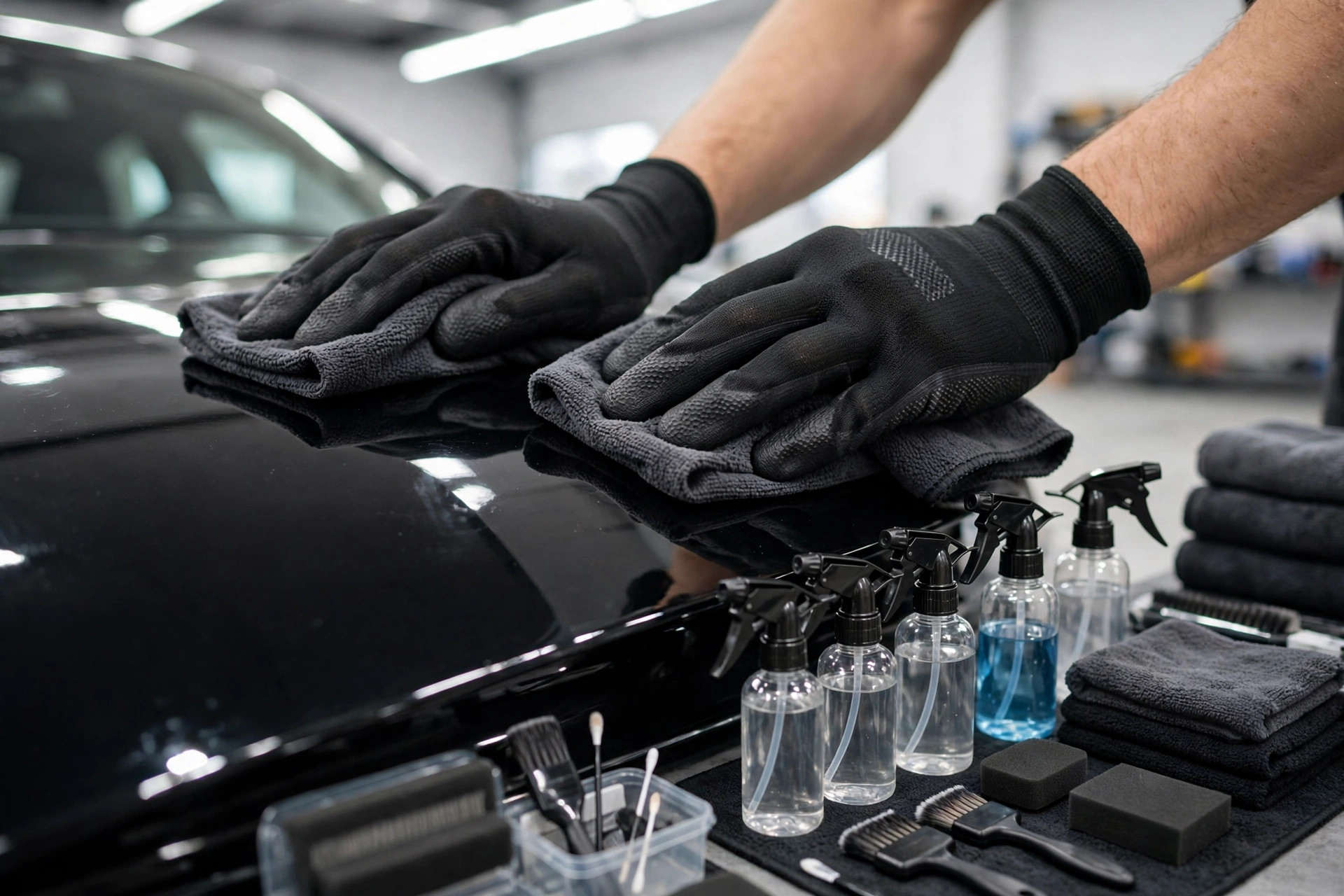
A complete precision kit costs less than a pizza. Start with a bulk bag of foam swabs in mixed tip shapes, a bag of large cotton swabs, and a small bottle of quality all-purpose cleaner diluted for interiors. Add a pack of pointed precision tips for emblems and buttons. That is the whole kit, and it will last through many details if you buy the swabs in reasonable bulk.
Storage matters more than you would think: keep swabs in a sealed bag or container, because dusty swabs defeat the purpose. A small tackle-box style organizer in your detailing kit keeps foam, cotton, and pointed tips separated and clean. Toss used swabs; do not try to wash and reuse foam tips, because the foam degrades and the economics never justify it.
Deploy the kit at the end of your interior routine, after vacuuming and broad cleaning, as the final pass. Work around the car systematically, seams, emblems, buttons, hinges, with good light; a raking inspection light makes a real difference at this scale. For the brush work that comes before the swab pass, see our guide to car detailing crevice tools, start from the broader car interior cleaning guide, and for delicate perforated surfaces that need a gentle touch, read cleaning perforated leather seats.
Related posts:

Finished here? How to Clean Under Child Car Seats: Crumbs, Stickiness, and Protector Mats is the most natural next drive from this page.
Save this page and send it to your car group — good tips travel.

