
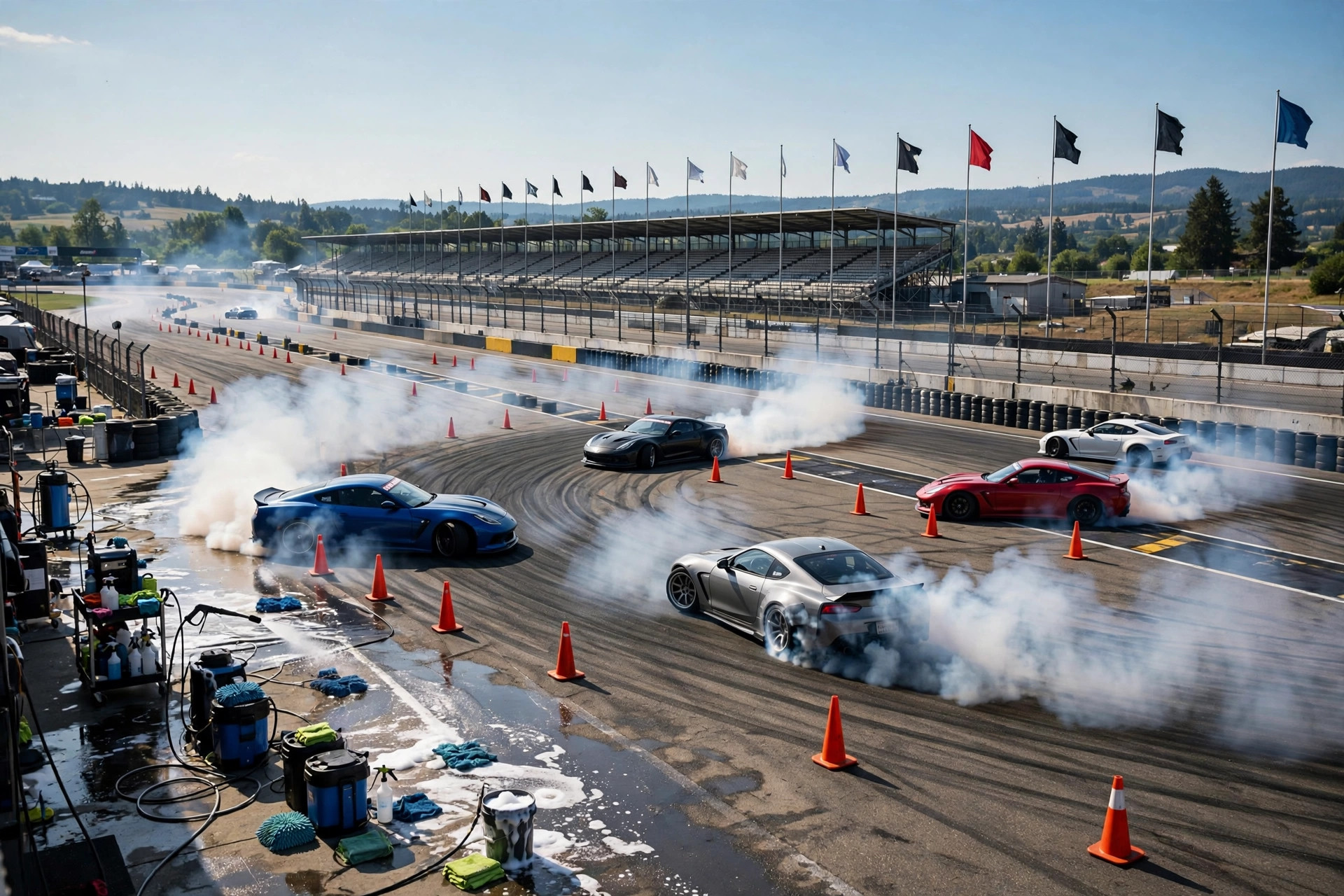
The hardest part of learning to drift is not the technique; it is finding somewhere legal to practice. If you are a new driver asking where you can slide, what it costs, and how to get started safely, know that drifting on public roads is dangerous, illegal, and the fastest way to lose your license or worse. Fortunately, the grassroots drift scene has grown enormously, and organized practice opportunities exist in more places than most beginners realize. This guide maps the landscape of drift events, from casual practice days to professional competitions, and shows you exactly how to find them, what to expect, and how to make the most of your first visit.
The Drift Event Landscape and Grassroots Practice Days
Drift events exist on a spectrum from informal to professional. At the grassroots end are practice days: low-pressure events where drivers pay a modest fee for open track time, with no judging and no trophies. These are the lifeblood of the sport and the ideal starting point for beginners. Next come grassroots competitions, which add judging and brackets but keep the atmosphere friendly and the costs low.
Above that sit pro-am series, which feed drivers into professional competition, and at the top are professional series like Formula Drift and D1 Grand Prix. The professional events are spectacular to watch but irrelevant to beginners as participants; your focus should be entirely on the grassroots end of the spectrum for your first year or two.
Understanding this landscape helps you set expectations. A grassroots practice day might cost $100 to $200 for a full day of driving, with a relaxed schedule and helpful fellow drivers. A pro-am competition costs more, demands a higher standard of car preparation and safety equipment, and puts you under judging pressure. Start where the pressure is lowest and the seat time is highest.
Grassroots practice days are typically organized by local drift clubs, track day companies, or the tracks themselves. They rent a circuit, skid pad, or autocross lot for the day and sell driver spots. Formats vary: some run open sessions where you queue and drive, others divide drivers into run groups by skill level. Beginners are almost always welcome, and many events specifically cater to first-timers.
To find them, start with your local tracks. Most road courses and oval tracks host drift events on days when grip racing is not scheduled. Check their calendars directly, as smaller events may not be widely advertised. Kart tracks and large paved lots are also common venues; the tighter confines are actually ideal for learning because speeds stay low.
Ask around in the community. The drift scene runs on word of mouth, and a single conversation at a car meet can reveal events you would never find online. Experienced drivers remember being beginners and are usually generous with advice about where to go and what to expect. Do not be shy about introducing yourself as a newcomer; the community grows by welcoming new drivers.
Drift Schools and Finding Events Online
Drift schools compress months of trial-and-error into a single day of structured instruction. A professional instructor rides with you or follows in another car, giving real-time feedback on your technique. Many schools provide the car, which means you can learn the fundamentals before investing in your own build. For absolute beginners, a school day is the highest-value money you can spend in drifting.
What you learn in a day at school would take five unguided practice days to figure out alone. Instructors spot the mistakes you cannot feel: late initiations, tense hands, eyes looking at the wrong place. They also teach in a safe, controlled environment with proper runoff and no pressure from other drivers. If your budget allows only one splurge as a beginner, make it instruction.
Some tracks also offer beginner-focused practice days with instructors circulating among the drivers. These hybrid events give you open seat time plus periodic coaching, which is an excellent combination. Look for events explicitly marketed to novices; the instruction quality and the patience of fellow drivers will both be higher than at advanced-only days.
The internet is your best tool for finding events. Start with Facebook groups and Instagram pages for drifting in your region; most grassroots organizers announce events on social media rather than through formal websites. Search for terms like your city or state plus drift, and join every relevant group you find. Event announcements often appear only a few weeks in advance, so check regularly.
Dedicated track day aggregator websites list drift events alongside other motorsports. These are useful for discovering venues you did not know existed. Set up alerts or bookmarks for your local tracks so you see new events as they are posted. Some regions also have drift-specific forums or Discord servers where drivers coordinate carpools and share spare parts.
Do not overlook the professional series as a resource. Organizations like Formula Drift maintain lists of affiliated grassroots series and pro-am competitions. The guide to professional drifting can point you toward the sanctioned ladder in your area, and attending a pro event as a spectator is both inspiring and educational. Watch how the drivers you admire handle the same fundamentals you are practicing.
What to Bring to Your First Event
Your first event goes smoothly with proper preparation. Bring your driver’s license, the event fee in the expected payment form, and a helmet that meets the event’s safety rating; check the rules beforehand, as requirements vary. Pack basic tools, a jack, spare fluids, and at least one spare set of rear tires mounted on wheels. Bring more water and food than you think you need; track facilities are often minimal.
Use this packing list when you load the car:
- Driver’s license and the event fee in the expected payment form
- A helmet that meets the event’s safety rating
- Basic tools, a jack, and spare fluids
- At least one spare set of rear tires mounted on wheels
- More water and food than you think you need
Prepare the car the week before, not the night before. Check all fluid levels, torque the lug nuts, inspect brake pads, and ensure nothing is leaking or loose. Remove all loose items from the interior and trunk; they become projectiles when you are sideways. A quick tech inspection checklist, completed calmly at home, prevents the frantic paddock repairs that ruin mornings.
Mentally, arrive with the right attitude. Your goal for the first event is to learn and have fun, not to impress anyone. Introduce yourself to the organizers, attend the drivers’ meeting, and ask questions. Walk the track before driving it to understand the layout and surface, because the drivers who progress fastest are the ones who treat every event as a classroom.
Track Etiquette and the Step Up to Competition
Track etiquette keeps everyone safe and ensures you get invited back. The fundamental rule is awareness: know where other cars are at all times, especially when entering and exiting the track. Never stop on the racing line, and if you spin, stay in the car with your hands visible until it is safe to recover or wait for assistance. Sudden, unpredictable movements cause accidents.
Respect the schedule and the staff. Be ready when your run group is called, clear the track promptly when your session ends, and follow flag signals without argument. If a corner worker points you somewhere, go there. These volunteers are there for your safety, and arguing with them is the fastest way to get ejected from an event.
Be a good paddock neighbor. Keep your area tidy, contain your fluids, and offer help to others when you can. The drift community is famously generous with tools, advice, and spare parts, and that generosity flows both ways. Clean up your tire debris at the end of the day; leaving a mess of shredded rubber for the track staff guarantees higher fees or lost venues for everyone next time.
After several practice days, you may feel the pull of competition. Grassroots drift competitions are the natural next step: they add judging, which gives you objective feedback on your progress, and the tandem format teaches car control under pressure. Enter when you can consistently link a full course without spinning, not before; competition magnifies every weakness in your driving.
Prepare for the step up in requirements. Competitions typically demand more safety equipment, a more thorough tech inspection, and entry fees two to three times higher than practice days. The car preparation standards are stricter because the speeds and proximity are greater. Read the rulebook carefully and ask experienced competitors what the inspectors actually check.
Remember that competition is a tool for improvement, not the point of the sport. Many of the happiest drifters never compete seriously; they just enjoy sliding with friends at practice days for years. Whether you chase trophies or just chase the feeling, the grassroots scene exists to serve drivers like you.
Iconic venues like Ebisu Circuit started as humble playgrounds before becoming legends, and your local track could be the beginning of your own story. Even winter drift series and snow drifting events prove that the sport thrives wherever drivers gather to slide.
Related posts:


If this read fired you up, Best Cheap Beginner Drift Cars: RWD Platforms That Will Not Break the Bank keeps the Driving & Road Trips momentum rolling.
Share this with a fellow driver or enthusiast who needs to see it.

