
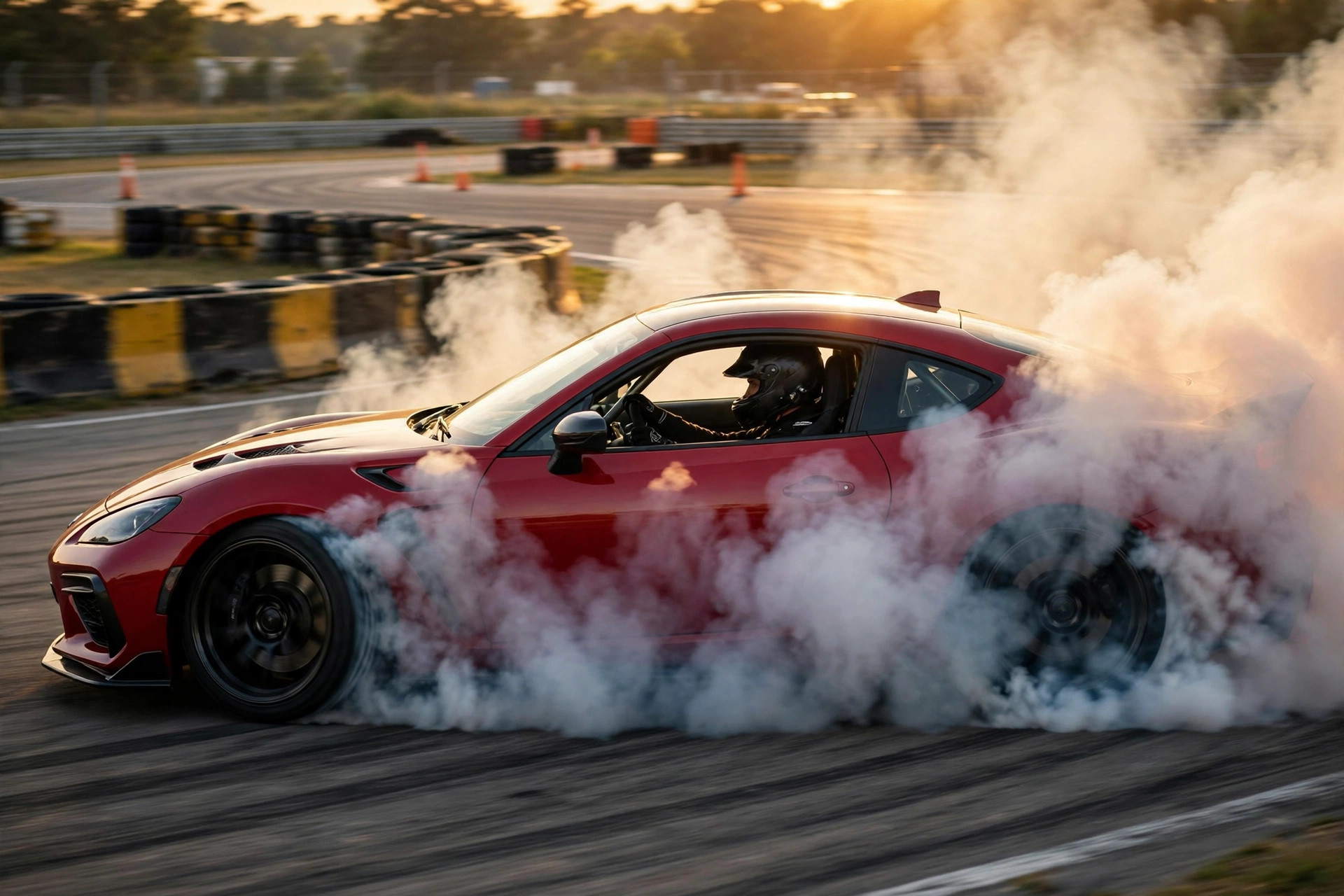
Drifting is a motorsport, and motorsports carry real risks, which is why anyone who wants to slide a car at an organised event needs to know what safety gear is required, how the car must be prepared, and why those rules exist before the first run begins. Cars slide at speed, sometimes toward walls, other cars, and track barriers. Taking safety seriously is not about being timid; it is about ensuring you can keep doing the sport you love for years. Every professional series enforces strict safety standards, and grassroots events are increasingly following suit.
This guide covers the safety requirements you will encounter at drift events, wherever you drive and whenever you progress from practice days toward competition. It explains who must wear what, how your car is checked, and what happens when preparation is done properly. The mindset that separates long careers from short ones runs through every section.
Why Safety Matters More in Drifting
Drifting presents unique safety challenges compared to other motorsports. The car is intentionally out of control in the conventional sense, traveling sideways at speed with reduced stability. When drifts go wrong, they go wrong quickly: spins into walls, contact with other cars in tandem, and rollovers on grippy surfaces are all real possibilities.
The speeds may be lower than circuit racing, but the angles and proximity create their own dangers. Beginners face elevated risk because their car control is still developing. Spins are frequent, and an unexpected spin at the wrong place can put you into a barrier or another driver.
This is not a reason to avoid the sport; it is a reason to respect it. Proper safety gear and car preparation convert most incidents from potential tragedies into funny stories. The culture of safety in drifting has matured enormously.
Where early grassroots events sometimes ran with minimal oversight, modern events enforce tech inspections, require proper helmets, and employ trained corner workers. Embrace these standards rather than resenting them. They exist because the community learned hard lessons so you do not have to.
Driver Safety Gear Essentials
The helmet is the single most important piece of safety gear. Most events require a helmet meeting a recognized standard such as Snell SA or M, or FIA 8859. Motorcycle helmets sometimes qualify at grassroots events, but check the specific event’s rules before you arrive.
The helmet must fit snugly without pressure points; a loose helmet is nearly as bad as no helmet. Replace any helmet that has taken a significant impact, as the protective foam compresses permanently. Fire-resistant clothing is required at higher levels and strongly recommended everywhere.
A proper driving suit, fire-resistant gloves, and closed-toe shoes are the baseline. The suit buys you critical seconds to escape if fuel ignites, and in a sport where cars routinely contact walls and each other, fuel system damage is always possible. Even at casual practice days, long sleeves, long pants, and closed shoes are sensible minimums.
Before you drive, work through the small details that are easy to overlook:
- Remove or secure loose jewelry, and tie back long hair so nothing can catch or distract you.
- Wear the helmet’s visor or goggles to protect against debris and tire smoke.
- Keep a first aid kit in your paddock area and know where the event’s medical staff are stationed.
- Check that your helmet, suit, gloves, and shoes all meet the rules for the level you are entering.
These preparations take minutes and cost little. They define the difference between a prepared driver and a lucky one. Broader lessons about how manufacturers approach occupant protection, such as those covered in the Aston Martin Luxury Car Safety Rating, point in the same direction.
Car Safety Preparation, Roll Cages, Seats, and Harnesses
Car safety preparation starts with the fundamentals: nothing should be loose, leaking, or broken. Tech inspectors check that the battery is securely tied down, because a loose battery becomes a projectile and a fire hazard. They verify that lug nuts are torqued, that there are no fluid leaks, and that the throttle returns freely.
These sound basic, but cars fail tech inspection for these items regularly. Remove all loose objects from the car before driving. Floor mats, water bottles, tools, and phone mounts all become dangerous in a spin or impact.
The interior should contain only what is bolted down: seats, steering wheel, and essential controls. This rule applies at every level of the sport, from first practice to professional competition. The same securing principle matters outside the cabin too, as shown in guides such as Loading Surfboards on Roof Rack: The Complete Safety Guide.
Pay special attention to the fuel system. Inspect fuel lines for cracks and abrasion, ensure the fuel cap seals properly, and check that the tank and filler neck are secure. In a rear impact, which is common when drifts go wrong, the fuel system takes the hit.
A few minutes of inspection here is cheap insurance against the worst-case scenario. As you progress beyond beginner practice days, rollover protection becomes mandatory. A proper roll cage or at minimum a roll bar protects the cabin’s survival space in a rollover or severe impact.
Cages must be built to recognized specifications with proper tubing diameter, wall thickness, and mounting plates; a poorly built cage is worse than none because it creates new impact hazards inside the cabin. Details of how a roll cage is designed help explain why those specifications matter. Racing seats and harnesses work with the cage as a system.
A fixed-back bucket seat holds you firmly so you can focus on driving instead of bracing yourself, and a multi-point harness distributes impact forces across your body. Never run a harness without proper rollover protection and a seat designed for it; a harness without a cage can trap you in a collapsing roof. For beginners at casual practice days, the stock three-point belt and factory seats are usually acceptable, and that is fine.
Upgrade to a bucket seat early for the driving benefits, and add the harness and cage together when you step up to competition. Doing safety modifications as a complete system, rather than piecemeal, is both safer and cheaper in the long run.
Fire Safety and Extinguishers
Every drift car should carry a fire extinguisher, securely mounted within the driver’s reach. A 2.5-pound dry chemical extinguisher is the minimum; many drivers carry larger units. Mount it with a proper bracket, not rolling loose in the footwell.
Check the gauge regularly and replace or service the extinguisher according to its schedule. Know how to use it before you need it. The technique is simple: pull the pin, aim at the base of the flames, squeeze the handle, and sweep.
Practice the motion mentally so it is automatic under stress. If you see fire in another driver’s car, alert the corner workers immediately; they have larger extinguishers and training, but seconds matter. Reduce fire risk proactively.
Keep the engine bay clean of oil and debris that could ignite on hot surfaces. Ensure electrical wiring is properly insulated and fused; electrical fires are a common cause of car fires in modified vehicles. After any contact or off-track excursion, inspect for fuel and oil leaks before driving again.
Most car fires are preventable with basic diligence. That diligence matters because fire gives you very little time to react. Preparation before the event is what protects you during it.
Track Rules, Tech Inspection, and the Safety Mindset
Every event publishes a rulebook or at minimum a set of tech requirements. Read it before you go, not when you arrive. Requirements vary: some grassroots days ask only for a helmet and a sound car, while competitions mandate cages, suits, and specific equipment.
Showing up unprepared wastes your entry fee and the organizers’ time. The drivers’ meeting before each event is mandatory and genuinely important. Organizers explain the track layout, flag signals, passing rules, and emergency procedures.
Pay attention even if you have heard it before; every venue has quirks. Ask questions about anything unclear. The meeting is also where you learn the day’s schedule and run group assignments.
Tech inspection is not an adversarial process; the inspectors want you to drive safely. If your car fails on a minor item, fix it cheerfully and re-present. Experienced drivers help newcomers through tech all the time, so do not be embarrassed to ask what a requirement means.
The goal shared by everyone is a day of safe sliding, and the rules are how the community guarantees it. Legendary venues like Ebisu Circuit enforce standards that keep their legendary status intact. The ultimate safety device, though, is between your ears.
Drive within your limits, especially early in the day when tires and brakes are cold and your reflexes are warming up. Build speed gradually across sessions rather than trying to set records on your first run. The drivers who last in this sport are the ones who know when to push and when to circulate calmly.
Respect the conditions. Wet tracks, cold tires, and fading light all reduce grip and visibility; adjust your driving accordingly rather than pretending conditions do not matter. If you feel tired, take a break; fatigue kills reaction time and judgment faster than most drivers admit.
There is no trophy for the most runs in a day, but there are real consequences for driving exhausted. Finally, look out for others. Drifting is a community sport, and safety is collective.
Warn fellow drivers about track hazards you spot, help newcomers understand the rules, and speak up if you see something dangerous. The culture you help build determines whether your local scene thrives or gets shut down. Champions like Ken Block inspired millions while respecting the safety infrastructure that made their driving possible.
The professional drifting scene shows what is possible when talent meets rigorous safety standards. Even in extreme conditions like winter drifting, preparation and mindset keep drivers safe. Put the gear, the car, and the mindset together, and safety stops feeling like a restriction and becomes the reason you can keep coming back to drive again.
Related posts:



Finished here? Drag Racing Safety Requirements: What You Need Before You Run is the most natural next drive from this page.
Share this with a fellow driver or enthusiast who needs to see it.

