
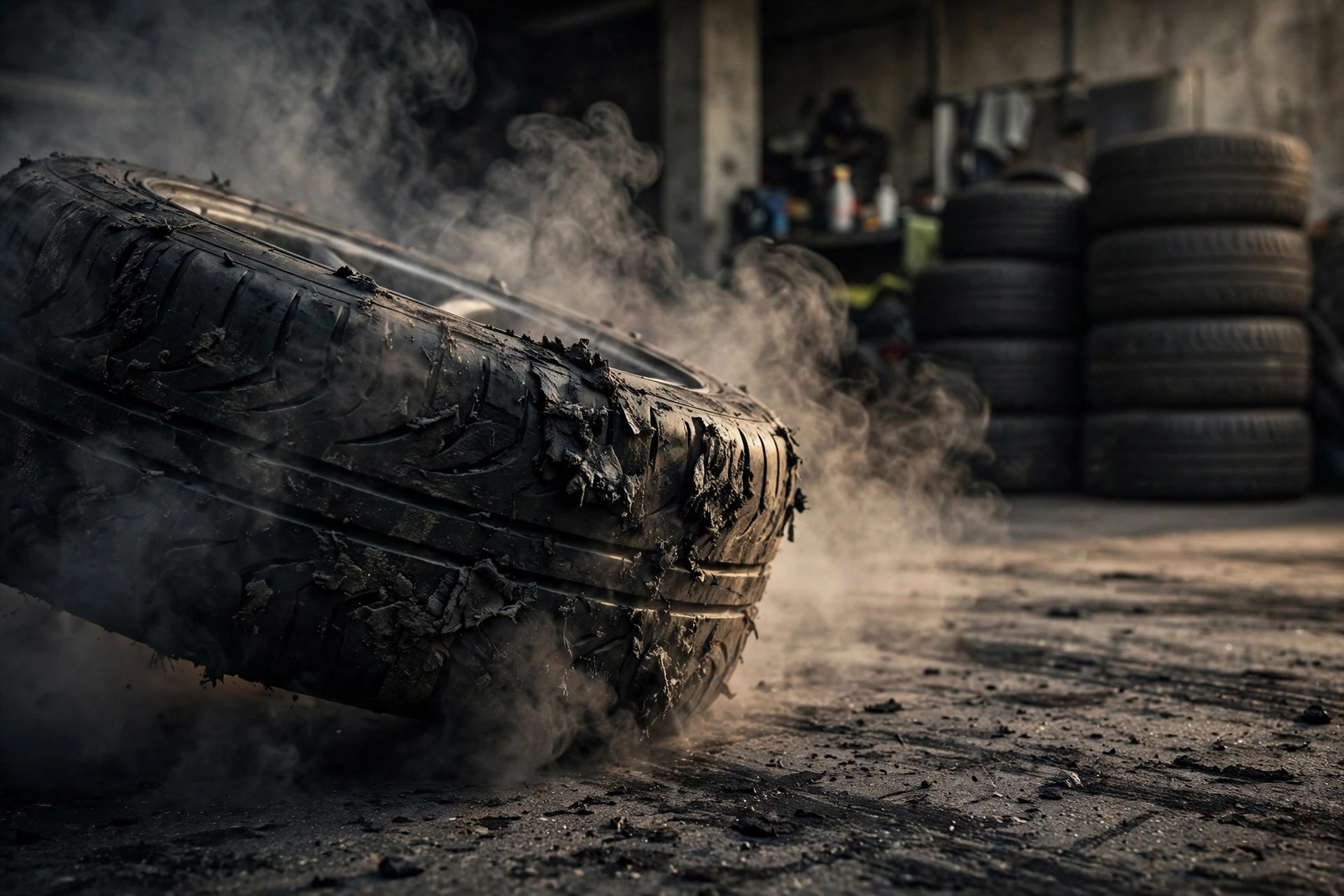
Tires are the single biggest running cost in drifting, and for anyone asking how to keep sliding without burning cash, the answer starts with understanding why a tire dies so fast when it is sideways. An enthusiastic beginner can destroy a pair of rear tires in a single practice day, and at retail prices, that math gets terrifying fast. But experienced drifters have spent decades perfecting the art of sliding cheaply, and their strategies can cut your tire budget to a fraction of what newcomers expect. This guide explains why drifting destroys tires, what tires to buy, where to find them cheap, and how to make each set last as long as possible.
Why Drifters Eat Tires and How to Choose the Right Ones
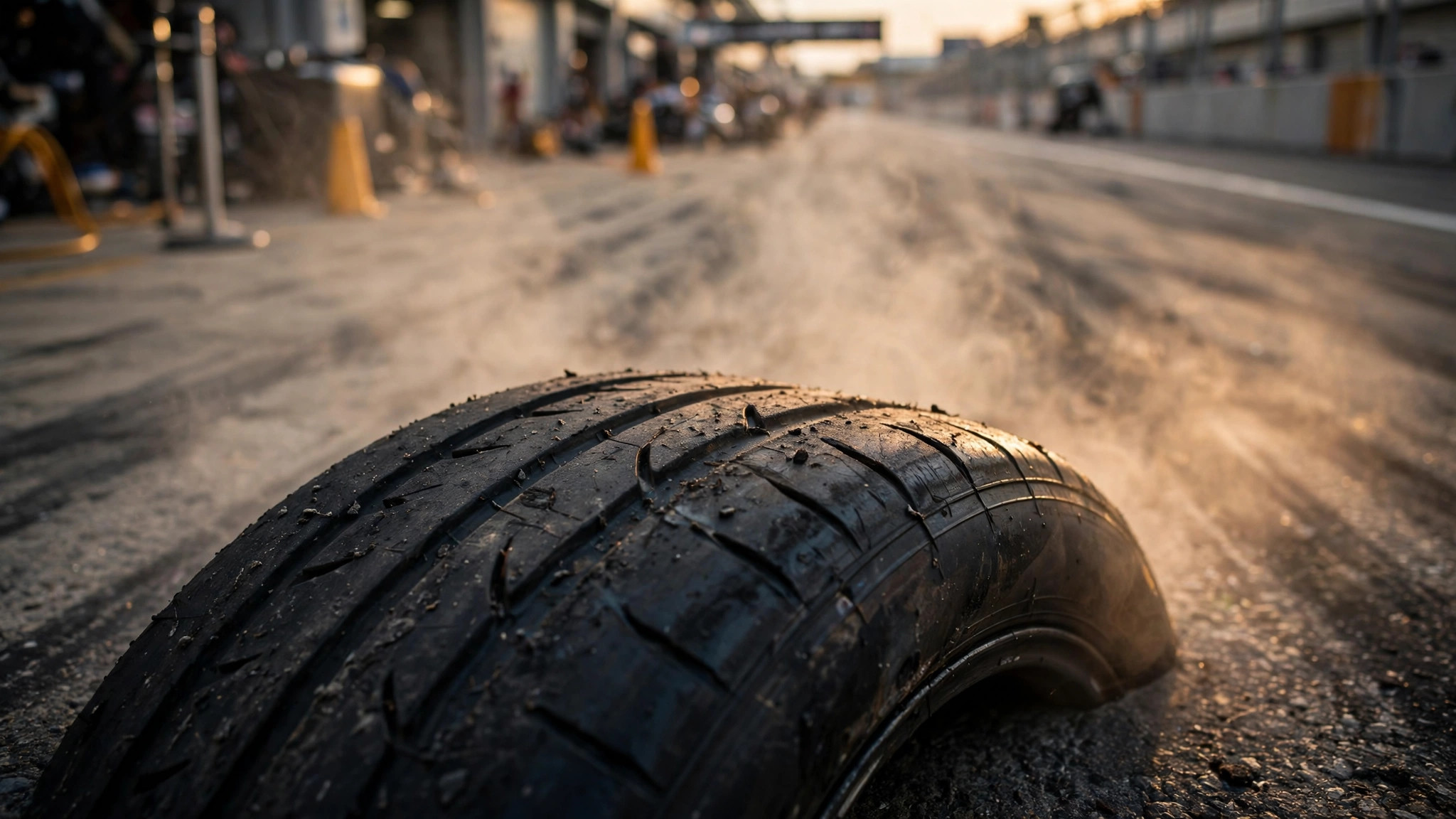
Drifting destroys tires by design. When a car drifts, the rear tires are spinning faster than the car is traveling, which means they are constantly slipping against the asphalt. That slip generates enormous heat and friction, and the tire’s tread compound literally gets torn away and deposited on the track as smoke. A tire that might last 40,000 miles on the street can be reduced to cords in a few hours of hard drifting.
The physics are unforgiving. Every clutch kick, every sustained slide, every transition scrubs rubber off the rear tires. Heavier cars, more powerful cars, and grippier surfaces all accelerate the wear. A 3,500-pound V8 car on a rough asphalt track can kill a pair of rears in under an hour of continuous running, while a light four-cylinder car on a smooth skid pad might stretch a pair across several sessions.
Understanding this helps you budget realistically. Tires are not an occasional expense in drifting; they are fuel, consumed every time you drive. The drivers who drift the most are not the ones with the most money, but the ones who solved the tire equation cheapest. Everything that follows is about solving that equation.
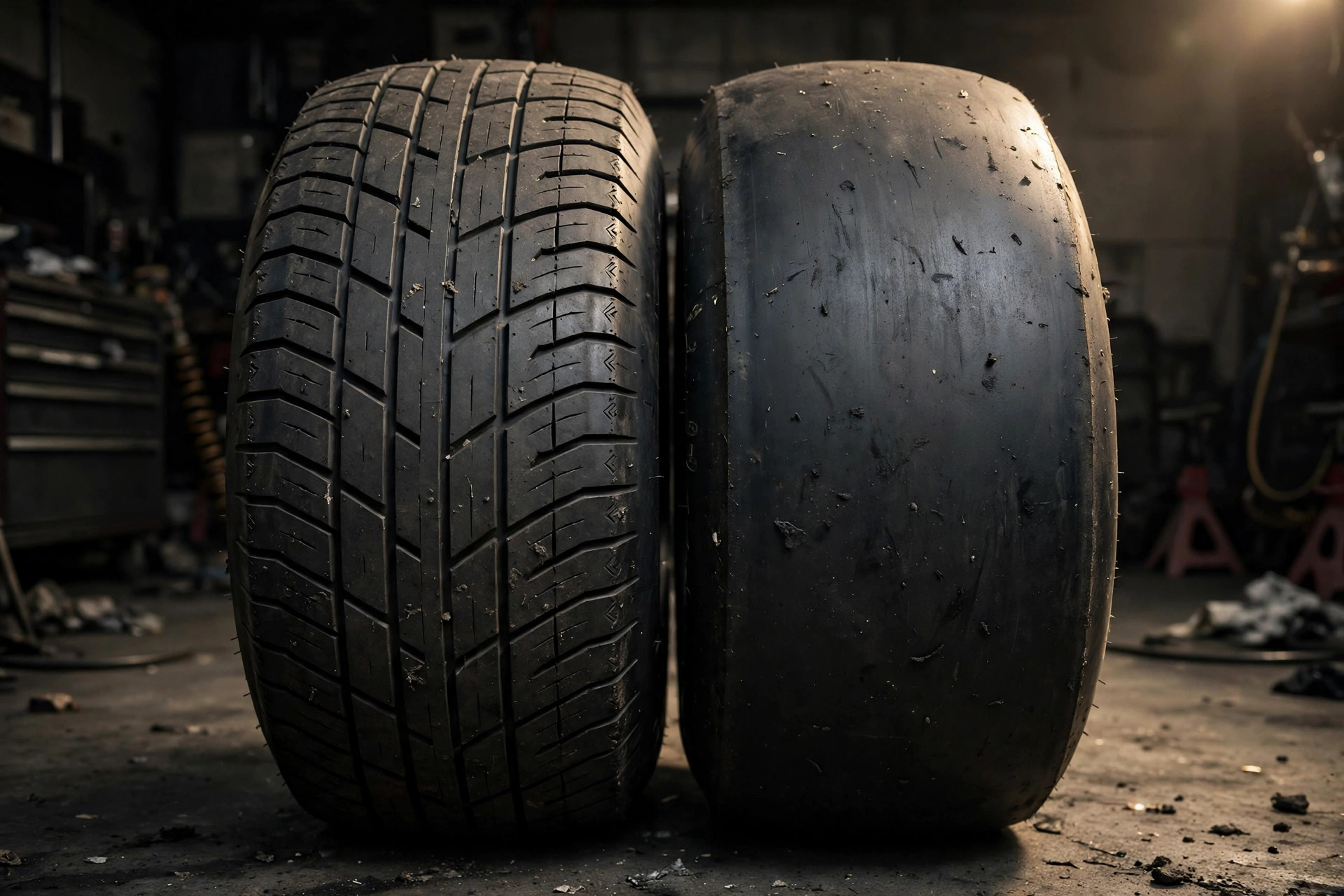
The counterintuitive truth of drift tires is that cheap is good. Expensive, grippy performance tires are actually worse for learning: they resist breaking loose, wear out just as fast once sliding, and cost three times as much. The ideal drift tire is a cheap all-season or touring tire with a hard compound and a high treadwear rating. These break loose easily, slide predictably, and cost a fraction of performance rubber.
When you shop for rear tires, look for these traits:
- Treadwear ratings above 400, since the higher the number, the harder the compound and the longer the tire lasts while sliding
- Cheap all-season or touring construction rather than expensive, grippy performance rubber
- Narrower sizes, which break loose easier and cost less, so many drifters run narrower rubber on the rear than the front
- Budget brands that tire shops struggle to sell, which are often perfect drift tires
Avoid used performance tires with unknown history for the rear; they may have flat spots or internal damage that causes vibrations or blowouts at speed. For the front, where tires last much longer, you can afford to be pickier. But for the rears, which are essentially disposable, cheap and plentiful beats premium every single time. Understanding how tire wear works helps you read your tires and adjust your driving to extend their life, and model-specific guides such as 2026 Nissan Convertible Tires show how fitment choices vary by car.
Front vs Rear Tires and the Pressures to Run
Front and rear tires do completely different jobs in a drift car. The rear tires are sacrificial: they spin, smoke, and die. The front tires are precision instruments: they steer, grip, and must last. This asymmetry means you should run different tires, and different budgets, at each end of the car.
Up front, invest in decent grip. Good front tires give you the steering authority to catch slides and the turn-in response to initiate precisely. A quality summer performance tire or even a semi-slick up front transforms how the car feels, because the front end is where all your control inputs happen. Front tires last many events since they are not spinning, so the cost per event is low.
At the rear, go as cheap as possible. The rear tires’ job is to break loose on demand and die with dignity, and a $50 budget tire does this as well as a $200 performance tire. Many drifters run mismatched rear tires without issue, though matching pairs give more predictable behavior. Keep several pairs of rear wheels mounted with cheap tires ready to go, so a worn-out pair costs you minutes in the paddock rather than ending your day.
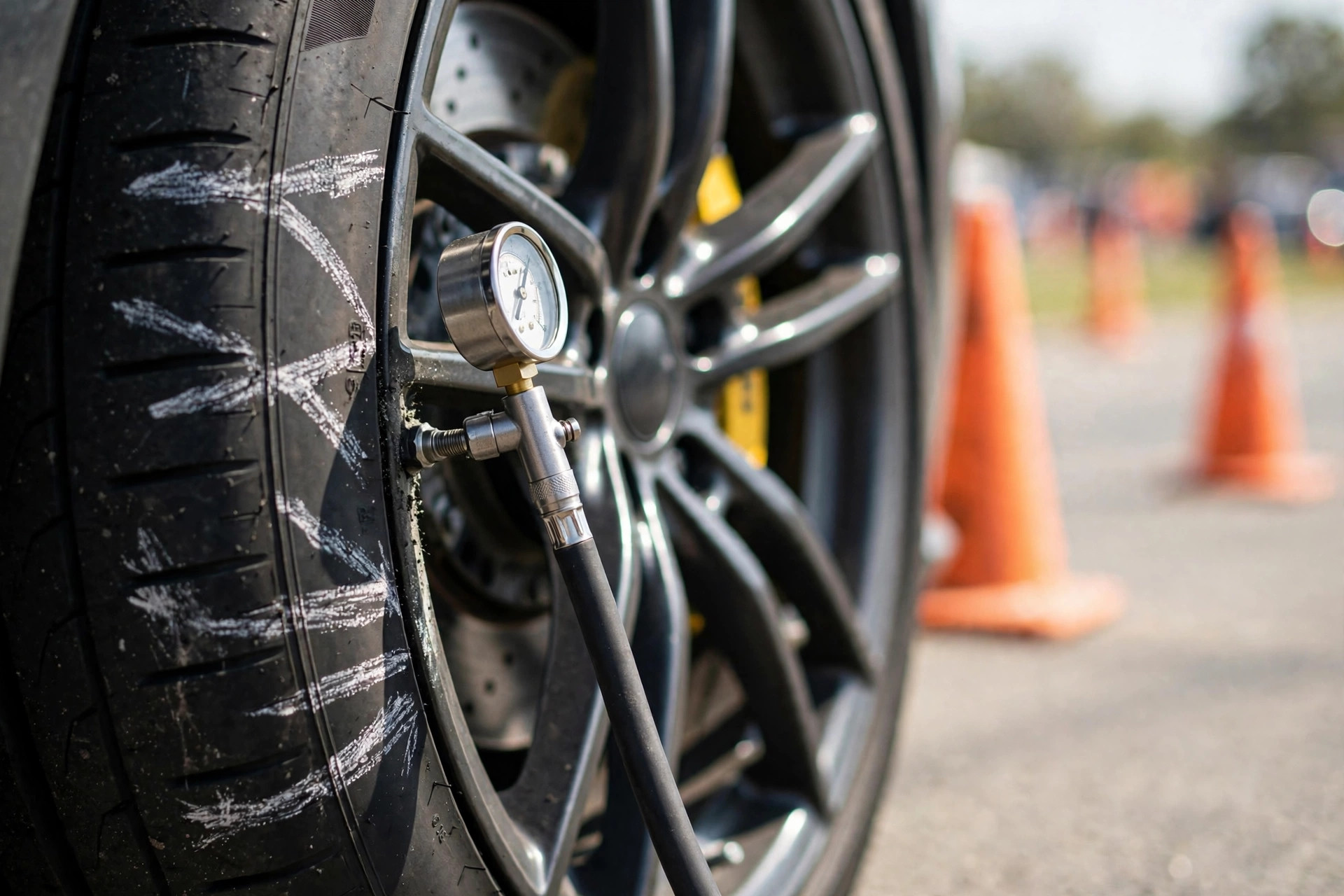
Tire pressure is a powerful and free tuning tool in drifting. Higher pressures reduce the contact patch and make tires break loose more easily, which is why drifters often run rear pressures of 40 to 50 psi or even higher. This seems alarming if you are used to street pressures, but it is standard practice: the reduced grip makes the car more willing to slide and the tires last longer because less rubber is in contact with the abrasive asphalt.
Start with rear pressures around 40 psi and adjust based on feel. If the car will not break loose, add pressure. If the rear feels nervous and snappy, reduce it slightly. Front pressures typically stay near normal, around 32 to 36 psi, because you want maximum front grip for steering control, and you should check pressures throughout the day, as heat buildup increases them significantly.
Pressure also affects tire wear patterns. Overinflated tires wear the center of the tread; underinflated tires wear the edges. Reading your wear patterns between sessions tells you whether your pressures are right and whether your alignment needs attention. A tire worn evenly across its face is a tire that is working correctly, and getting this right stretches every dollar of your tire budget further.
Where to Find Cheap Drift Tires and How to Change Them
The secret to affordable drifting is never paying retail for rear tires. Tire shops regularly discard take-off tires with plenty of life left: customers upgrade wheels, lease returns get new rubber, and perfectly usable tires end up in the dumpster. Build relationships with local tire shops and ask for their take-offs in your sizes. Many shops will give them away free or sell them for a few dollars each.
Online marketplaces are another goldmine. Search for used tires in common drift sizes, and you will find sellers clearing out garages full of part-worn rubber. Buy in bulk when you find a good deal; a stack of twenty cheap tires in your garage is the foundation of a full season of drifting. Just inspect used tires for damage, bulges, and dry rot before mounting them.
Some drifters organize group buys of budget tires, splitting a pallet among several drivers for wholesale pricing. Others befriend employees at national tire chains who can flag deals on clearance sizes. The common thread is hustle: the cheapest tires go to the drivers who network hardest. Treat tire sourcing as part of the sport, and your budget will thank you, and even creative displays like tire and rim displays show how central wheels and rubber are to car culture.
Changing tires at the track is a core drifting skill. Invest in a good floor jack, a cordless impact wrench, and a torque wrench, and practice until you can swap a pair of rears in under ten minutes. At busy practice days, the drivers who spend their time driving instead of struggling with lug nuts get dramatically more seat time.
Mounting your own tires takes the savings further. A manual tire changer costs less than a few sets of shop mounting fees and pays for itself within a season. It is physical work, but there is satisfaction in mounting your own rubber, and the ability to flip tires on the wheel to even out wear extends each tire’s life. Pair it with a bubble balancer or pay a shop just for balancing.
Organize your spares efficiently. Label wheels by size and condition, keep a dedicated set of lug nuts for your drift wheels, and store everything where you can load the car quickly. The right wheel and tire combinations matter for performance, but at the track, logistics matter just as much. The best tire strategy in the world fails if you cannot get the rubber onto the car between sessions.
Making Your Tires Last Longer
Driving style is the biggest variable in tire life. Smooth drivers who initiate cleanly and maintain slides with steady throttle use far less rubber than aggressive drivers who clutch kick violently and saw at the steering wheel. Every unnecessary input scrubs speed and rubber; the smoothest drifters are often the fastest and the cheapest to run.
Surface choice matters enormously. Smooth concrete skid pads are gentle on tires compared to rough asphalt tracks. If you have a choice of venues, the smoother surface will cut your tire consumption dramatically. Wet conditions also reduce wear to almost nothing, which is why rain practice days are treasured: you get the same car control lessons at a fraction of the tire cost.
Finally, manage your heat cycles. Tires that get screaming hot and then cool completely last longer than tires kept at maximum temperature continuously. Take breaks between runs, let the rears cool while you check pressures, and rotate pairs to spread the wear.
Combined with smart sourcing and smooth driving, these habits can cut a beginner’s tire budget in half. The wheel and tire culture may celebrate extravagance, but grassroots drifting rewards the frugal, and mastering the economics of rubber removes the biggest financial barrier between you and regular seat time.
Related posts:
This is one stop in the Tires & Wheels garage. Plenty more models, guides and stories are parked in the same category.
Share this with a fellow driver or enthusiast who needs to see it.

