

If you want to know how to display a show car so judges actually see its best work, this guide explains what to use, where to place it, and why it matters on show day. Two identical cars can score differently based on display alone, because judges are human. A car presented with care, mirrors, and a clear story creates an impression of thoroughness that lifts the whole evaluation. Display does not replace preparation, but it frames preparation, the way a good frame helps a painting.
At shows where presentation is scored, it is free points. Where it is not scored, it still influences the humans holding the clipboards. Good display is not about spending money on gimmicks. It is about a clean space, a clear story, and a few well-chosen tools that help judges see your car’s best qualities.
This guide covers the display elements that actually work: mirrors, stands, information boards, canopies, and the small touches that separate professional-looking presentations from cluttered ones. Veterans of the cars and coffee scene know that presentation starts the moment you park, not when judging begins, a point the car show tradition makes clear.
Why Presentation Counts and What to Bring
Judging begins before the judges reach your car. They form impressions from across the field: which cars look like contenders, which look like afterthoughts. A car sitting in a clean, organized space with its story displayed reads as a serious entry. The same car in a cluttered space with supplies scattered around reads as casual.
The car has not changed; the frame has, and the frame affects the score. Presentation also serves the judges practically. An information board tells them what the car is, what is original, and what was done, which focuses their inspection on the right things. Mirrors show them the underside without crawling.
A spec sheet answers the questions they would otherwise have to ask. Every piece of good display makes the judge’s job easier, and judges reward the cars that respect their time. The investment is small relative to the return.
Most effective display elements cost little: a printed board, a set of mirrors, and a canopy you may already own. What they cost is thought: deciding what story to tell and how to tell it cleanly. That thought is visible, and it is one of the cheapest competitive advantages in the hobby. A practical display kit drawn from what actually works includes:
- Large, clean inspection mirrors placed under the car to show the suspension, exhaust, and floor
- A concise information board with year, make, model, key specifications, and restoration or modification history
- A neutral-colored canopy, properly secured, to protect the car and define your space
- Spec sheets in protective sleeves and, for serious entries, a binder of restoration photos
- Simple ropes and stanchions, used only when the venue allows and the crowd warrants it
Mirrors and Undercarriage Presentation
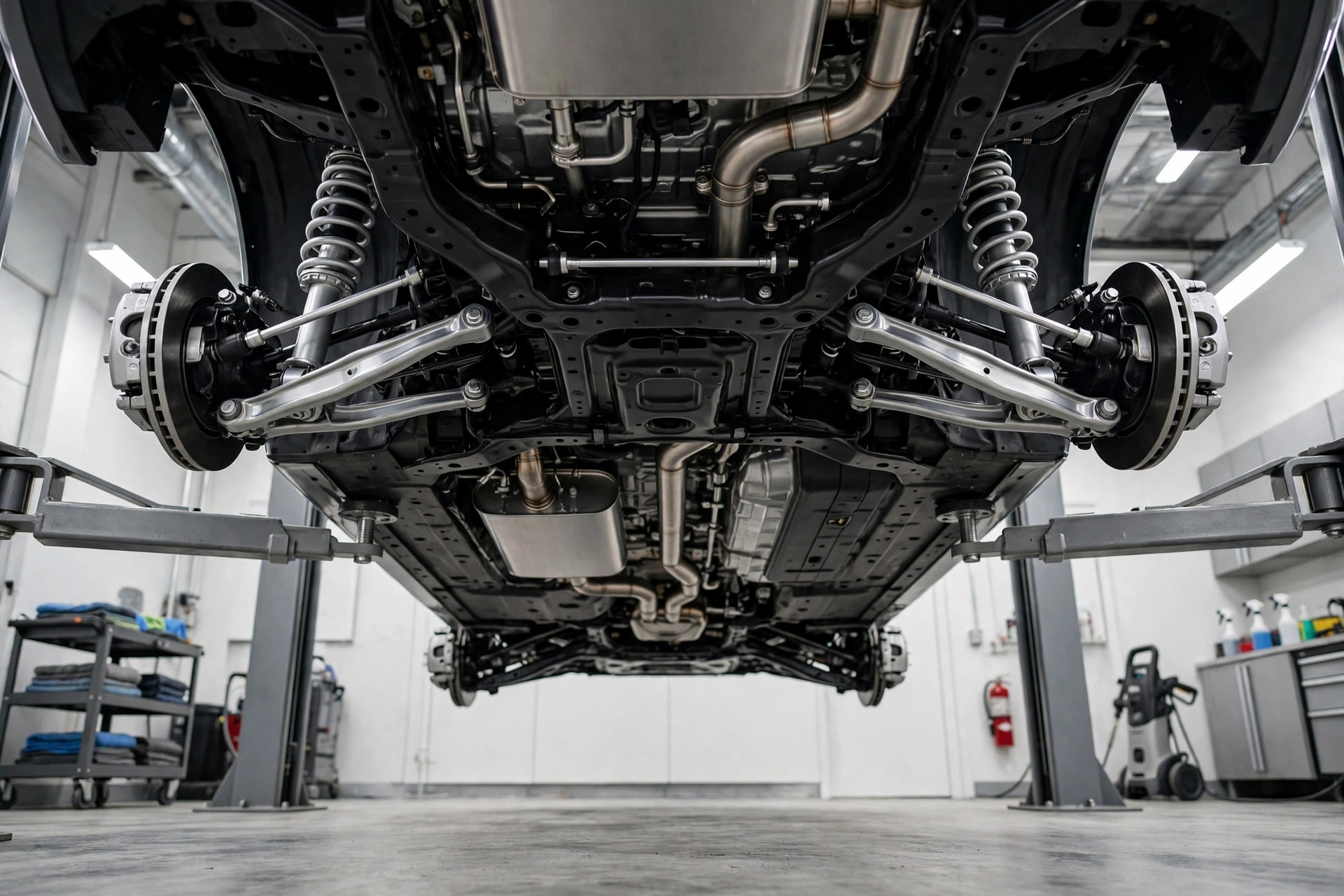
Inspection mirrors are the single most effective display tool at shows where the underside matters. Large, clean mirrors placed under the car let judges see the suspension, exhaust, and floor without getting on the ground, and they signal confidence: you would not invite inspection of a dirty underside. Position mirrors to show your best work, typically the front suspension and the exhaust. Keep the mirrors themselves spotless.
Some competitors use angled display stands or low ramps to tilt the car slightly, improving underside visibility. Check the show’s rules before bringing ramps, since not all venues allow them, and never compromise safety: the car must be stable and secure. When in doubt, mirrors alone are sufficient and universally accepted. That same attention to hidden areas matters at home, too, as in Cleaning Car Seat Rails and Tracks: Fixing Seats That Will Not Slide.
Coordinate the mirrors with your undercarriage preparation. Mirrors multiply the value of a detailed underside and multiply the embarrassment of a neglected one. If you have not detailed underneath, mirrors draw attention to exactly what you least want seen. Display tools amplify whatever is there, so make sure what is there deserves amplifying.
Information Boards and Signage
A good information board answers the judge’s first questions: year, make, model, key specifications, restoration or modification history, and any awards. Keep it concise and readable from a few feet away: large type, high contrast, and no walls of text. Include a photo or two of the car during restoration or in action, because process photos tell a story that words cannot. Laminate the board or print it on weatherproof material, because morning dew destroys paper.
Place the board where judges will see it during their walk, typically near the front of the car at a readable angle, but not blocking the view of the car itself. The board supports the car; it must never compete with it. One well-designed board beats three cluttered ones. If the show provides judging sheets, you do not need to duplicate their function; the board is for story, not for scores.
Spec sheets in protective sleeves are a useful supplement for technical judges, listing modifications, part numbers, and build details. Keep them brief and factual. Judges appreciate documentation that helps them verify correctness, especially in stock classes where originality claims matter. A binder of restoration photos, kept in the car or at the board, is the gold standard for serious entries.
At concours events, documentation binders are practically expected, and the habit scales down beautifully to local shows. The same care applies before you arrive, as in Car Detailing Brushes for Vents, Seams, and Buttons: Choosing the Right Bristle.
Canopy, Lighting, and Your Space
A canopy serves two purposes: it protects the car from sun and surprise rain, and it defines your space on the field. Choose a neutral-colored canopy that does not cast colored light on the paint; white or light gray is ideal. Make sure it is properly secured, because a canopy in the wind is a hazard to every car around it. Some shows restrict canopy sizes or placement, so check the rules.
Keep your space immaculate. All supplies, chairs, coolers, and personal items should be organized and out of the judging sightlines, ideally behind the car or under the canopy’s edge. Nothing kills a presentation faster than a nest of detailing supplies and fast-food wrappers next to a car you want judged as excellent. The space around the car is part of the display whether you plan it or not.
Lighting is rarely needed at daytime shows, but for indoor or evening events, a few battery-powered LED lights can highlight the car beautifully. Keep lighting subtle and neutral in color temperature; colored accent lighting is a matter of taste and show culture, and at formal events it reads as gimmicky. When in doubt, let the car speak for itself. Ropes and stanchions then handle the boundary between display and crowd.
Ropes and stanchions protect the car from the crowd, and at busy shows they are practical necessities. Use them when the venue allows and the crowd warrants it, but keep them unobtrusive: simple posts and rope, set at a distance that protects without creating a fortress. Over-roping a modest car looks pretentious; under-protecting a concours car at a crowded public show is asking for fingerprints. Display boundaries also communicate how you want people to interact.
A small sign asking visitors not to touch is perfectly acceptable and widely respected; most enthusiasts understand. What is not acceptable is scolding or hovering over spectators. The show etiquette around spectator interaction applies to your display: protect the car firmly but graciously, and remember that the public’s admiration is part of what makes showing fun. Keep the display accessible to judges, too.
Ropes should have an obvious entry point, mirrors should be positioned before judging, and the hood, trunk, and doors should be open when the judges are due. A display that the judges have to dismantle to do their job works against you. Set everything up so the judging walk flows naturally around the car.
Display Mistakes to Avoid
The most common display mistake is clutter: too many signs, too many props, and too much stuff competing with the car. Every element should earn its place by helping the judges or telling the story. If an item does neither, remove it. The car is the exhibit; everything else is supporting cast, and supporting cast should never upstage the star.
The second mistake is the sales pitch. For-sale signs, business cards scattered on the car, and promotional materials turn a show entry into an advertisement, and many shows prohibit them outright. Even where allowed, commercial clutter undermines the impression of a car shown for love of the hobby. If the car is for sale, say so discreetly to interested parties; do not billboard it.
The third mistake is neglecting the display after setup. Boards blow over, mirrors get dusty, and canopies sag. Check your display periodically through the day, especially before the judging window. A display that starts sharp and ends sloppy suggests the owner’s attention faded, and judges notice.
The best displays look as good at awards time as they did at arrival, because their owners maintain them.
Related posts:

If this read fired you up, Undercarriage Detailing for Car Shows: The Category Most Owners Ignore keeps the Detailing & Car Care momentum rolling.
Bookmark this guide — it will come in handy in the garage.

