
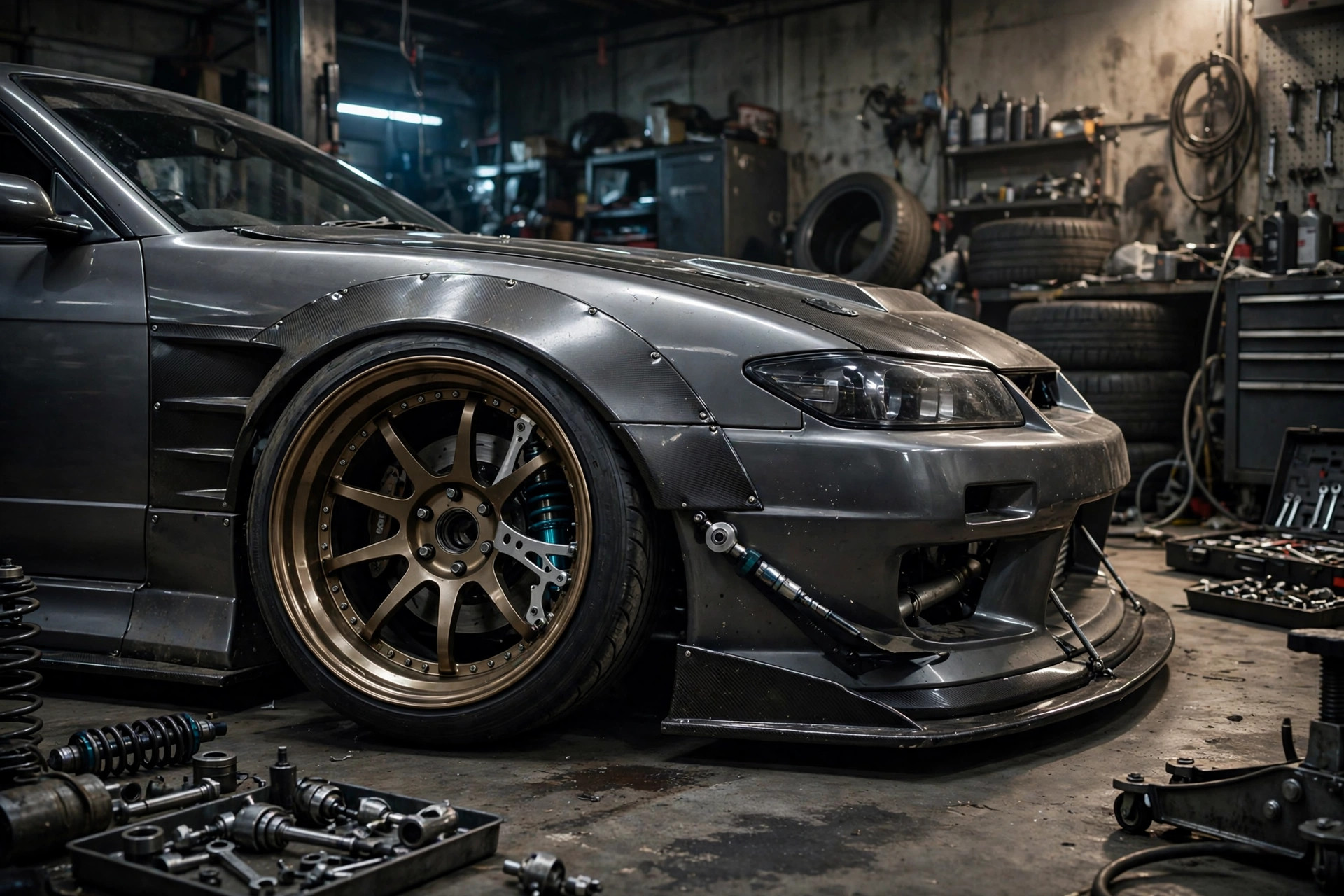
A well set up drift car feels like an extension of your body; a poorly set up one fights you at every corner. If you are a beginner asking what to change first, why each part matters, and how to spend in the right order, the good news is that a competitive grassroots drift setup is simpler and cheaper than most beginners expect. You do not need a professional build to learn: a handful of focused modifications to the suspension, differential, and steering transform a stock rear-drive car into a willing drift partner. This guide covers the essential drift car setup basics and lays out a sensible order for spending your money, aiming for a car that is predictable, durable, and fun.
Key Takeaways
- Setup Philosophy and Suspension Fundamentals — Drift setup philosophy differs fundamentally from grip racing setup.
- Alignment Settings and Differential Options — Alignment settings are free to change and profoundly affect handling, which makes them the best value modification in drifting.
- Steering Angle Kits Explained — Steering angle is how far the front wheels can turn, and more angle means bigger, more dramatic drifts.
- Power Goals, Reliability, and the Smart Order to Modify — Beginners consistently overestimate how much power they need.
Setup Philosophy and Suspension Fundamentals
Drift setup philosophy differs fundamentally from grip racing setup. A grip car is tuned to maximize traction; a drift car is tuned to break traction predictably and controllably. This means the priorities are stability at angle, linear responses to inputs, and durability under abuse rather than ultimate lap time. A setup that feels slightly loose and playful is usually better for learning than one that feels locked down and serious.
Predictability is the golden rule. Every modification should make the car’s behavior more consistent, not just more extreme. Stiffening the suspension reduces body roll and makes weight transfer more immediate, which helps you feel what the car is doing, while a proper differential ensures both rear wheels behave the same way every time. When the car responds identically to identical inputs, you can build muscle memory; when it surprises you, you build fear.
Resist the temptation to copy professional setups. Pro cars run extreme alignment, massive angle kits, and 1,000 horsepower because professional courses demand it. A beginner on a tight technical track needs a forgiving, moderate setup that communicates clearly. Start conservative, learn what each change does, and evolve the setup as your driving evolves.
The single most impactful modification for a beginner drift car is a set of coilovers. Factory suspension is soft, rolly, and designed for comfort, which makes the car vague and unpredictable at the limit. Coilovers replace the stock springs and dampers with adjustable units that lower the car, stiffen the ride, and allow corner balancing. The transformation in how the car feels is immediate and dramatic.
You do not need the most expensive coilovers on the market. A reputable mid-range set with adjustable damping offers everything a beginner needs. What matters most is that the damping is matched to the spring rates and that the units are rebuildable, because drift cars wear out dampers faster than street cars. The complete coilover guide is worth studying before you buy, so you understand spring rates and damping curves rather than just shopping by brand name.
Beyond coilovers, reinforce the chassis. Strut tower braces, subframe reinforcement, and upgraded bushings all reduce flex and make the car’s responses sharper. Polyurethane bushings are a popular upgrade: they transmit more vibration than rubber, but they eliminate the slop that makes stock cars feel vague. Focus on the rear subframe and differential bushings first, as these have the biggest effect on how the car behaves when sideways.
Alignment Settings and Differential Options
Alignment settings are free to change and profoundly affect handling, which makes them the best value modification in drifting. The three angles that matter are camber, caster, and toe. Camber is the inward or outward tilt of the wheel; drift cars typically run negative camber up front, around 3 to 4 degrees, so the tire contact patch stays flat when the car is at full steering lock and big angle.
Caster is the forward or backward tilt of the steering axis, and more positive caster gives stronger self-centering of the steering wheel. Drifters love high caster because it helps the wheel spin back naturally during transitions, reducing the arm work needed to catch slides. If your car allows caster adjustment, max it out within reason.
Toe settings fine-tune stability. A touch of toe-out up front sharpens turn-in response, while slight toe-in at the rear adds stability at angle. Rear toe is particularly sensitive: too much toe-out at the rear makes the car twitchy and unpredictable, which is the opposite of what beginners need. Start with mild settings, and only get aggressive once you can feel the difference each change makes.
The differential is what allows the rear wheels to rotate at different speeds in corners, and for drifting, you need both rear wheels locked together. An open differential sends power to the wheel with least grip, which means one-wheel burnouts and unpredictable slides. Every drift car needs either a welded differential or a proper limited-slip differential.
Welding the differential is the budget classic: the spider gears are welded solid so both axles turn as one. It costs almost nothing, never wears out, and provides perfectly consistent lockup. The downsides are tire chirping in parking lots, increased stress on axles, and handling quirks on the street. For a dedicated drift car or a tolerant daily driver, welding is the smartest money you will ever spend on drifting.
A clutch-type limited-slip differential is the premium alternative. It locks the wheels together under power but allows some differentiation off-throttle, making the car more civilized on the street. Quality LSDs are expensive, but they offer the best combination of drift performance and daily drivability. Viscous LSDs, found stock in many cars, are generally inadequate for serious drifting because they overheat and lose lockup quickly, so whatever you choose, the differential is non-negotiable: no drift car works properly without one.
Steering Angle Kits Explained
Steering angle is how far the front wheels can turn, and more angle means bigger, more dramatic drifts. Stock cars typically offer 35 to 40 degrees of steering lock, which is enough to learn on but limiting as you progress. Angle kits modify the steering geometry with new knuckles, extended lower control arms, and revised tie rod pickups to push lock toward 60 degrees or more.
For beginners, an angle kit is a luxury rather than a necessity. Learn to drift within stock steering lock first; it teaches you to manage angle with throttle and weight transfer rather than relying on steering to save every mistake. Once you can consistently hold slides at stock lock and find yourself running out of steering in transitions, you have earned an angle kit.
When you do upgrade, buy a complete kit from a reputable manufacturer rather than piecing together parts. Steering geometry is safety-critical: poorly designed angle modifications cause bump steer, binding, and unpredictable behavior that can end your day or worse. A proper kit maintains correct geometry through the full range of motion, and the difference in how the car feels at big angle is transformative. Pair the kit with the alignment knowledge above to dial in the full benefit.
Power Goals, Reliability, and the Smart Order to Modify
Beginners consistently overestimate how much power they need. A reliable 200 horsepower will teach you more about drifting than an unreliable 400 horsepower ever will. Before adding power, invest in reliability: an upgraded radiator, an oil cooler, and fresh cooling system components. Drifting generates sustained high-RPM heat that stock cooling systems were never designed for, and overheating is the number one day-ender at grassroots events.
When you do add power, do it in stages that preserve reliability. Basic bolt-ons like an intake, exhaust, and tune wake up most engines without compromising durability. Forced induction transforms the car but doubles the maintenance burden and the number of things that can break. Many experienced drifters advise staying naturally aspirated until your driving skill genuinely exceeds your car’s capability, which takes longer than most people expect.
Do not neglect the supporting systems. Upgraded engine and transmission mounts keep the drivetrain stable under the shock loading of clutch kicks. A baffled oil pan prevents oil starvation during sustained lateral loads. These unglamorous modifications are what separate cars that finish events from cars that get towed home, and they cost far less than the repairs they prevent.
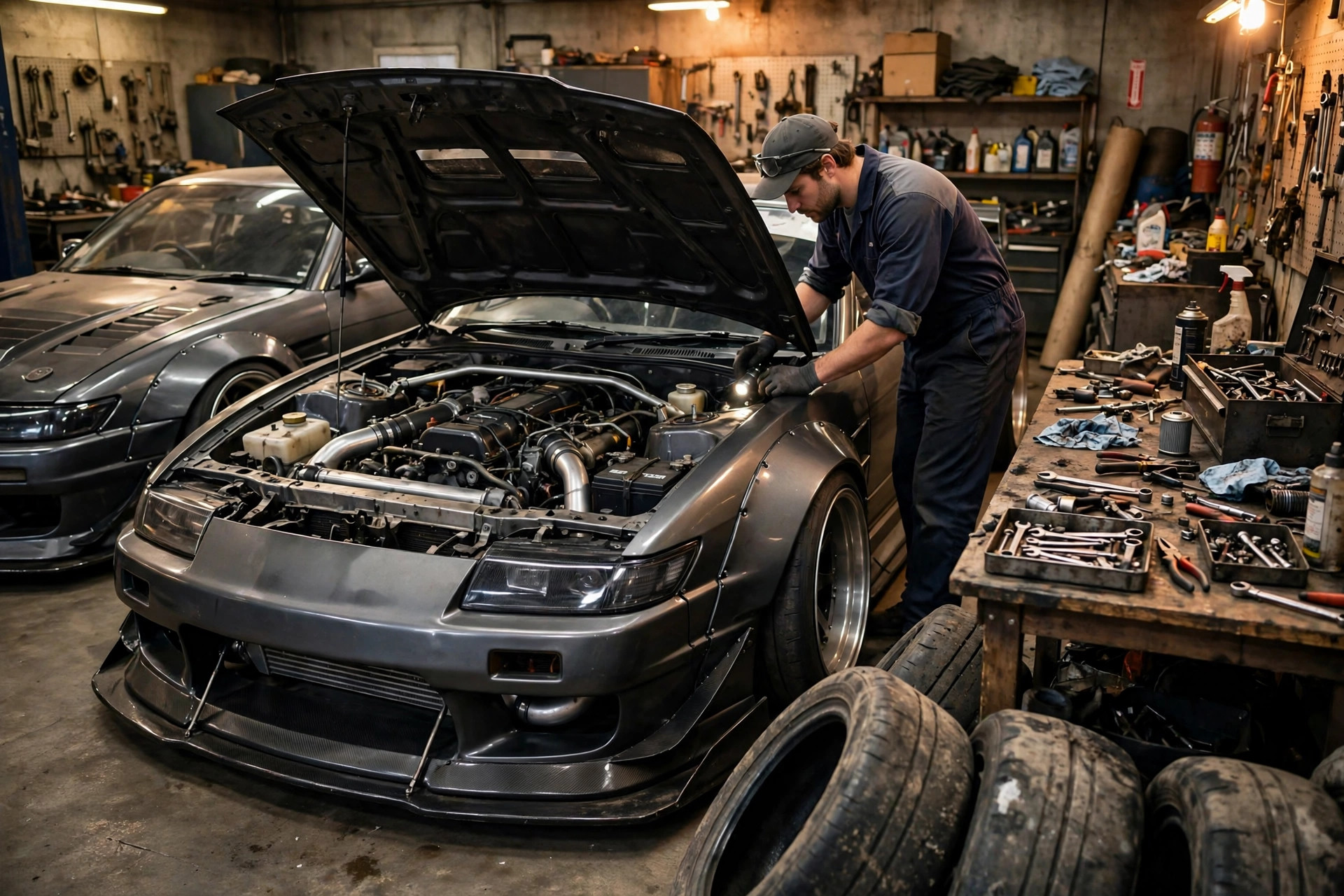
Having the right tools on hand makes this work far easier. Knowing the specialty sockets every car owner should know helps with jobs such as axle nuts, oil filters, and O2 sensors. And when you are cleaning out the cabin after dusty track days, understanding brushed vs brushless car vacuum motors helps you pick a tool that lasts.
Spend your money in this order for maximum learning per dollar:
- First, maintenance: fix everything broken, refresh fluids, and ensure the car is mechanically sound
- Second, the differential: weld it or install an LSD, because nothing else matters until both rear wheels work together
- Third, suspension: coilovers and an alignment
- Fourth, a bucket seat and steering wheel, because being planted in the seat and having precise steering control dramatically improves your driving
- Fifth, cooling upgrades; only after all of this should you consider power modifications or angle kits
This order exists because each step builds on the last. Maintenance gives you a reliable baseline, the differential makes the car driftable, suspension makes it predictable, the seat connects you to it, and cooling keeps it alive. Drivers who follow this path progress faster and spend less than those who bolt on a turbo first and wonder why the car is undrivable.
Study builds like the drift missile philosophy to see how experienced builders prioritize function over flash, and remember that the fanciest suspension in the world cannot fix bad driving. Seat time is the ultimate modification, so get the basics sorted and get to the track. Even air suspension has its place in car culture, as the air suspension setups show, but for learning to drift, simple coilovers and honest alignment beat complexity every time.
Related posts:
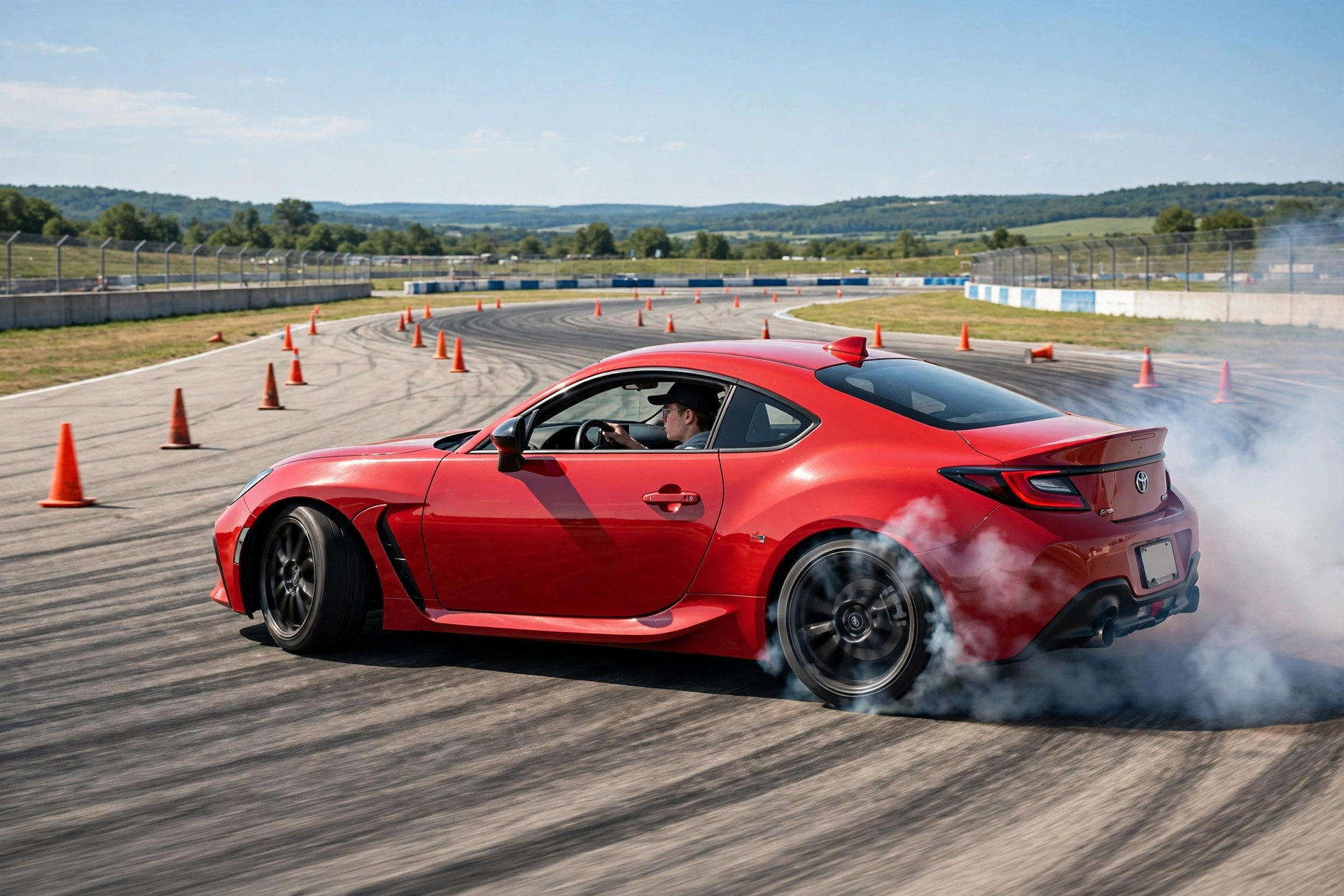

Into this kind of machine? Common Drifting Mistakes Beginners Make and How to Fix Them covers a close cousin worth your garage time.
Share this with a fellow driver or enthusiast who needs to see it.

