

Throttle gets the glory in drifting, but steering does the precision work, and any driver who wants to hold a slide or link two corners needs to understand how counter steering works, how the hands should move, and why transitions succeed or fail. Counter steering, turning the wheel opposite to the slide, is the defining visual of the sport and the skill that separates controlled drifts from spins. Transitions, the lightning-fast direction changes between linked corners, are where races are won and jaws drop.
This guide breaks down the steering techniques of drifting from first principles. It explains what happens at initiation, how to practise it, and how to fix the errors that hold beginners back.
Counter Steering Mechanics and Hand Technique
Counter steering means pointing the front wheels in the direction you want to go, which during a drift is opposite to where the car is pointing. If the rear slides out to the right, the car points left, and you steer right to keep it traveling straight. This feels deeply unnatural at first; every instinct says to steer where the car points.
Overriding that instinct is the first great hurdle in learning to drift, as any introduction to drifting (motorsport) makes clear. The amount of counter steer, called opposite lock, varies with the slide. Small slides need small corrections; big angle needs the wheel spun nearly to full lock.
The relationship is dynamic: as the slide grows, you add lock; as it shrinks, you wind it off. Your hands are in constant motion, making micro-adjustments that keep the car balanced. Watch in-car footage of professionals and notice how alive the steering wheel is, never still, always working.
Understanding why it works helps. The front tires still have grip during a drift; they are your anchor to the intended path. By pointing them where you want to travel, you let the front tires pull the car along while the rears slide.
Too little counter steer and the car spins; too much and the car straightens or snaps the other way. The sweet spot is the balance point you learn to feel. How you move your hands on the wheel matters enormously.
The two main approaches are shuffle steering, where your hands slide around the wheel feeding it through your grip, and fixed-grip steering, where your hands stay at nine and three and the wheel rotates within your grasp. For drifting’s huge steering inputs, most drivers use a hybrid: shuffle for the big initial catch, then fixed grip for fine control. The critical skill is letting the wheel self-center during transitions.
With proper caster alignment, the steering wheel naturally spins back toward center when you relax your grip. Skilled drifters exploit this: they guide the wheel rather than forcing it, letting physics do the fast work. Beginners who white-knuckle the wheel fight this natural motion and end up slow and exhausted.
Practice hand speed deliberately. Sit in the parked car and practice spinning the wheel from lock to lock quickly and smoothly, letting it slide through your hands. Build the muscle memory of the catch: the fast unwind as the slide starts, the pause as it settles, the feed as it ends.
Your hands should move with purpose but without tension; tension is the enemy of feel, and feel is everything.
Catching the Slide at Initiation
Catching the slide at initiation is the moment that defines the drift. As the rear breaks loose, the car begins to rotate, and you must unwind the steering fast enough to match the rotation. Too slow, and the car spins before you catch it; too fast, and you kill the slide before it develops.
The timing window is fractions of a second, which is why it must become reflex rather than thought. The key is to look where you want to go, not at what scares you. Your hands follow your eyes with remarkable fidelity; stare at the wall and you will steer into it, look down the track and your hands find the right lock automatically.
This is the most repeated advice in driver coaching because it is the most powerful: vision drives hands. Start practicing catches at low speed with small slides. Initiate gently, focus on unwinding the wheel at the right pace, and feel the car settle.
Gradually increase the aggression of your initiations as your catch reflex improves. There is no shortcut here; the reflex is built through hundreds of repetitions. But once it clicks, it never leaves you.
A reliable catch depends on a few linked habits working together:
- Look where you want to go, down the track, rather than at the wall or obstacle you fear.
- Unwind the steering fast enough to match the car’s rotation, without outrunning the slide.
- Start with gentle, low-speed initiations and increase aggression only as the reflex improves.
- Repeat the catch hundreds of times until it becomes reflex rather than conscious thought.
Transitions: Switching Direction Mid-Drift
Transitions are direction changes between linked drifts: the car slides left, then must slide right, with the switch happening in a heartbeat. The technique is a coordinated dance of steering, throttle, and weight transfer. As the first slide ends, you unwind the steering rapidly, often letting the wheel spin through your hands, while modulating the throttle to shift the car’s weight and initiate the opposite slide.
Timing is everything. Transition too early and you kill the first slide prematurely, losing speed and style. Transition too late and the car grips up or spins as it runs out of corner.
The ideal moment is when the first slide has done its work but before the car settles; you ride the momentum of the weight shift like a surfer catching a wave. This timing can only be learned by feel, through countless repetitions. Throttle plays a crucial supporting role.
A lift off the throttle shifts weight forward, helping the rear break loose in the new direction; a stab of throttle can kick the rear out aggressively. Different corners demand different throttle choreography, and advanced drivers blend these inputs seamlessly. Watch slow-motion footage of professional transitions and study the sequence: hands, feet, weight, slide.
Then go practice it until your body knows the sequence without thinking.
Manji Drifting and Rhythm Transitions
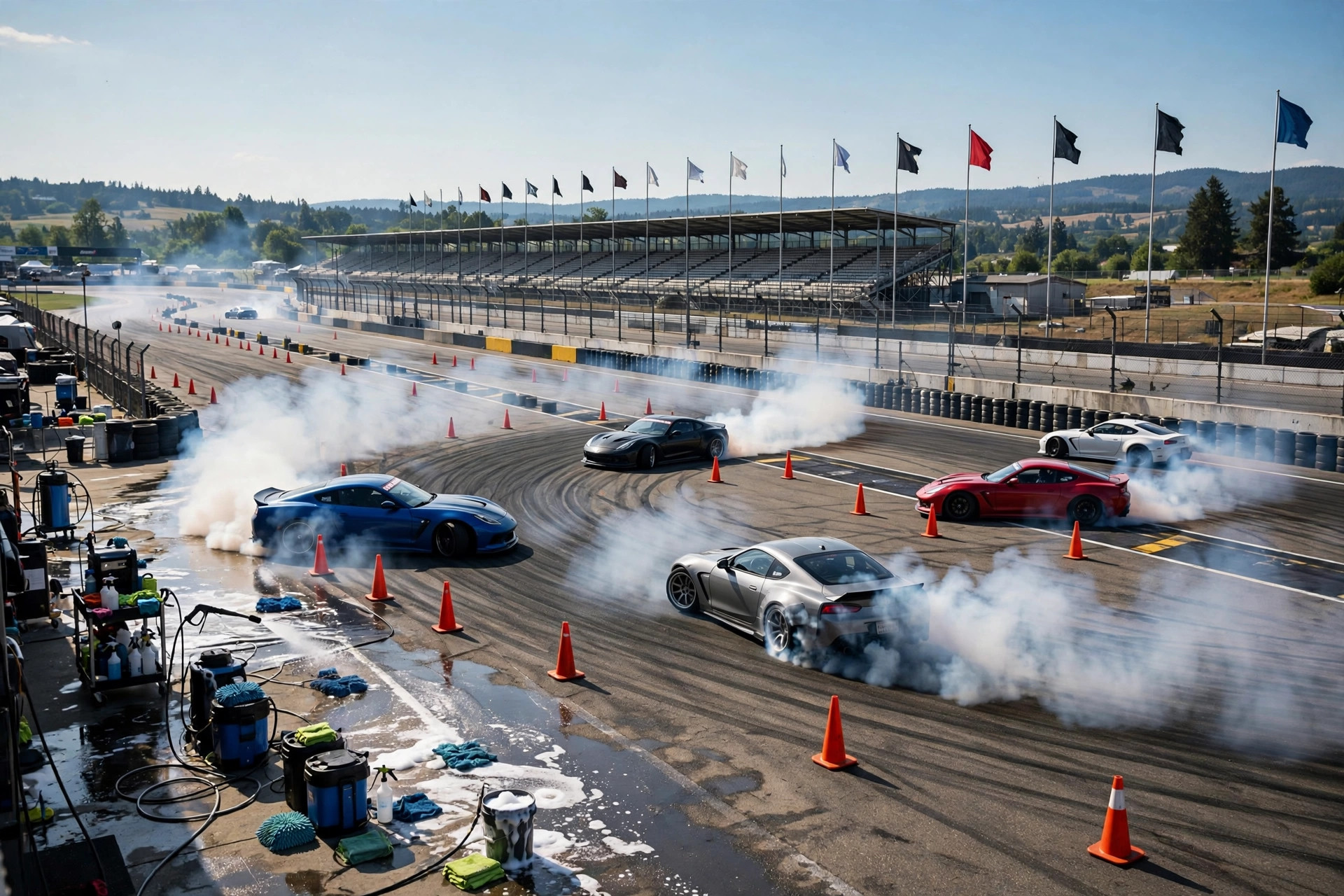
Manji drifting, named after the Japanese term for the zigzag pattern, is drifting in a continuous series of S-turns, usually on a straight. It is the purest expression of transition technique: no corners, just rhythm. The driver flicks the car left and right in a flowing sequence, and it looks spectacular when done well.
Manji is both a show technique and a serious training drill. The rhythm of manji teaches the metronome timing that underlies all transitions. Each flick must be committed but controlled, with the steering unwind timed to the weight shift.
Start slowly with wide, gentle weaves and tighten the rhythm as your confidence grows. The goal is a smooth sine wave of slides, not a series of panicked corrections. Beyond manji, practice flick initiations: the Scandinavian flick where you steer away before steering into the corner.
This technique loads the suspension and unloads the rear tires, producing initiations without handbrake or clutch. It is advanced, but understanding it deepens your feel for weight transfer, which improves every other technique you know.
Common Steering Mistakes and Drills to Sharpen Your Steering
The most common beginner steering mistake is sawing at the wheel: rapid, jerky back-and-forth corrections that upset the car. Sawing usually comes from panic and from looking at the wrong place. The fix is to slow your hands down, look ahead, and make deliberate inputs.
Smooth hands make smooth drifts; the wheel should move with purpose, not vibrate with anxiety. The second mistake is freezing: locking your arms and holding the wheel rigid as the slide develops. Frozen hands cannot catch a slide because they cannot move fast enough when the car rotates.
Consciously relax your shoulders and grip; think of holding a bird, firm enough to control, gentle enough not to crush. Relaxed hands are fast hands. The third mistake is over-correcting: applying full opposite lock for a small slide, which straightens the car violently or snaps it the other way.
Match your steering input to the slide’s size; small slides need small corrections. This calibration develops with experience, but you can accelerate it by practicing with conscious attention to input size. Ask yourself after each run: did my hands match the car, or fight it?
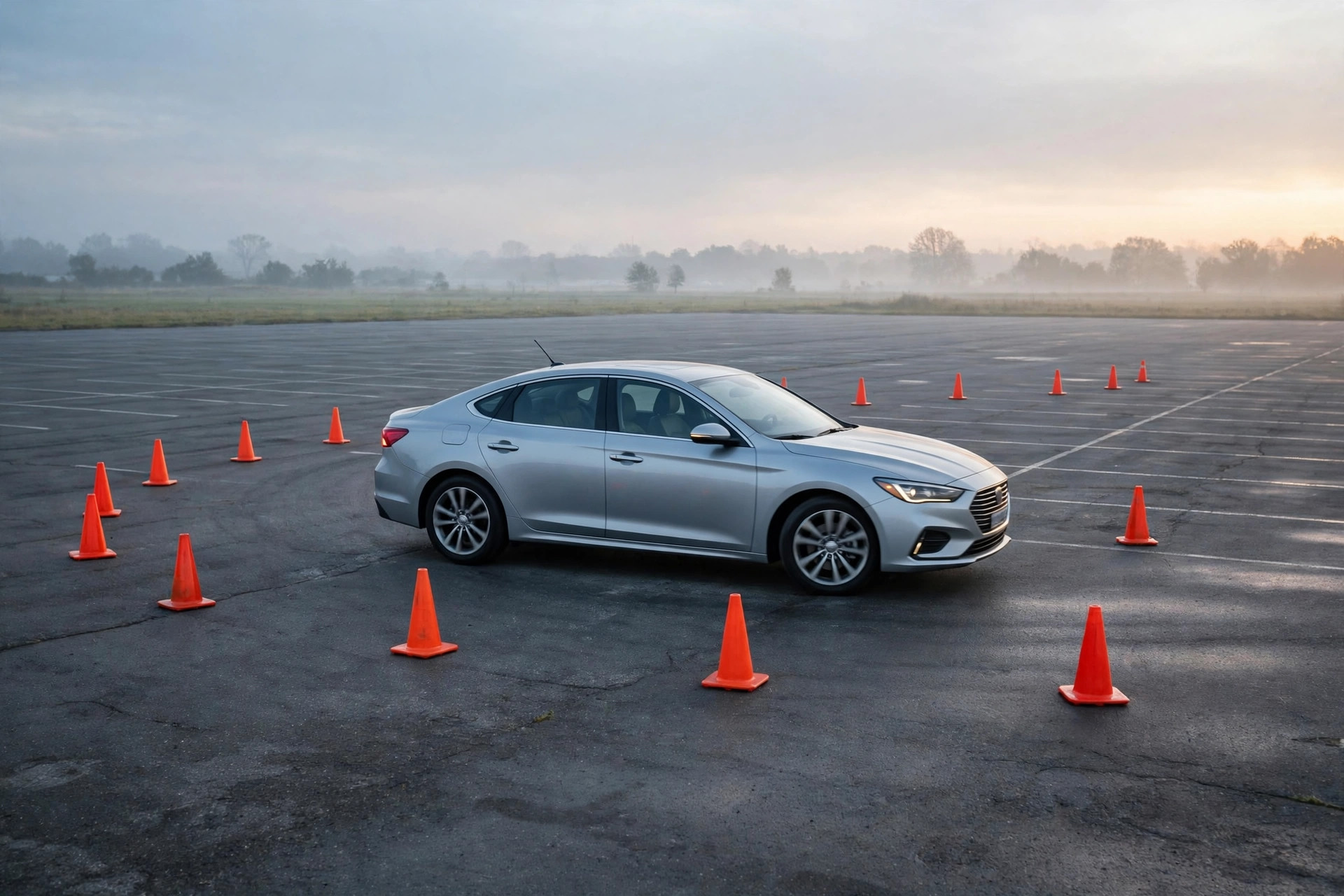
The slalom drill is steering training in its purest form. Weave through cones focusing on hand speed and smoothness, then add small slides between cones. Pay attention to how the wheel feels as grip comes and goes; this sensitivity is what you are training.
Ten focused minutes of slalom improves your hands more than an hour of unfocused sliding. The delayed-catch drill builds reflexes. Have a friend randomly call out slide directions while you drive slow circles, and practice catching the indicated slide as fast as possible.
The randomness prevents anticipation and trains genuine reaction. It feels silly, but it works; rally drivers have used versions of this drill for decades. Finally, study the masters.
Watch in-car footage from powerful drift cars to nimble Japanese drift machines and focus only on the driver’s hands. Notice the economy of motion, the relaxed grip, the way the wheel spins freely during transitions. Then compare with footage of yourself; the gap between the two is your curriculum.
Great steering is quiet, efficient, and almost boring to watch, which is exactly why it is so hard to learn and so satisfying to master. From the European drift builds to the legends of Initial D, every icon of the sport shares the same secret: hands that listen to the car. Keep your hands relaxed, your eyes ahead, and your inputs matched to the slide, and counter steering and transitions stop being separate tricks and become one fluent language of control.
Related posts:

Before you roll on, check out Learning Car Control in Empty Lots: Safe and Legal Practice — it builds on exactly what you just read.
Share this with a fellow driver or enthusiast who needs to see it.

