
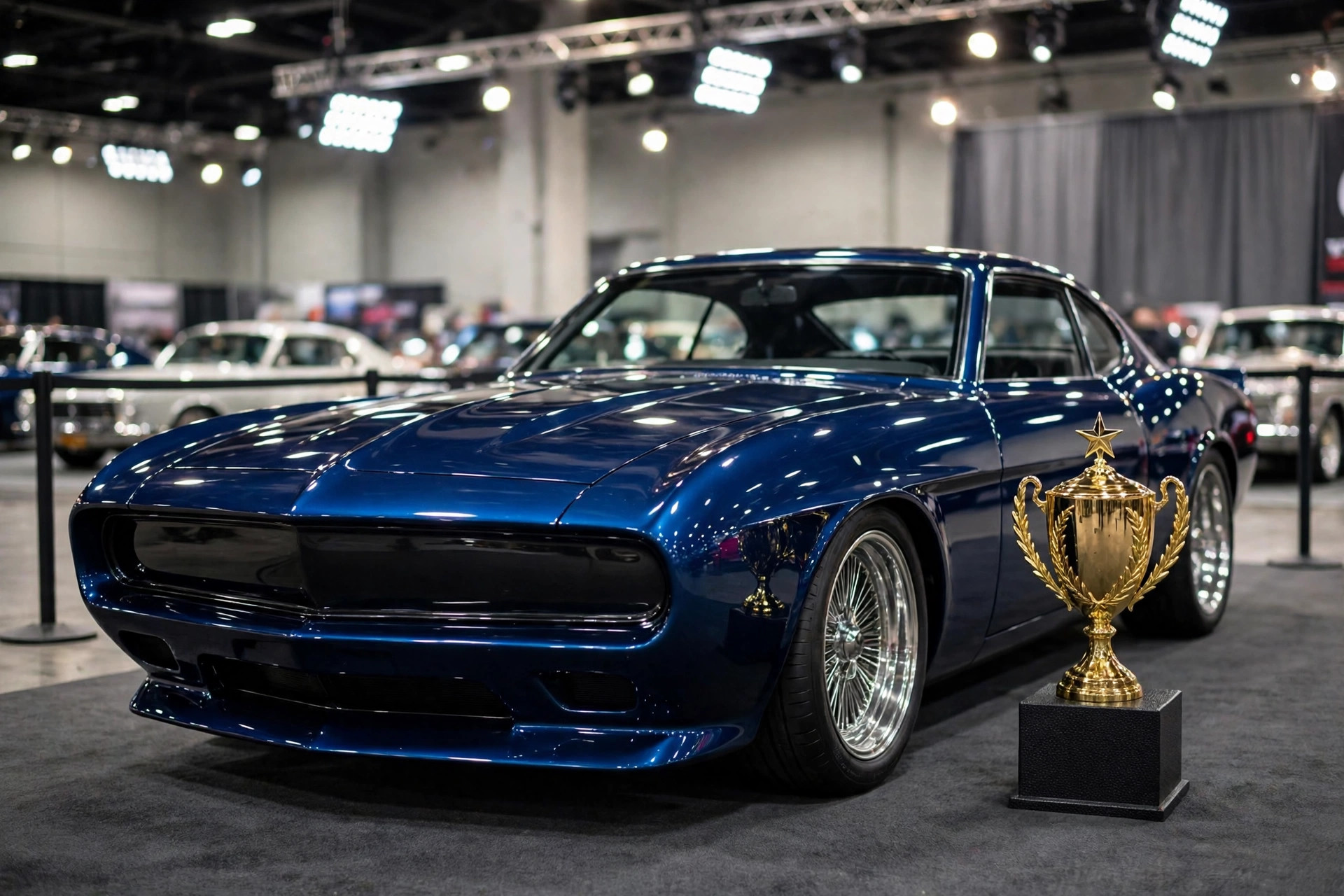
If you want winning car show strategies that actually work, the answer from experienced competitors is consistent: treat showing as a system, prepare the details judges notice, and learn from every score sheet. Ask ten trophy-winning competitors how they do it and you will hear the same themes. Preparation beats money, consistency beats luck, and the winners are usually the people who treat showing as a discipline rather than a lottery. There is no secret trick, but there is a body of accumulated wisdom about what works.
That wisdom is remarkably consistent across regions, car types, and decades of competition. This guide distills it into strategies you can actually use: how experienced competitors choose their battles, prepare their cars, read the competition, and improve season after season. Whether you are chasing your first class trophy or your fiftieth best-in-show, the principles are the same. The concours winners and the local show champions are playing the same game at different stakes, and the strategies transfer.
Winning Is a System, Not Luck
Consistent winners approach the season like a campaign. They pick their target shows in advance, schedule preparation around those dates, and track results and score sheets from event to event. This systematic approach beats the casual approach of entering whatever is nearby whenever the car happens to be clean. It concentrates effort where it counts and builds improvement on data rather than hope.
The system starts with honest assessment. Know your car’s strengths and weaknesses relative to its class, know which categories cost you points, and know how much preparation time each target show deserves. A major judged event gets weeks of preparation; a casual local show gets a good detail and a relaxed attitude. Allocating effort by event importance is how winners avoid burnout while still peaking when it matters.
Document everything. Keep a log of each show: the class entered, the result, the score sheet, what worked, and what did not. Over seasons, this log becomes a strategic asset, revealing which shows suit your car, which judges’ feedback to trust, and where your preparation time pays best. Winners are often just the competitors with the best records of their own history.
The formal end of that system is the tradition described under Concours d’Elegance, where the same habits are tested at the highest standard. The discipline scales down to any class, any region, and any budget.
Know Your Competition
Walk the class before judging. Experienced competitors arrive early, survey the cars in their class, and assess the field honestly. This is not about psyching yourself out; it is about calibration. Knowing whether you are the car to beat or the underdog changes nothing about your preparation, but it changes your expectations and your strategy for the day.
Study the regular winners in your region. What do their cars have in common? Usually it is not exotic parts but exceptional preparation: the details are right, the cars are spotless, and the displays are thoughtful. Emulate the habits, not the hardware.
The habits are free, and they are the actual difference between the regular winners and everyone else. Respect the competition publicly and study it privately. The show community is small, and reputations matter; the competitor who badmouths rivals finds fewer people willing to share advice, parts leads, and judging insights. The generous competitors, the ones who compliment good work and help newcomers, build the networks that surface the tips and opportunities that actually win trophies.
That habit of honest study applies when researching a future entry as well, including through a guide such as Genesis Crossover Specs.
The Details Judges Notice
Experienced winners obsess over the details judges check when classes are close: door jambs, the edges of the hood and trunk, the fuel filler area, the glass against the light, and the wheels from behind the spokes. These are the tiebreaker zones, the places where two well-prepared cars are separated. A pre-show routine that covers the tiebreakers systematically is worth more than any single modification. Before any event, that routine should confirm:
- Door jambs, hood and trunk edges, and the fuel filler area are clean and finished to the same standard as the exterior
- Glass reads clean against the light, and wheels are detailed from behind the spokes, not just on the face
- Paint, glass, trim, interior, engine bay, trunk, and underside have all received full attention, with the weakest area fixed first
- Everything functions: lights, gauges, windows, locks, and latches all work as they should
Consistency across the car matters more than brilliance in one area. Judges score the whole car, and a car with a perfect exterior but a neglected trunk reads as incomplete. Winners prepare every area to the same standard: paint, glass, trim, interior, engine bay, trunk, and underside all get full attention. The weakest area sets the ceiling, so find your weakest area and fix it first.
Function impresses. Everything should work: lights, gauges, windows, locks, and latches. Judges who find everything functional form an impression of a cared-for machine, and that impression colors the entire score sheet. The pre-show function check, done the night before every event, is the cheapest winning habit in the hobby.
Documentation, Story, and Consistency
Cars with documented histories score better and win more often, especially in judged classes. A binder with restoration photos, receipts, build records, and the car’s story gives judges context that elevates their evaluation. It shows the work behind the shine, and judges are human: understanding the effort makes them look more carefully and score more generously. This is especially true for restoration projects, where the binder of process photos proves the quality of work hidden under the paint.
Documentation turns a pretty car into a credible contender. The story matters most when it is honest. A survivor with forty years of patina and a documented history can beat a fresh restoration in the right class, because the story is the value. Do not invent provenance or exaggerate the restoration; judges and fellow competitors know the cars and will spot fiction.
The true story, told well, is always enough. Share the story beyond the judges, too. Spectators love a good car story, photographers love documented builds, and the attention your car draws contributes to the people’s choice calculus at dual-format shows. A car with a story gets remembered; a car without one gets glanced at.
In a hobby built on passion, the narrative is part of the product, for a survivor or for a newer car researched through guides such as Affordable Volkswagen Luxury Car. Show up, too, because attendance is a strategy.
The competitors who win season championships are the ones who enter consistently, accumulate points, and stay visible. Many series and club championships reward participation across the season, and you cannot win a championship from your garage. Pick a realistic schedule and keep it. Consistency in preparation matters as much as consistency in attendance.
The car should present at the same high standard every time, which means the between-show maintenance routine is as important as the pre-show push. Winners do not rebuild the car before every event; they maintain it so that pre-show prep is a refresh, not a rescue. This is sustainable; the boom-and-bust cycle is not. Learn from every event, win or lose.
Review the score sheet, note what the winners did differently, and adjust. The competitors who improve fastest are the ones who treat every show as data, and the data compounds. A tenth of a point here, a corrected detail there, and over seasons the consistent learner becomes the consistent winner.
Grace in Victory and Defeat
How you win matters as much as whether you win. Congratulate the other winners, thank the organizers and judges, and be gracious about close calls. The show community remembers behavior longer than results, and the respected competitor gets the benefit of the doubt in every future interaction, from judging to parts deals to friendships. Trophies tarnish; reputations do not.
Losing well is a competitive skill. Every loss contains information: the score sheet, the winning car, and the judge’s comments. Extract the lesson, apply it, and come back better. The competitors who handle losses with curiosity instead of bitterness are the ones still winning years later, because they never stopped learning.
Bitterness, by contrast, is a retirement plan. Remember why you started. Beneath the strategy and the score sheets, car showing is about love for the machines and the people who love them. The etiquette of the hobby, the friendships, the shared knowledge, and the sight of a field full of beautiful cars on a perfect morning: that is the real prize, and the trophies are just souvenirs.
Winners who remember this enjoy the hobby for decades. Those who forget it burn out, no matter how many trophies they take home.
Related posts:
Whether you wrench, drive or just admire, the Car Reviews & Features category has more miles to offer.
Bookmark this guide — it will come in handy in the garage.

