
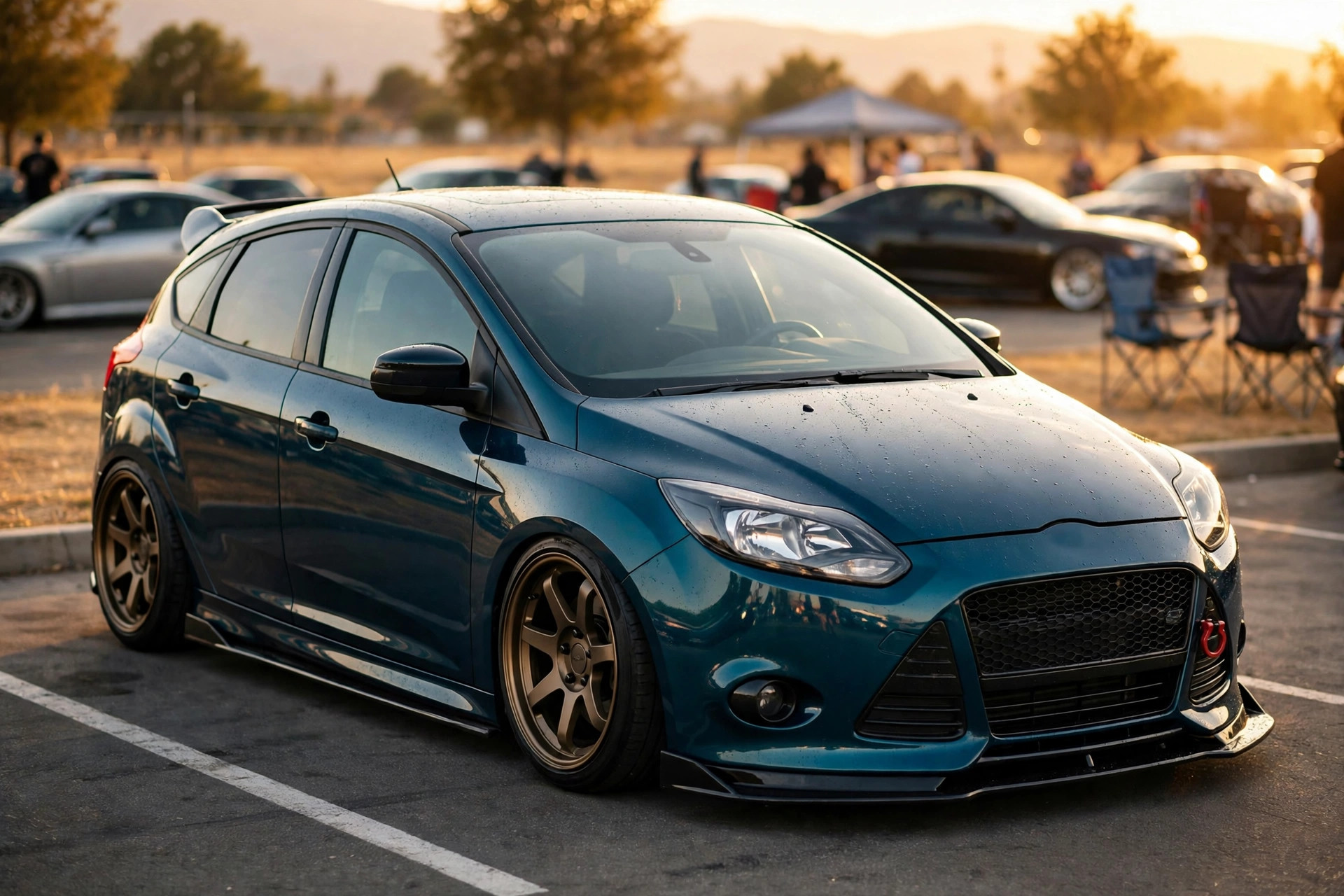
If you want to build a show car on a budget that still impresses judges, this guide explains what to buy first, why preparation beats price, how to stretch every dollar, and when patience does the heavy lifting. Who wins on a budget is rarely the owner who spent the most, but the owner who prepared the most thoroughly. Where your money goes matters far more than how much of it you have.
There is a persistent myth in the car show world that trophies are bought, not earned. The myth survives because expensive cars do win, but it misreads why they win. They win because their owners prepared them thoroughly, not because the parts cost a fortune.
Talk to judges and they will tell you the same thing: some of the most impressive cars on any field are modest machines owned by people who spent time instead of money. Building a show car on a budget is a discipline of priorities. Every dollar and every hour goes where judges actually look, and nothing goes to modifications that impress only the owner.
This guide lays out the budget strategy that works: where to spend, where to save, which cheap upgrades punch above their weight, and how patience compounds into a car that competes with builds costing five times as much. The casual, low-pressure world of cars and coffee meetups is the perfect place to start testing what works before committing to judged competition, and the broader car show tradition has always made room for exactly this kind of owner-built entry.
The Budget Builder’s Philosophy
The core insight is that judges score condition and execution, not cost. A perfectly detailed $8,000 car beats a neglected $80,000 car in any judged class they can fairly share, and in budget-appropriate classes the expensive car is not even in the room. Your competition is other owners at your level, and among them, the winner is whoever prepared best.
Money buys speed; it does not buy points directly. This reframes the budget as an advantage. Limited money forces choices, and choices force taste.
The budget builder who picks one coherent theme and executes it with care will beat the builder who scattered money across mismatched parts. Constraints produce the clean, intentional look that judges reward, while unlimited budgets often produce the cluttered look that judges deduct. Some of the cleanest show cars in the hobby were built by owners who could not afford to do it wrong twice.
Set a real budget and track it. The number matters less than the discipline, because knowing what you have spent keeps you from the half-finished-project trap, where money runs out with the car apart. A finished budget car beats an unfinished expensive car every time, because judges score what is in front of them, so finish what you start, even if finishing means choosing the simpler option.
That lesson holds at every price point. Reading about extremes, from Bentley Pickup Exterior 2026 to value-focused models, changes nothing about the judging standard. Condition and execution still decide the score.
Where the Money Actually Goes
Detailing supplies first. For a few hundred dollars, you can own everything needed to keep a car at show standard indefinitely: wash supplies, clay, polish, wax or sealant, wheel and glass cleaners, interior products, and microfiber. This is the highest-return spending in budget show building, because detailing affects every judging category and the supplies last for dozens of shows.
No modification costing ten times as much improves scores across the board the way proper detailing does. Maintenance second. Fix the leaks, replace the worn bushings, service the brakes, and make everything work.
Judges deduct for mechanical neglect, and a car that runs right is a car you can drive to shows, which saves trailer money. Maintenance also protects the detailing investment, because there is no point polishing an engine bay that is still leaking oil. The unglamorous mechanical work is the foundation everything visible sits on.
Appearance third, and only after the first two are handled. This is where most budget builds go wrong, spending on wheels or body kits while the paint is swirled and the interior is tired. The correct order is always: make it right, make it clean, then make it yours.
Appearance modifications on a well-maintained, well-detailed car look like taste, while the same modifications on a neglected car look like a disguise. Spend in this order, every time:
- Detailing supplies first, because they lift every judging category.
- Maintenance second, so leaks, bushings, and brakes stop costing points.
- Appearance last, only after the car is right and clean.
Great Paint and Wheels Without Overspending
A professional show-quality respray costs more than many budget cars are worth, so budget builders win the paint game differently: through correction, not repainting. Machine polishing removes swirls and oxidation and can transform tired paint for the cost of a polisher, pads, and compound. The chameleon paint finishes and custom paint world gets the attention, but at local shows, glossy, well-corrected factory paint in good condition scores excellently and costs almost nothing beyond effort.
Touch-up work handles the rest. Dr. ColorChip-style systems, touch-up paint with careful wet sanding, and trim restoration products address the chips and flaws that catch judges’ eyes. The goal is not perfection but uniformity: paint that looks consistent and cared for across the whole car, because judges deduct for the flaws that stand out.
Protect what you have. A quality sealant or wax, applied regularly, keeps corrected paint looking good and makes show-morning preparation faster. The two-tone classics remind us that interesting factory paint, kept in great condition, has its own appeal that no budget custom job can match, so work with the paint you have before dreaming about the paint you want.
Wheels are the most visible modification on any car and the best value in budget appearance. A clean set of used wheels in good condition, properly cleaned and detailed, transforms a car’s presence for a fraction of new-wheel prices. The used market is full of quality wheels from owners who upgraded, and patience and fitment research turn someone else’s cast-offs into your car’s best feature, as long as they fit correctly.
Tires matter as much as wheels. Fresh, correctly sized tires with clean sidewalls look purposeful, while worn, mismatched, or dry-rotted tires suggest neglect no matter how nice the wheels are. Budget builders should prioritize tire condition over tire brand, because a set of decent all-seasons in good shape beats premium tires worn to the cords, so keep the sidewalls dressed and the wheels spotless.
Stance is free or cheap and changes everything. Proper tire pressures, a careful alignment, and, where appropriate, modest lowering through affordable springs or adjusted suspension transform how a car sits. The key word is modest, because slammed cars with ruined geometry and rubbing tires collect deductions for fitment and practicality, while a car that sits right, with even gaps and sensible ride height, looks expensive regardless of what the suspension cost.
DIY Modifications That Score Points
The best budget modifications are the ones that look like care: debadging done cleanly, trim restored or replaced, emblems polished, weatherstripping renewed, and lighting restored. Each costs little and each removes a deduction or adds a merit. Judges notice the accumulation of small correct details more than any single part, because the details signal an owner who pays attention.
Interior DIY offers huge returns. Deep cleaning, dyeing faded plastics, replacing worn pedal pads and shift knobs, and reupholstering tired panels are all achievable on a budget and all visible to judges. A budget interior that is spotless and coherent beats an expensive interior that is dirty or mismatched, and the cabin is where owners spend their own time, so judges expect it to show care.
Engine bay DIY follows the same logic: cleaning, painting, and dressing cost little and score in workmanship. New hoses, dressed plastics, painted brackets, and polished covers transform a bay for the price of supplies and weekends. This is the budget builder’s secret weapon, because engine bays are where most competitors underinvest, and a detailed bay on a budget car surprises judges in the best way.
Value thinking helps here too. Guides such as Affordable Volkswagen Luxury Car show how much presentation you can get without flagship money. Your build makes the same argument on the show field, one finished detail at a time.
Playing the Long Game
Budget show cars are built over seasons, not weekends. The winning strategy is to pick a plan, then execute one project at a time, finishing each before starting the next. This season: paint correction and detailing.
Next season: wheels and suspension. The season after: interior refresh. Each season the car gets better, each season it scores higher, and the total spend stays manageable because it is spread across years.
Buy used, buy patiently, and learn to do the work yourself. The used parts market, forum classifieds, and swap meets are the budget builder’s supply chain, and the skills learned doing the work are permanent. Every project teaches techniques that make the next project cheaper and better, and owners who build their own cars also tell better stories to judges, because they can explain every choice and every repair from personal knowledge.
Finally, show the car at every stage. Do not wait until it is finished, because it is never finished, and showing it now teaches you what judges see. The score sheets from early shows guide the later spending, which means the car improves in exactly the areas that matter, and the budget builder who shows up, learns, and improves season after season is the one holding the trophy eventually.
Related posts:
Into this kind of machine? Concours vs Local Car Shows: Which Is Right for You covers a close cousin worth your garage time.
Bookmark this guide — it will come in handy in the garage.

