
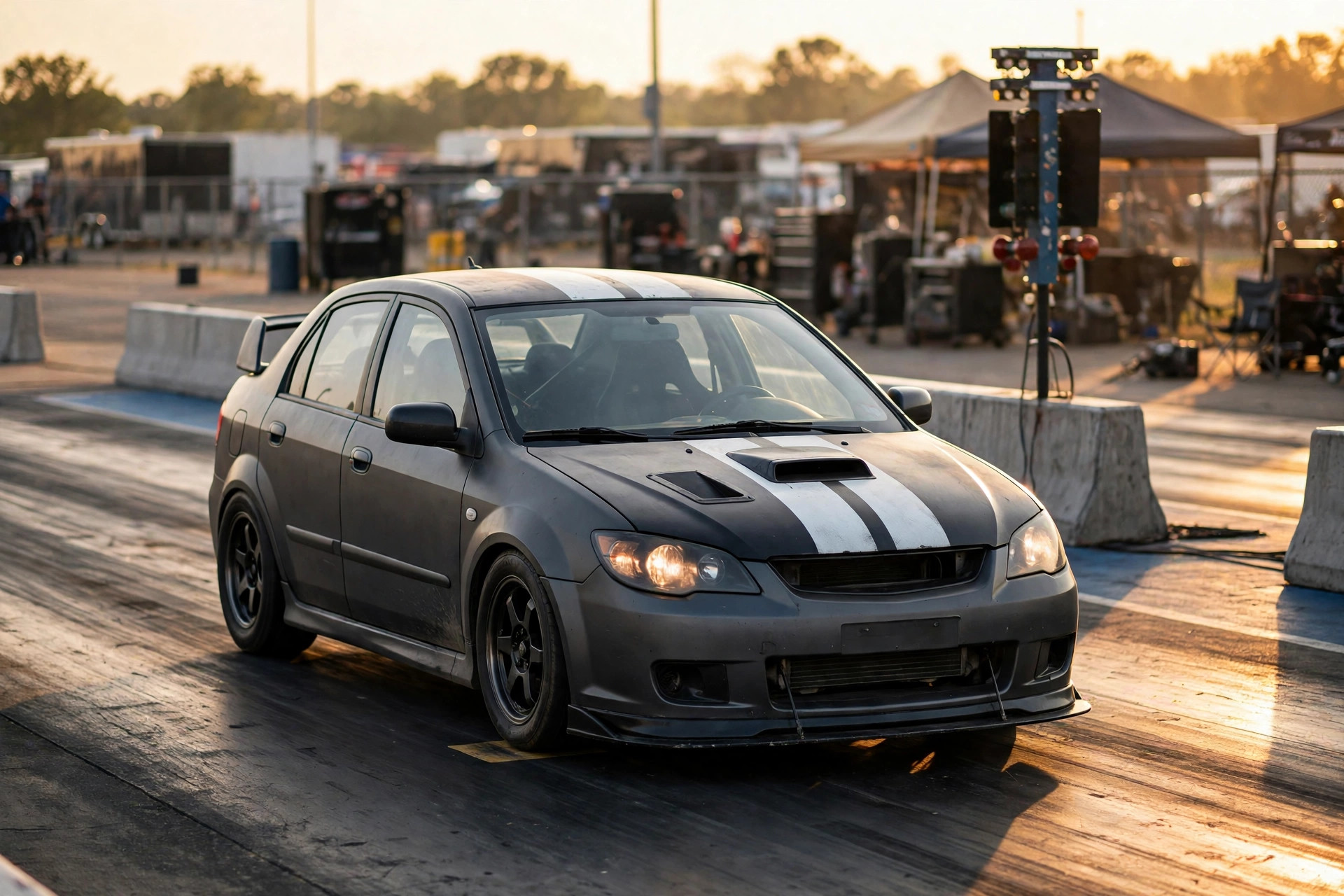
How much does it cost to start drag racing, who can actually afford it, and where does the money go when you do? Despite a reputation earned by six-figure professional teams on television, grassroots drag racing is genuinely the most affordable motorsport in existence. You can start with the car you already own, a helmet, and a modest entry fee, and be making passes on your first night.
The real question is not whether you can afford to start, but how far you want to go and how fast, because costs scale with ambition far more than with the sport itself. This guide breaks down every cost category honestly: what you must spend, what you should spend, what can wait, and the hidden expenses that surprise newcomers. Whether your budget is two thousand dollars or twenty-five thousand, there is a sensible path in — and understanding the full picture before you spend a dime is the best money-saving move you will ever make.
Entry Fees, Licenses, and Memberships
The core cost of participation is refreshingly small. Test-and-tune nights typically cost between twenty and fifty dollars for unlimited runs, and bracket race entry fees run from thirty to around a hundred dollars depending on the track and the payout. Many tracks offer season memberships or pit passes that reduce the per-event cost for regulars.
Spectator admission for your crew is usually under twenty dollars. Compared to any other motorsport, the seat time per dollar is extraordinary. It is the line item most newcomers overestimate before their first visit. As drag racing has grown at the grassroots level, that low cost of entry is a big part of why.
Licenses enter the picture as you get quicker
Licenses enter the picture as you get quicker. Sanctioning-body competition licenses are required once you cross into the 9-second zone or run certain classes, and they involve a physical exam, an application fee, and observed runs, typically costing a few hundred dollars all in. Below that level, your driver license and tech card are enough.
Some racers also join track points programs for a yearly fee, which makes them eligible for season championships and banquet awards. Budget a few hundred dollars per season for entries if you race monthly, or over a thousand if you chase points every weekend. Either way, this is the smallest line item for most racers.
Safety Gear: The Non-Negotiable Spending
Safety gear is the one category where economizing is false economy, but the entry level is reasonable. A quality Snell-approved helmet costs between two and four hundred dollars and lasts for years across the certification period. Long pants and closed-toe shoes you already own satisfy the clothing minimum for slower cars.
As your car gets quicker, budget for a fire jacket, racing gloves, and eventually a full SFI suit, with costs stepping up at each ET threshold. A good set of racing gloves and a proper helmet are worth buying right the first time, since fit and comfort affect your driving. Harnesses, when required, run a few hundred dollars and must be replaced when they expire, so check dates before buying used.
The key budgeting insight is to buy safety gear for the ET you plan to run, not just the ET you run today, because rebuying gear mid-season wastes money. Allocate five hundred to a thousand dollars for a complete beginner safety setup. Consider it the entry ticket that never depreciates in value.
The Car: What You Actually Need
You need a safe, reliable car, not a fast one. The ideal first drag car is whatever dependable vehicle you already own, provided it passes tech inspection: no leaks, solid battery hold-down, good tires, working brakes. Thousands of racers started in daily drivers, and bracket racing’s handicap system means your 15-second sedan can genuinely compete.
Spending money on a dedicated race car before you have made twenty passes is the classic beginner financial mistake. When you are ready for a dedicated car, the used market is your friend. Solid, simple platforms with strong aftermarket support — think older Mustangs, Camaros, Civics, and similar — trade for a few thousand dollars in race-ready condition, and their parts are cheap and plentiful.
A budget-friendly used car makes an outstanding first race car precisely because you will not cry when it needs work. Budget two to five thousand dollars for a decent starter race car, or zero if you begin with your daily driver. Resist the urge to buy someone’s half-finished project unless you can verify exactly what is done.
Tires, Fuel, and Running Costs
Running costs are where the per-event math lives. A set of drag radials costs several hundred dollars and lasts a season or more of moderate use; true slicks cost more and wear faster but deliver more traction. Budget for tire replacement as a recurring cost, not a one-time purchase, and remember that stickier tires accelerate wear on the rest of the drivetrain.
Fuel is modest for test-and-tune nights but adds up for frequent racers, especially if your combination demands race fuel at ten dollars or more per gallon. Maintenance is the quiet budget line: oil changes come more often, brake pads wear, clutches have finite lives, and things break. A realistic maintenance reserve is a few hundred dollars per season for a mild car, scaling up with power.
Travel costs, food, and the occasional broken part on race day round out the picture. The disciplined approach is to set aside a fixed amount per event for consumables and breakage, so a bad night does not end your season. Racers who budget for breakage keep racing; racers who do not, stop.
Modification Budget Tiers
Modifications should follow a disciplined order: reliability first, then traction, then weight reduction, then power. At the budget tier, under one thousand dollars, the best buys are maintenance items that restore lost performance, a proper tune-up, good tires, and free weight removal. These unglamorous moves often gain more ET than expensive parts on a neglected car, and a used set of drag radials and a thorough weight-strip can transform a daily driver for very little money.
At the mid tier, one to five thousand dollars, you enter bolt-on territory: intake, exhaust, gearing changes, torque converters for automatics, suspension upgrades for traction, and mild power adders like small nitrous kits. This is where most bracket racers live happily for years. Above five thousand, you are into serious builds: forced induction, engine internals, transmissions, and chassis work, with costs scaling rapidly.
The golden rule at every tier is to spend on the constraint. If the car spins, buy traction before power; if it hooks and the ET still disappoints, then buy power. Chasing the wrong constraint is how budgets evaporate.
Hidden Costs Nobody Warns You About
Several costs surprise every newcomer. Trailering is the big one: once your car is no longer street-legal or street-practical, you need a trailer and a tow vehicle, which can double your investment overnight. Tools accumulate endlessly, from the torque wrench you should own to the specialty tools each new project demands, and storage for the car, the trailer, and the parts stash costs money or goodwill.
Then there is the cascade effect: stickier tires break axles, more power needs a better transmission, a quicker ET mandates a cage and safety gear, and each upgrade triggers the next. This is normal and should be planned for, not feared. Time is the final hidden cost: a race car consumes weekends, and the opportunity cost is real.
Go in with open eyes and budget a contingency of twenty percent over every estimate. You will find the sport remarkably affordable for the thrill it delivers. Forewarned is forearmed, and the racers who last are the ones who planned for the hidden costs instead of being surprised by them.
Three Sample Budgets: $2,000, $10,000, $25,000
The three tiers below show how the same sport fits very different wallets:
- $2,000: race your daily driver — roughly three hundred on a helmet, fifty per event on entries for a partial season, a few hundred on maintenance and a tire pressure gauge, and the rest held as a breakage reserve.
- $10,000: a dedicated used race car for around four thousand, fifteen hundred on safety gear including a harness and fire jacket, a thousand on drag radials and wheels, and a thousand on suspension and gearing for traction, with the rest for entries, maintenance, and surprises.
- $25,000: a serious bracket car with a built drivetrain, a mild power adder, full safety equipment for the 10s or 11s, a trailer setup, and a comfortable operating budget for a full season.
At two thousand dollars, do free weight removal, learn to launch, log every pass, and run brackets. This budget wins rounds, because consistency beats spending, and it teaches the driving skills that money cannot buy. Many seasoned racers insist this is the best way to start, and the preparation mindset from a first track day guide applies perfectly to stretching a small budget.
At ten thousand dollars, the result is a genuinely competitive bracket car that can win local events. At twenty-five thousand, the program steps up in every category at once. Each tier is a complete, enjoyable program; the sport does not require the top tier to be deeply rewarding, and the smartest money in drag racing has always been spent on seat time first.
Related posts:
Into this kind of machine? What Is Drifting and How It Is Judged in Competition covers a close cousin worth your garage time.
Found this useful? Pass it on to a friend who would appreciate it too.

