
- Golf Clubs and Other Long, Awkward Items
- The Gym Bag Zone: Containing Moisture and Odor
- Ball Sports: Taming the Rolling Chaos
- The Quick-Grab Layout: Zones, Not Piles
- The Dirty Gear Protocol: Mud, Sweat, and Grass Stains
- Rotating Gear With the Seasons
Sports gear is the trunk’s most demanding tenant. Golf clubs are long, heavy, and oddly shaped. Gym bags are damp and smelly. Soccer balls, basketballs, and cleats each want different treatment, and all of it has to coexist with the everyday cargo you still need to carry. The result, in most trunks, is a tangled pile where finding one shin guard requires excavating everything else, and where the smell of old gym socks achieves a permanence that borders on structural.
This guide designs a sports gear trunk setup that actually works: dedicated zones for different sports, smart handling of long items like golf clubs, moisture and odor control for gym gear, and a layout that lets you grab what you need without unpacking the rest. We will also cover how to keep the mess from migrating into the cabin. A good trunk organizer forms the backbone of the system, and a washable cargo liner underneath makes the whole thing forgiving.
Golf Clubs and Other Long, Awkward Items
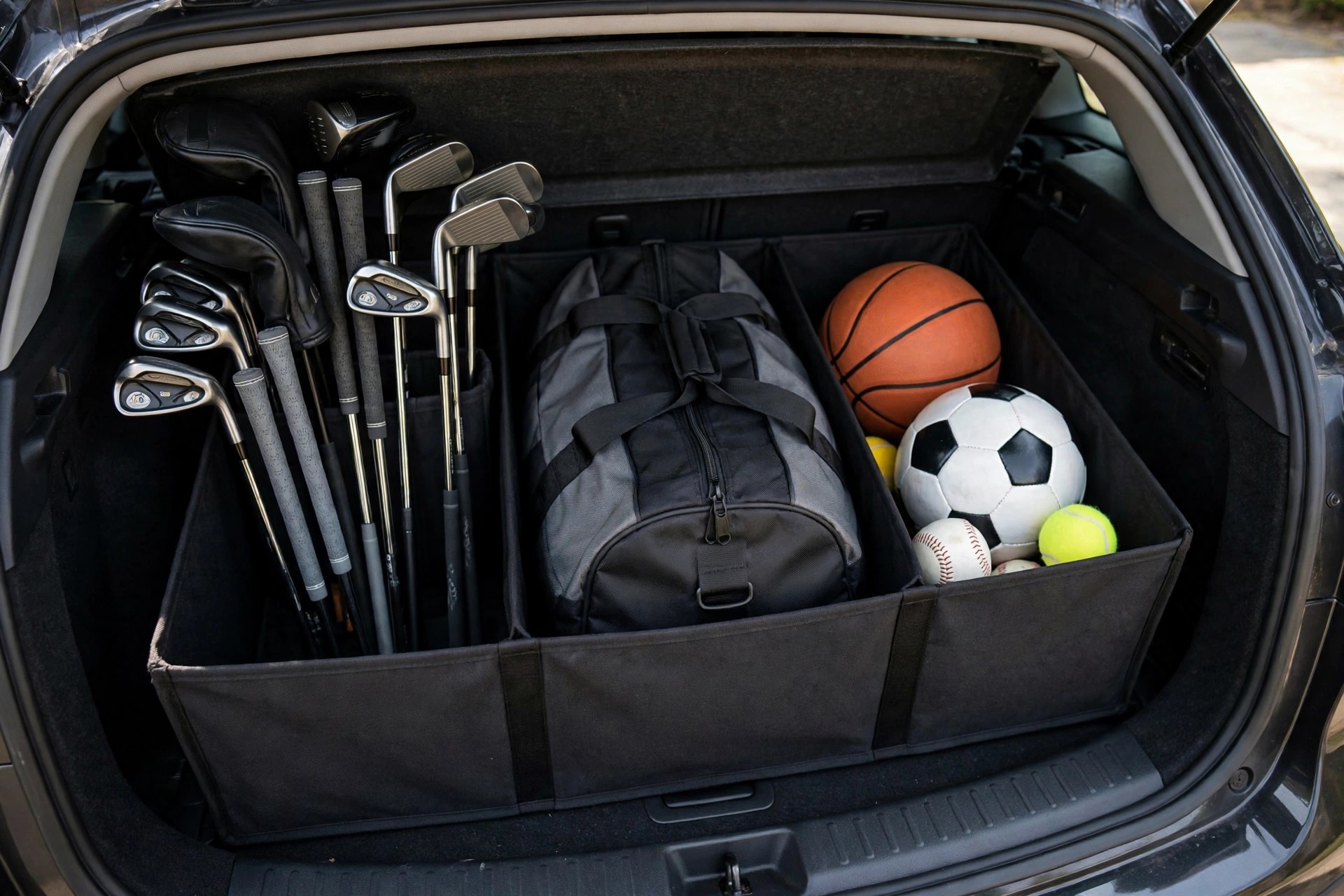
A golf bag is roughly 35 inches tall and stubbornly refuses to fit anywhere convenient, yet it lives in millions of trunks. The trick is laying it diagonally across the trunk with the club heads toward the rear, secured so it cannot slide. In sedans, fold one rear seat if the bag will not clear the opening. In SUVs, stand the bag upright against the side wall and strap it to a tie-down point. Never let a golf bag roam free: the metal club heads will dent everything they touch, including your trunk lid struts.
The same logic applies to hockey sticks, lacrosse sticks, fishing rods, and baseball bats. Long items want to lie along the trunk’s longest diagonal, padded where they meet hard surfaces, and anchored at both ends. Rod tubes and stick bags are worth their modest cost because they convert a snag-prone bundle into a single manageable unit. If your sport’s gear consistently overflows the trunk, a roof carrier may be the honest answer; our guide to roof box packing for snowboard trips covers the principles that apply to any long gear, winter or summer.
The Gym Bag Zone: Containing Moisture and Odor
The gym bag is a biological hazard in waiting. Damp workout clothes sealed in a bag breed bacteria, and the resulting smell permeates trunk carpet with remarkable persistence. The fix is a dedicated, ventilated zone: a mesh laundry bag inside the gym bag for wet clothes, so they can be pulled out and washed without touching anything else, and a strict rule that the gym bag never sits directly on carpet.
Place the gym bag on a washable liner or inside a plastic tote, and add odor control as a permanent resident of the trunk: activated charcoal bags, a box of baking soda, or a purpose-made odor absorber. Crack the trunk or a window when parked in a garage to let moisture escape. And build the habit that matters most: wet clothes come out of the bag the same day, every time. No trunk system survives a forgotten damp towel, and no air freshener defeats one.
Ball Sports: Taming the Rolling Chaos
Balls are nature’s perfect trunk escape artists. A basketball, soccer ball, or volleyball will roll to exactly the spot you cannot reach, usually during a turn. The solution is containment with airflow: a large mesh duffel or a tall open bin that holds the balls as a group while letting them breathe. Mesh matters because balls stored damp in sealed bags develop mildew on their surfaces and lose grip.
Cleats, shin guards, and gloves go in a separate ventilated bag, because they are the smelliest items in ball sports and should never share air with anything else. Keep a soft-bristle brush in the trunk for knocking mud off cleats before they go back in the car; it takes twenty seconds and saves the liner. If kids play multiple sports, color-code the bags per sport so the right gear grabs happen without thought on busy school mornings.
The Quick-Grab Layout: Zones, Not Piles
The difference between a pile and a system is zoning. Divide the trunk into three zones: daily sport gear you use several times a week, occasional gear for the current season, and everything else, which does not belong in the trunk at all. Daily gear gets the prime real estate near the opening. Occasional gear goes deeper. Everything else goes back in the garage.
Within the daily zone, arrange by frequency of access. The gym bag you grab every morning sits closest to the opening; the golf clubs you use on weekends sit behind it. This sounds obvious, but most trunks are organized by whatever was thrown in last, which is the opposite of useful. Re-zone once when you build the system, then defend the zones. A zone that drifts becomes a pile again within a month.
The Dirty Gear Protocol: Mud, Sweat, and Grass Stains
Sports gear gets dirty by definition, so the trunk system must assume contamination. A heavy-duty waterproof liner is non-negotiable; it is the difference between hosing out the trunk and shampooing carpet. Keep a dedicated dirty-gear tote, a plastic bin with a lid, where muddy cleats, wet uniforms, and grass-stained towels go immediately after the game. The lid contains both smell and moisture.
Stock a small cleanup kit permanently: a towel, a trash bag for truly foul items, and a spray bottle of enzyme cleaner for the inevitable mystery stain. After muddy games, knock off the worst before loading; your future self will thank you. And wash the liner monthly during the season. A liner that never gets cleaned becomes a petri dish with a trunk around it, and no amount of organizing fixes that.
Rotating Gear With the Seasons
No trunk needs to carry every sport at once. When soccer season ends and ski season begins, or when summer running gives way to fall leagues, do a full swap. Pull everything out, clean the liner, and reload only the current season’s gear. The off-season equipment goes into labeled bins in the garage, where it stays clean, dry, and findable.
The seasonal swap is also the perfect moment for maintenance: check balls for proper inflation, inspect cleats for worn studs, replace the odor absorbers, and retire anything broken. Fifteen minutes twice a year keeps the system honest and prevents the slow accumulation of dead gear that chokes most sports trunks. If your winter sport involves serious cargo, our road trip packing guide has layering techniques that keep bulky seasonal gear from eating the whole cargo area.
An organized sports trunk comes down to three ideas: zone by frequency, contain the wet and smelly stuff without mercy, and rotate with the seasons. Golf clubs lie diagonal and strapped, gym bags live on washable surfaces with ventilation, and balls stay in mesh where they can breathe. Build the system once, defend the zones, and the trunk stops being a gear graveyard and starts being a proper equipment room on wheels.
Related posts:

Before you roll on, check out Dog-Friendly Trunk Setups: Crates, Liners, and Cargo Areas Pets Will Love — it builds on exactly what you just read.
Found this useful? Pass it on to a friend who would appreciate it too.

