
- Crate vs Barrier vs Open Zone: Three Philosophies
- Sizing the Crate: The Stand-Turn-Lie Rule
- Waterproofing: Liners, Covers, and Seat-Back Protection
- Ventilation and Temperature: The Life-Safety Chapter
- Food, Water, and Comfort on the Go
- Cleanup Between Trips: Keeping It Fresh
Dogs love car rides with a purity humans rarely manage, but the trunk or cargo area they ride in is often an afterthought: bare carpet, no ventilation plan, and nothing to stop a nervous pup from scrambling into the driver’s lap at the worst moment. A thoughtful dog-friendly trunk setup keeps your pet safe and comfortable while protecting your car from claws, fur, drool, and the occasional accident. It is one of those upgrades where everyone wins, including the upholstery.
This guide covers the three main approaches to pet trunk travel, crates, barriers, and open cargo zones, plus the liners, ventilation, and temperature management that make any of them work. We will size crates correctly, waterproof the cargo area, and handle food, water, and cleanup on the go. For the journey-planning side, our dog road trip guide covers routes, stops, and gear, while our cargo liner guide dives deeper into protecting the load floor.
Crate vs Barrier vs Open Zone: Three Philosophies
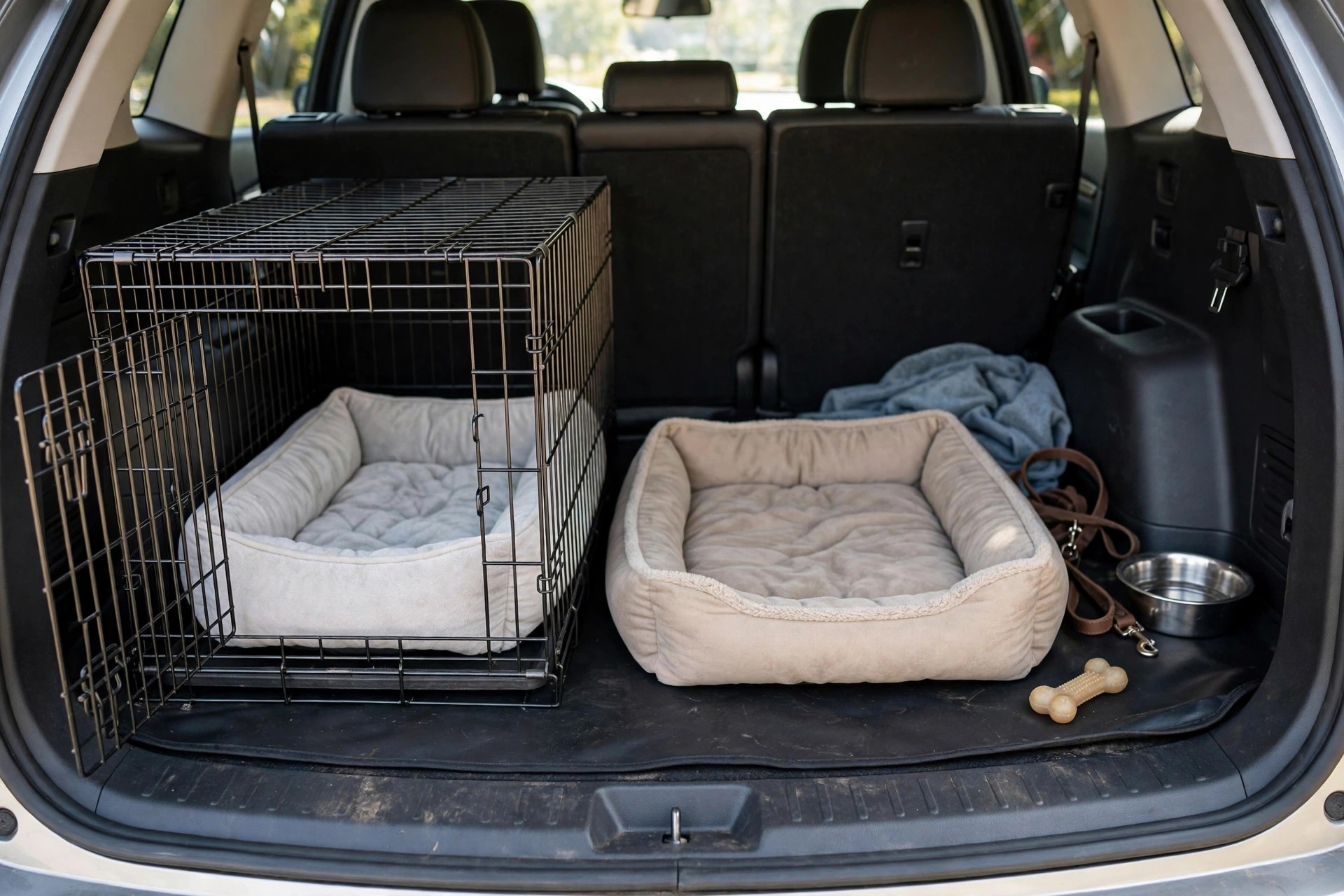
The crate is the gold standard for safety. A properly sized, crash-tested crate contains the dog in a sudden stop, prevents driver distraction, and gives anxious dogs a den-like space they often prefer. Secure the crate itself with straps to tie-down points; an unsecured crate is just a box full of dog. The downside is space: a large crate can consume most of a sedan trunk or a big slice of SUV cargo area.
Barriers, usually metal grilles mounted behind the rear seats, turn the whole cargo area into the dog’s zone. This suits large dogs and multi-dog households, and preserves more usable space than a crate. But barriers vary in strength, and a determined large dog can defeat a cheap tension-mounted grille. The open zone, just a lined cargo area with the dog loose, is the least safe option and the one most owners actually use; if you go this route, at minimum add a barrier so the dog cannot reach the cabin. Honest assessment matters more than convenience here.
Sizing the Crate: The Stand-Turn-Lie Rule
A crate should be big enough for the dog to stand up, turn around, and lie down comfortably, and no bigger. Oversized crates let the dog build momentum in a stop and defeat the purpose of containment. Measure your dog’s height at the shoulder and length nose to tail base, then add a few inches. Then measure your cargo area, because the right crate for the dog must also fit through the tailgate opening and sit flat on the floor.
For SUVs, wire crates offer ventilation and fold flat when not in use; plastic airline-style crates offer more den-like security for nervous dogs. In sedans, the trunk is rarely tall enough for a large dog’s crate, which usually means the back seat with a seat cover is the honest answer instead. Do not force a crate into a space that is too small; a cramped dog is a stressed dog, and a stressed dog plus a moving car is nobody’s idea of a good trip.
Waterproofing: Liners, Covers, and Seat-Back Protection
Dog cargo areas need waterproofing as a baseline, not an upgrade. A heavy-duty cargo liner with raised edges catches drool, muddy paws, spilled water bowls, and accidents before they reach the carpet. Look for non-slip surfaces, because a dog scrambling on slick plastic is both stressed and unsafe. Extend protection up the back of the rear seats with a seat-back cover; dogs lean, climb, and press against them constantly.
Layer for easy cleaning: liner on the bottom, a washable blanket or crate pad on top. The blanket takes the daily fur and dirt and goes straight into the washing machine, while the liner underneath stays clean for months. Keep a lint roller and a pack of pet wipes in the trunk permanently. Fur management is a maintenance task, not a one-time fix, and the owners with the cleanest cars are simply the ones who wipe down most often.
Ventilation and Temperature: The Life-Safety Chapter
This is the section that matters most. Dogs overheat far faster than humans, and a parked car becomes lethal with shocking speed: on a 70-degree day, the interior can hit 100 degrees in twenty minutes. Never leave a dog unattended in a vehicle in warm weather, not with windows cracked, not for a quick errand. In the cargo area specifically, ensure airflow reaches the dog when driving; some SUVs route little cabin air to the far rear, so check with your hand.
For hot-weather travel, add battery-powered crate fans, freeze water bottles to place near the crate, and plan stops in shade. In cold weather, the cargo area can get chilly; an insulated crate cover or a warm blanket helps, but avoid overheating too. Watch for signs of distress: excessive panting, drooling, restlessness, or lethargy. A comfortable dog sleeps; a stressed dog pants. Learn the difference before the long drive, not during it.
Food, Water, and Comfort on the Go
Hydration on the road needs a spill-proof strategy. No-spill travel water bowls with floating disks or narrow openings survive normal driving without soaking the liner; ordinary bowls do not. Offer water at every stop rather than leaving a full bowl sloshing in the crate. For food, stick to the regular schedule as closely as possible and bring the usual kibble; new treats plus travel stress are a recipe for digestive drama.
Comfort items matter more than owners expect. A familiar blanket or bed that smells like home measurably calms many dogs in the car. A safe chew toy occupies the mind on long stretches. And for puppies or first-time travelers, short practice drives that end somewhere fun build positive associations before the big trip. The cargo area should feel like the dog’s room, not a storage locker that happens to contain a dog.
Cleanup Between Trips: Keeping It Fresh
A dog trunk needs a reset routine, or the smell builds until the car is unpleasant for humans too. After each trip, shake out the blanket, wipe the liner, and check for any accidents you missed. Weekly, vacuum the fur; a rubber-bristled brush or a damp rubber glove pulls embedded hair out of fabric better than most vacuums. Monthly, wash the blankets and wipe down the liner with an enzyme cleaner that actually breaks down organic odors.
Keep a dedicated dog kit in the trunk: waste bags, paper towels, enzyme spray, a spare blanket, and any medications. Restock it the way you would a first-aid kit, because discovering you are out of waste bags at a rest stop is a special kind of frustration. If your family road-trips with kids as well as dogs, our best minivans for road trips roundup notes which models handle the combined chaos of children and canines most gracefully.
A dog-friendly trunk is built from simple layers: safe containment first, waterproofing second, ventilation and temperature awareness always. Size the crate to the dog, strap everything down, line every surface, and never underestimate heat. Do it right and the cargo area becomes your dog’s favorite room in the house, one that happens to move at sixty miles an hour. The fur will still get everywhere, but that is a small price for a happy co-pilot.
Related posts:
Every Accessories & Gear article adds another tool to the shed. The related reads below are worth a spin.
Found this useful? Pass it on to a friend who would appreciate it too.

