
- The Philosophy: Tools for the Repairs You Can Actually Do
- The Tire Kit: Flats Are the Number One Roadside Job
- Jump-Starting Gear: Cables vs Portable Jump Starters
- The Hand Tool Core: What Fits in a Small Bag
- Lighting and Visibility: Being Seen While You Work
- Fluids, Tape, and the MacGyver Supplies
- Packing It: The Bag, the Layout, the Weight
- Seasonal Adjustments and Maintenance
- The Verdict: A Kit You Hope to Never Use
The Philosophy: Tools for the Repairs You Can Actually Do
A roadside emergency tool kit is not a mobile repair shop. It is a carefully chosen collection of tools for the small set of problems you can realistically fix on the shoulder of a road: a flat tire, a dead battery, a blown fuse, a loose clamp, a bulb that quit. Everything in the kit should serve one of those jobs. Everything else is weight that makes the kit harder to carry and harder to find things in.
This philosophy distinguishes a tool kit from a general emergency kit. The general kit carries water, blankets, and first aid for your comfort and safety while you wait. The tool kit carries the means to avoid waiting at all, for the subset of failures where ten minutes of work beats two hours of waiting for a tow. Both belong in the trunk; this article is about the tool side.
The constraint that shapes every decision is space and weight. A trunk tool kit must be compact enough to live permanently in the vehicle without eating the cargo area, light enough to carry to the flat tire, and organized enough to use in the dark, in the rain, with traffic rushing past. Every item must justify its grams.
The Tire Kit: Flats Are the Number One Roadside Job
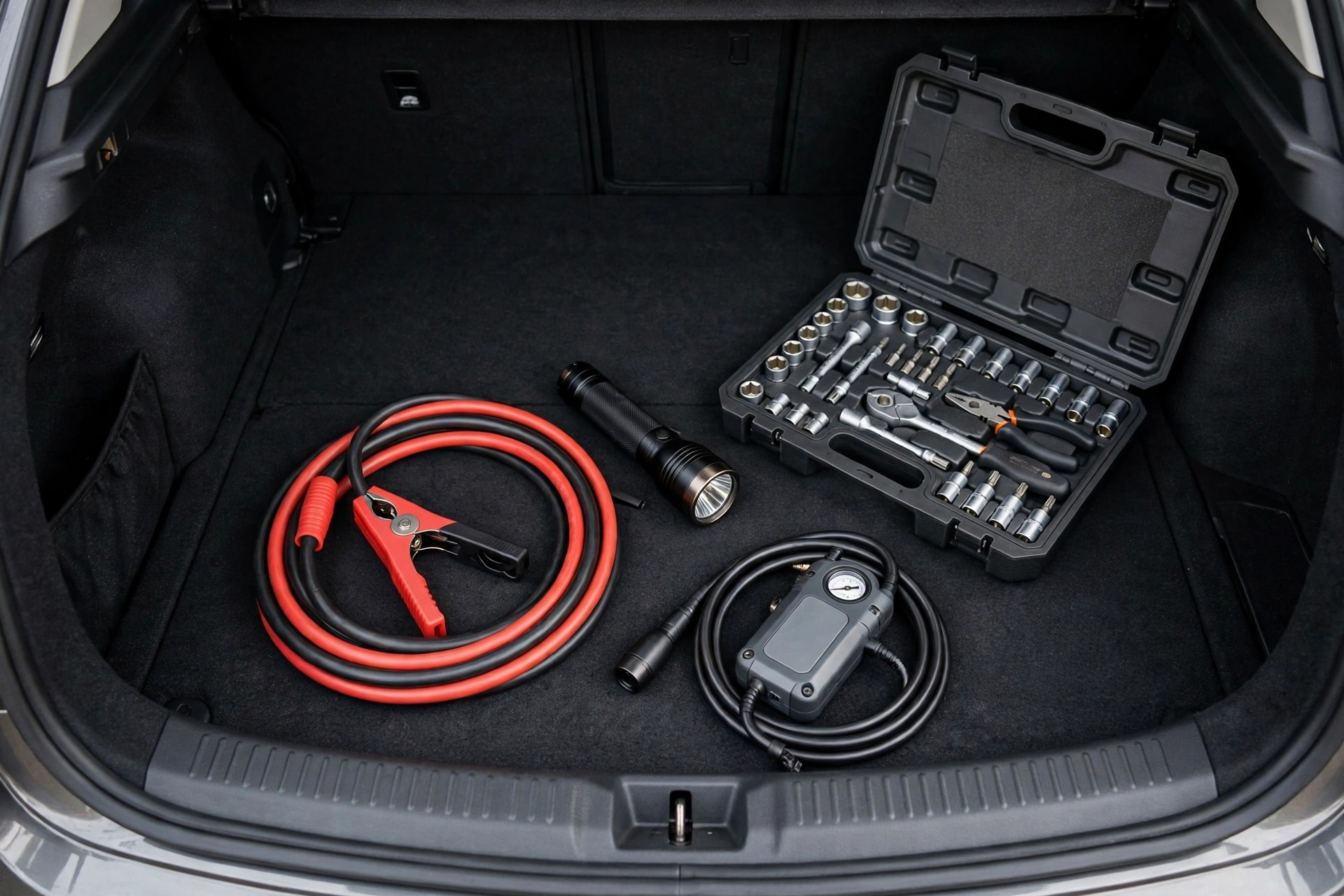
Flat tires are the most common roadside repair by a wide margin, so the tire kit is the heart of the trunk tools. The foundation is the factory spare, jack, and lug wrench, but the factory kit deserves upgrades. A telescoping lug wrench or a proper breaker bar with the correct thin-wall socket turns lug nut removal from a struggle into a routine, especially for anyone without the body weight to stand on the factory wrench.
Add a portable tire inflator, the 12-volt type that plugs into the accessory socket. Many flats are slow leaks, and an inflator lets you pump the tire back up and drive to safety instead of changing it on a dangerous shoulder. It also handles the chronically underinflated spare, which loses pressure sitting in the trunk for years. A tire pressure gauge, the pencil type is fine, completes the inflation side.
A tire plug kit is the advanced addition for the prepared driver. It handles punctures in the tread area without removing the wheel, which is faster and safer than a full change when conditions allow. It requires some practice to use confidently, so try it once at home on a scrap tire if you can. For the full procedure of the job these tools serve, our change a flat tire roadside step-by-step guide walks through every stage, and our inflate a flat tire roadside guide covers the inflator techniques.
Jump-Starting Gear: Cables vs Portable Jump Starters
Dead batteries are the second most common roadside failure, and the tool choice here has shifted in recent years. Traditional jumper cables are cheap, last forever, and work, but they require a second vehicle and someone willing to help, plus the knowledge to connect them in the right order. They remain a fine choice and belong in every kit as the baseline.
Portable lithium jump starters are the modern upgrade. These pocket-sized packs hold enough charge to crank most engines, require no second vehicle, and double as USB power banks for phones. Their limitation is maintenance: the lithium battery self-discharges over months, so the pack must be recharged every few months or it will be dead when you need it. Set a calendar reminder tied to your seasonal kit check.
The practical answer for most drivers is both: cables as the indestructible backup, a portable starter as the convenient primary. The cables cost little and weigh little; the starter earns its place the first time you are alone in an empty parking lot. Our jump starter versus jumper cables comparison breaks down the trade-offs in detail, including sizing for larger engines.
The Hand Tool Core: What Fits in a Small Bag
The hand tool core handles the fiddly roadside jobs: tightening a loose battery terminal, replacing a blown fuse, securing a dragging splash shield, swapping a bulb. A compact 3/8-inch drive socket set in the common sizes, 10 through 17mm, covers the fasteners you will meet. Add a multi-bit screwdriver with Phillips, flathead, and Torx bits, since modern cars mix all three.
Pliers earn their place: combination pliers for gripping and needle-nose for reaching. A small adjustable wrench covers the odd sizes the socket set misses. Zip ties in assorted sizes are the roadside mechanic’s secret weapon, securing everything from splash shields to wiring harnesses well enough to get home. A roll of electrical tape and a few feet of duct tape wrapped around a pencil handle the temporary repairs.
Keep the hand tools minimal and dedicated. This is not the place for your good garage tools; it is the place for a compact, complete-enough kit that lives in the car permanently. Duplicating a few inexpensive tools for the trunk kit beats raiding the garage every trip, because the kit that must be packed is the kit that gets left behind.
Lighting and Visibility: Being Seen While You Work
Half of roadside emergencies happen in poor light, and working beside traffic in the dark is genuinely dangerous. A headlamp is the single most important lighting tool: it keeps both hands free and points where you look, which a handheld flashlight cannot do. Carry spare batteries or a rechargeable model you keep topped up.
Visibility to other drivers matters as much as seeing your work. Reflective warning triangles, placed well behind the vehicle, give approaching traffic the warning that your hazard lights alone may not convey, especially on curves and hills. A reflective vest takes almost no space and makes you visible during the entire job. These are not tools in the turning-bolts sense, but they are the tools that keep the repair from becoming a second emergency.
A magnetic work light that sticks to the car’s body panels is a worthwhile addition for under-hood work at night. It frees both hands and survives the vibration of a running engine better than a balanced flashlight. Between the headlamp for close work and the magnetic light for area illumination, night repairs become manageable instead of miserable.
Fluids, Tape, and the MacGyver Supplies
A small bottle of the correct engine oil, a jug of premixed coolant, and a bottle of washer fluid cover the top-up emergencies that strand drivers. These are not repair tools but range extenders: the oil that gets you to the shop instead of seizing the engine, the coolant that closes the gap to the next exit. Check that the oil matches your car’s specification; the wrong oil is worse than none in some modern engines.
The temporary repair supplies deserve their niche: self-fusing silicone tape for hose leaks, hose clamps in the common sizes for the clamp that rusted through, JB Weld or similar epoxy putty for the crack that cannot wait, and a handful of spare fuses in your car’s sizes for the electrical gremlin. None of these are permanent fixes; all of them are get-home fixes, which is exactly the kit’s mission.
A pair of mechanics gloves and a few shop rags round out the consumables. Gloves protect against hot components, sharp edges, and the general filth of roadside work; rags handle the spills and the hand-cleaning. They weigh nothing and get used constantly.
Packing It: The Bag, the Layout, the Weight
The bag matters more than it seems. A soft tool bag with internal pockets keeps everything organized and conforms to trunk spaces; a hard case protects better but wastes space. Either way, the kit must be secured: an unsecured twenty-pound bag becomes a projectile in a sudden stop. Use the trunk’s tie-down points, a cargo net, or a trunk organizer with a dedicated pocket.
Layout follows frequency of use. The tire pressure gauge, the flashlight, and the warning triangle should be reachable without unpacking the bag. The rarely used items, the plug kit, the epoxy, can live at the bottom. If you cannot find the thing you need in the dark within thirty seconds, the layout needs work.
Watch the total weight. It is easy to keep adding just one more useful item until the kit weighs forty pounds and never leaves the garage because it is a hassle to move. Audit the kit annually with fresh eyes: if you have not touched an item in two years and cannot name the job it serves, remove it. For broader emergency preparedness beyond tools, our road trip emergency kit trunk essentials guide covers the comfort and safety side, and budget-minded drivers should see the budget roadside emergency kit for a lean twelve-item starting point.
Seasonal Adjustments and Maintenance
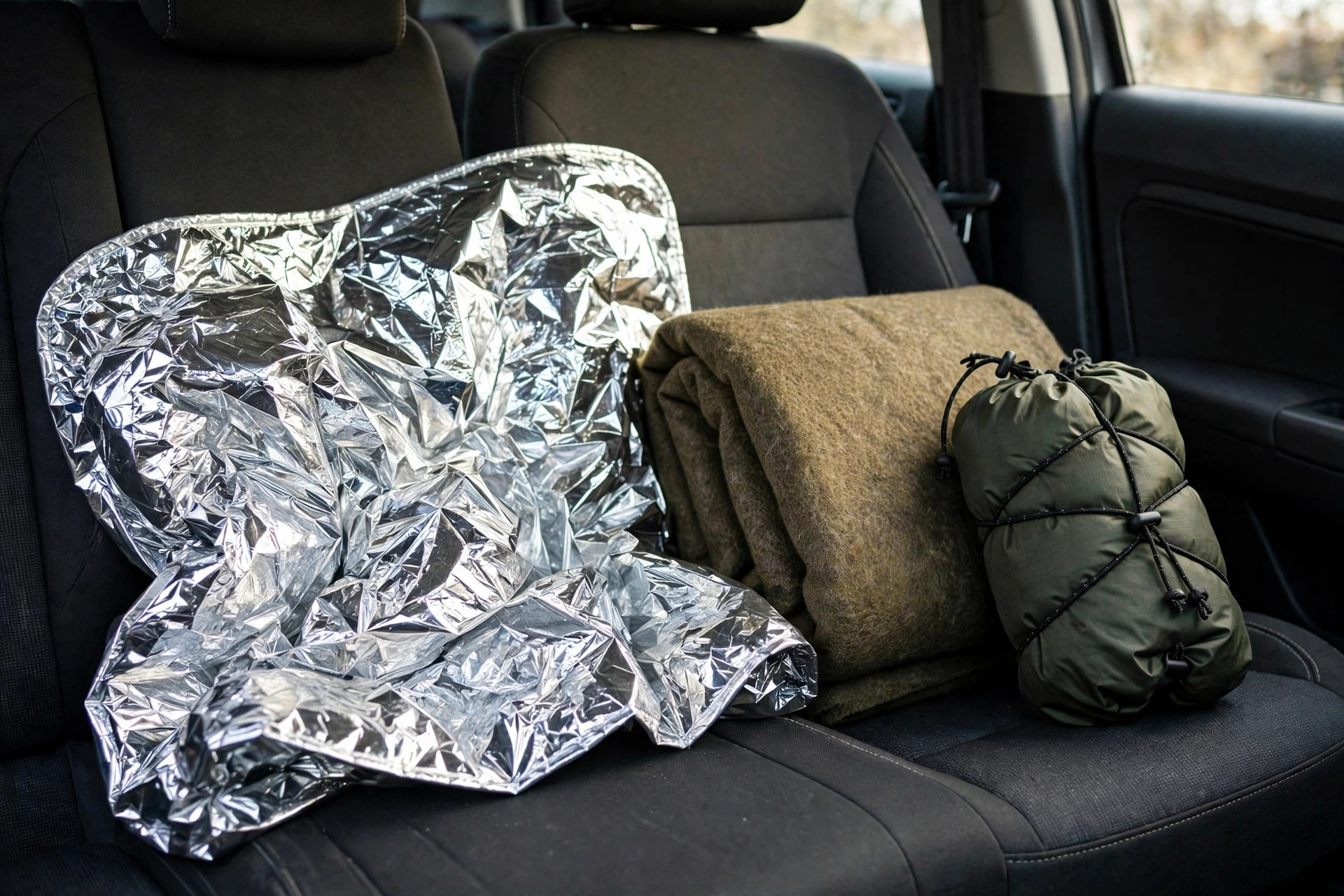
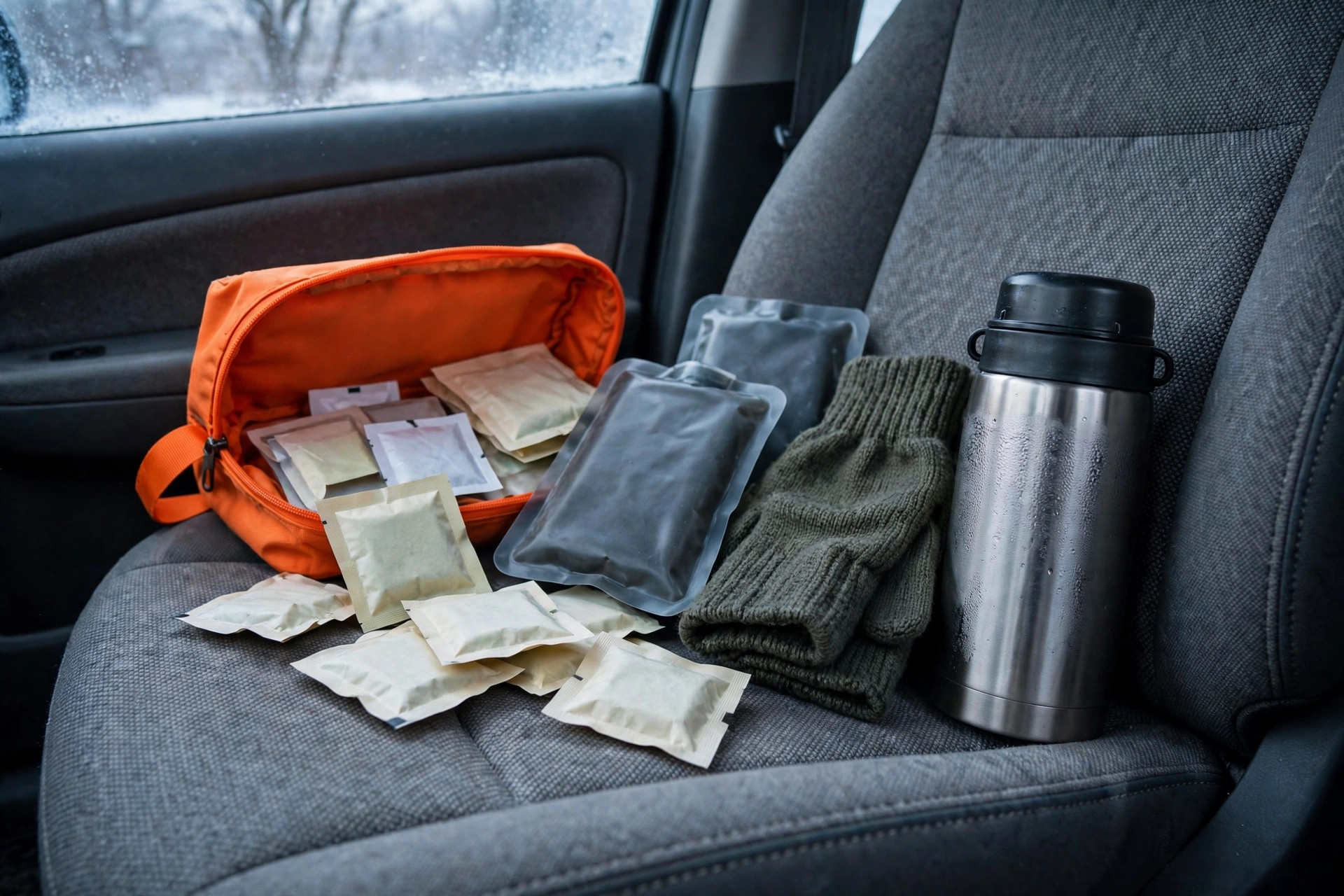
The kit needs seasonal attention. In winter, add a blanket, extra warm layers, and consider the cold’s effect on the jump starter’s battery, which loses capacity in freezing temperatures; store the pack where it stays warmer or check its charge more often. In summer, verify that fluids have not leaked in the heat and that the tire inflator still runs.
Maintenance is a twice-yearly ritual that takes fifteen minutes. Check the jump starter’s charge, verify the tire inflator works, confirm the spare tire’s pressure, replace any used consumables, and check expiration dates on anything perishable. Tie the check to something memorable: the clock changes, the start of road-trip season, the first frost.
Also verify the kit fits your current vehicle after any car change. Different cars use different lug nut sizes, different fuse types, and different oil specifications. A kit built for the old car may be subtly wrong for the new one, and discovering that on the roadside defeats the purpose. Rebuild the vehicle-specific items with each new car.
The Verdict: A Kit You Hope to Never Use
The roadside emergency tool kit is the cheapest insurance in car ownership: a compact bag of tire tools, jump-starting gear, hand tools, lighting, and get-home supplies that lives permanently in the trunk. It handles the flat tire, the dead battery, and the small failures that would otherwise cost hours of waiting, and it does so for less than the price of a single tow.
Build it once, pack it thoughtfully, secure it properly, and maintain it twice a year. Then forget about it and drive with the quiet confidence that comes from being prepared. The best roadside tool kit is the one you never need, and the second best is the one that is complete, organized, and within reach when you do.
Related posts:

Whether you wrench, drive or just admire, the Accessories & Gear category has more miles to offer.
Share this with a fellow driver or enthusiast who needs to see it.

