
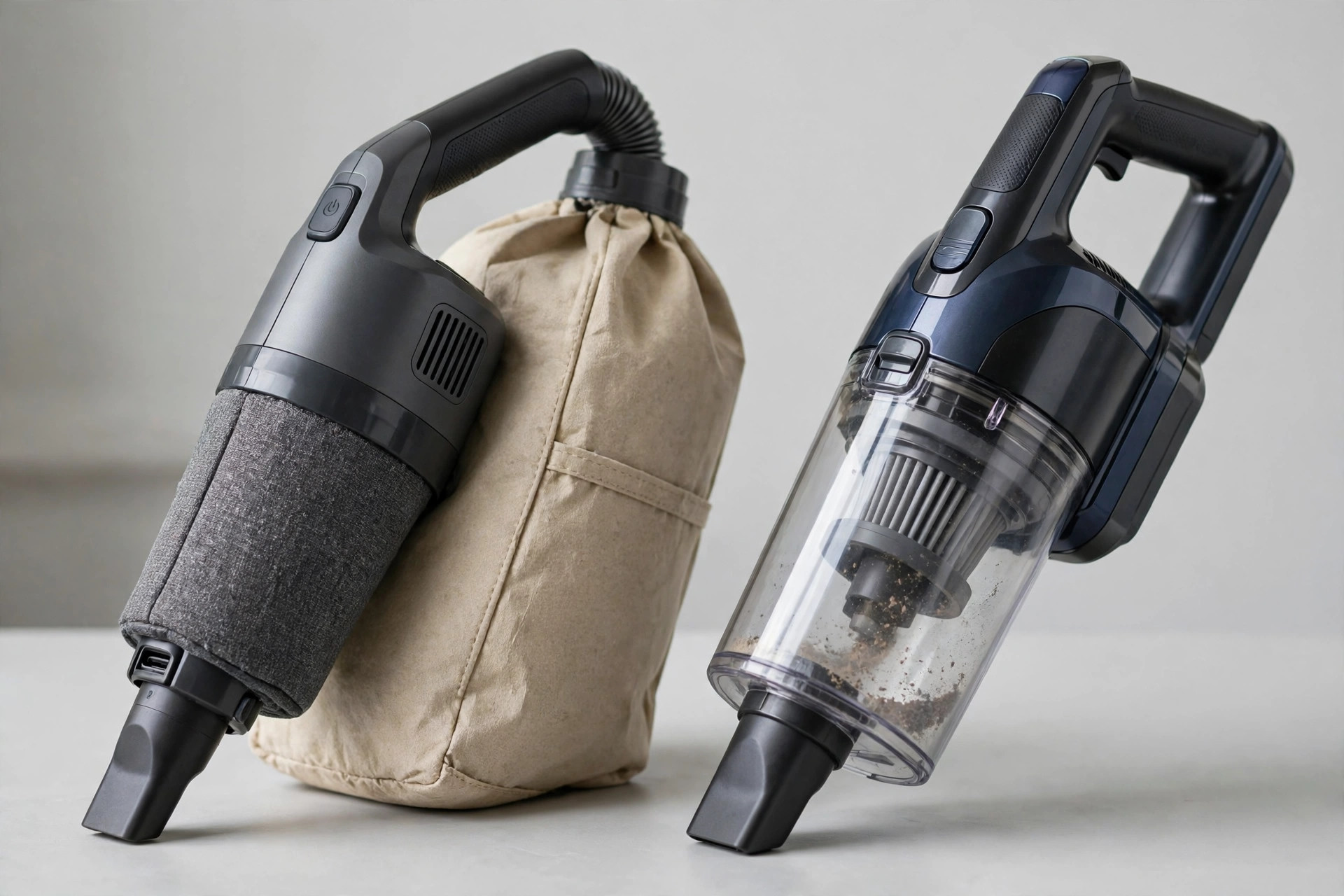
- Why Vacuum Bags Still Exist in the Cordless Era
- How Bagged Car Vacuums Actually Work
- How Bagless Car Vacuums Handle Dirt and Dust
- Filtration Face-Off: Allergies, Dust, and Exhaust Soot
- Running Costs: Bags, Filters, and the Five-Year Math
- Which One Should You Buy for Your Car
Why Vacuum Bags Still Exist in the Cordless Era
Walk into any detailing supply shop and you will notice something odd: in a market obsessed with cordless convenience, vacuum bags refuse to die. The reason is simple. A bag is not just a container; it is a disposable filter, a sealed disposal system, and a performance preserver all in one. For car owners who vacuum up sand, dog hair, dry cereal, and the mysterious black grit that lives under every floormat, the humble bag solves problems that bagless bins create.
Bagless machines won the marketing war years ago, and most handheld car vacuums on shelves today are bagless. The marketing pitch was irresistible: never buy bags again, see the dirt swirl in a clear bin, empty it straight into the trash. But anyone who has ever emptied a bagless car vacuum full of fine dust knows the catch. That cloud of particles that puffs back into your face, the filter you have to tap clean every few uses, the bin seam that slowly stops sealing. Bags, boring as they are, sidestep all of that.
This guide is not about picking a winner for everyone. It is about matching the dirt system to the dirt you actually make. A commuter who picks up lint and crumbs has different needs than a dog owner who battles undercoat fur or a parent extracting beach sand twice a month. Understanding how each system works, what it costs over time, and how it affects the air you breathe inside your car will make the choice obvious.
How Bagged Car Vacuums Actually Work
In a bagged vacuum, the bag is the primary filter. Dirt-laden air passes through the bag fabric, which traps particles while letting air flow through to the motor. Because the bag itself captures the finest dust, the motor and the secondary filter behind it stay remarkably clean. That is why bagged machines tend to hold their suction as they fill: the filter media has an enormous surface area compared to a little foam disc, so airflow degrades slowly and gracefully.
The big advantage for car use is hygienic disposal. You unclip the bag, drop it in the trash, and never touch the contents. No dust cloud, no tapping filters on the driveway, no washing parts in the sink. For anyone with dust allergies, that sealed disposal is the entire game. The debris that matters most, the fine stuff under ten microns that irritates lungs, stays trapped in the bag instead of puffing back out during emptying.
The downsides are real but often overstated. Yes, you must buy replacement bags, and yes, running out of bags means the vacuum sits idle. Bagged car vacuums are also getting harder to find, because most manufacturers chased the cordless bagless trend. But full-size bagged canister and garage vacuums remain common, and some cordless stick models now accept compact dust bags too, a hybrid approach that gives you cordless freedom with sealed disposal.
How Bagless Car Vacuums Handle Dirt and Dust
Bagless car vacuums, usually cordless handhelds, spin dirt into a plastic dustbin. Most use cyclonic separation: air spirals at high speed, flinging heavier particles against the bin walls while the air exits through a pleated or foam filter. It is clever engineering, and it works beautifully right up until the filter starts loading with fine dust. Then suction fades, the motor works harder, and you find yourself tapping the filter against a wall to buy back performance.
Emptying is where bagless machines show their weakness in automotive use. Car dirt is unusually nasty: sand, brake-dust-like road grime, pet hair wound into ropes, powdered food, and glass-shard-level grit from broken crackers. Dump a full bin of that into a trash can and you get a satisfying thud followed by a visible dust plume. Outdoor emptying is mandatory, and if you are sensitive to dust, wear a mask. It sounds dramatic until you have done it once in still air.
Where bagless wins is convenience and visibility. No consumables to stock, the clear bin shows you exactly what you picked up, and emptying takes ten seconds. For quick touch-ups, a kid crumb emergency, or a weekly cabin refresh, that frictionless workflow matters. Just understand the maintenance contract: rinse or replace the filter regularly, keep the bin seals clean, and empty it before it is packed solid. A bagless vacuum you maintain performs well; one you neglect becomes a noisy paperweight.
Filtration Face-Off: Allergies, Dust, and Exhaust Soot
Filtration matters more in a car than in a house because the cabin is a tiny sealed volume. A vacuum that leaks fine dust recirculates particles exactly where your face goes. Bagged machines with multi-layer synthetic bags filter down to very fine levels before air even reaches the motor filter. Many bagless handhelds, by contrast, rely on a small washable filter that degrades with every wash cycle and every accidental vacuuming of something damp.
If you or your passengers have allergies or asthma, favor sealed systems. Look for a bagged machine, or a bagless model with a sealed HEPA stage and gaskets you can inspect, not just a foam pad. The difference between a vacuum that says HEPA-style and one with a genuinely sealed HEPA filter is enormous in a small cabin. Particles you cannot see are the ones that make you sneeze, and car interiors are full of them: dust mite debris in cloth seats, pollen worked into carpet, fine brake and road dust on floormats.
One practical test cuts through marketing. Run the vacuum, then sniff the exhaust air with your face a foot from the vent. A well-sealed machine smells like nothing. A leaky one smells faintly dusty, warm, and familiar, that is the smell of recirculated grime. Do this test in the store if you can, or within the return window. Your nose is a decent particle counter for exactly the sizes that bother human lungs.
Running Costs: Bags, Filters, and the Five-Year Math
The running-cost argument for bagless machines looks airtight until you do the math honestly. A bagged handheld or canister typically consumes one bag every one to three months of regular car use, and packs of bags cost a few dollars each. Over five years that is somewhere between thirty and sixty dollars. A bagless machine costs zero in bags, but its filters are not immortal: washable foam filters lose efficiency, pleated cartridges clog beyond washing, and replacement filter sets run ten to twenty-five dollars, usually needed once or twice a year with heavy car use.
Then there is the hidden cost of neglect. A bagless vacuum with a clogged filter strains its motor and battery, shortening both. Battery replacement on a cordless handheld can cost more than the original purchase price, which quietly erases years of bag savings. Bagged machines keep their filters and motors cleaner for longer, which tends to extend service life, especially in dusty garage environments where the vacuum itself lives in grit.
The honest five-year total, for a typical owner vacuuming a car twice a month, lands in the same neighborhood either way: roughly fifty to eighty dollars in consumables. So buy on the experience, not the spreadsheet. Choose bags if you hate maintenance and dust clouds, choose bagless if you hate shopping for bags and love the grab-and-go ritual. The price difference will not decide your happiness; the emptying experience will.
Which One Should You Buy for Your Car
Buy bagged if you have allergies, haul pets, vacuum fine sand or drywall-level dust, or simply want a vacuum that asks nothing of you between uses. The best candidates are compact bagged canisters for garage duty and the newer cordless sticks with bag options for cabin touch-ups. You trade a small recurring cost for sealed, zero-drama dirt handling and consistently clean motor air.
Buy bagless if you do quick cleanups, empty outdoors, and do not mind a monthly filter ritual. Handheld bagless machines remain the fastest way to deal with a spilled snack or a sandy beach trip, and their cordless freedom is genuinely liberating. Pair one with washable filters you can buy two of, so a clean dry filter is always ready while the other dries, and empty the bin before every session rather than after.
Whichever you choose, two habits matter more than the bag debate. First, empty or change the dirt container before it is full, because every vacuum loses performance and filtration as its container loads up. Second, replace filters on schedule, not when the machine starts smelling. A car vacuum is a health tool as much as a cleaning tool: it decides what stays in your cabin air, and your lungs will notice the difference long after the carpets look clean. For a deeper look at what those filters actually do, read our guide to car vacuum filter maintenance, and to understand what suction ratings really mean, see car vacuum suction power explained. If spills are your main enemy, our wet-dry car vacuum guide covers liquid-capable machines, and apartment dwellers should check the quiet car vacuum noise guide before buying.
Related posts:
Before you roll on, check out Compressed Air vs Vacuum for Car Interior Dusting: When to Blow and When to Suck — it builds on exactly what you just read.
Share this with a fellow driver or enthusiast who needs to see it.

