
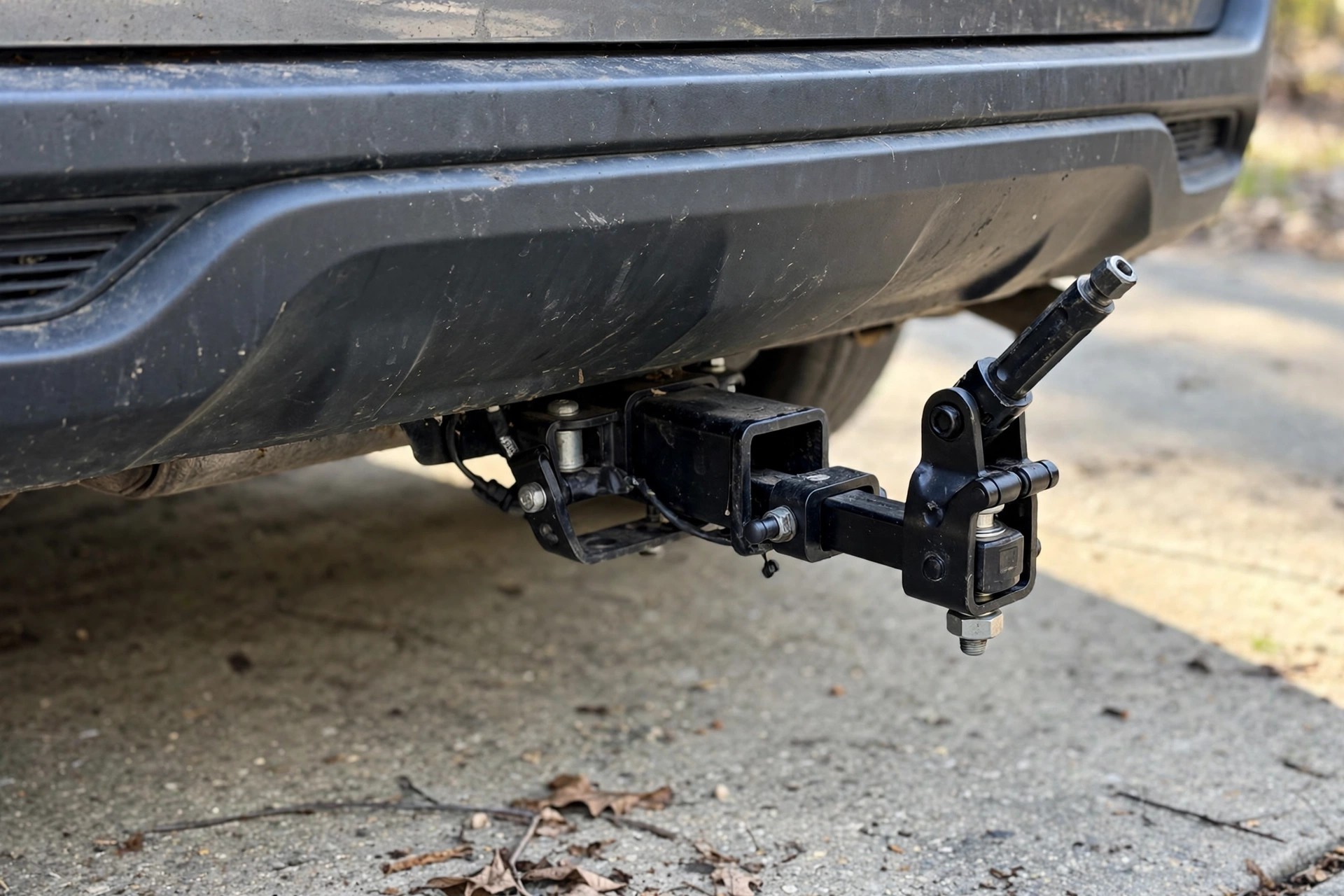
Millions of sedans, hatchbacks, and small crossovers roll off dealer lots with a 1.25-inch hitch receiver, the smaller of the two common sizes. If that describes your car, you do not need to panic: plenty of excellent bike racks are built specifically for 1.25-inch receivers. But the smaller receiver comes with real limits on weight, leverage, and stability that shape which racks make sense and which setups are asking for trouble. This guide explains how to use a 1.25-inch tow hitch for bike racks safely, when adapters are fine, and when the smart move is upgrading to a 2-inch receiver.
Why Compact 1.25-Inch Hitches Exist
The 1.25-inch receiver is the standard for Class I and most Class II hitches, which are rated for lighter duty: typically up to 2,000 pounds of towing and 200 pounds of tongue weight for Class I, and up to 3,500 pounds towing with 300 to 350 pounds of tongue weight for Class II. Automakers fit them to smaller vehicles because the unibody structure and suspension were never designed for heavy tongue loads, and a smaller, lighter hitch keeps costs and weight down.
For bike racks, the receiver size matters because it dictates the shank size of the rack and the leverage the loaded rack applies. A bike rack is a lever: every pound of bike weight sitting two feet behind the receiver multiplies the force on the hitch, which is why hitch classes rate tongue weight — the downward force the receiver can handle — separately from towing capacity. Our explainer on hitch receiver sizes covers the full sizing picture if you are still deciding what fits your vehicle.
The good news is that the bike rack industry designs around this reality. Most major brands sell dedicated 1.25-inch versions of their two-bike platform and hanging racks, engineered with the smaller shank and appropriate weight ratings. You are not stuck with a compromise product; you are buying a rack built for your hitch class.
Capacity and Tongue Weight Limits
Here is where the math gets real. A Class I hitch is typically rated for 200 pounds of tongue weight, and a Class II for 300 to 350 pounds, and your rack plus bikes must stay comfortably under that number, with the rack manufacturer layering its own ratings on top. Most 1.25-inch racks top out at two bikes, with per-bike ratings around 35 to 45 pounds, because four bikes on long arms create leverage that a small receiver cannot safely manage.
Run the numbers before you buy:
- A 45-pound rack carrying two 40-pound bikes puts 125 pounds on the tongue — fine against a 200-pound Class I rating, until dynamic loads on bumpy roads spike well above static weight.
- Two 60-pound e-bikes plus a 50-pound heavy-duty rack equals 170 pounds before a single pothole, which is why most e-bike-rated racks require a 2-inch receiver.
- Add a third bike with an add-on, and you are flirting with the limit.
The deeper dive in our tongue weight limits guide shows how leverage multiplies these loads. The practical rule: on a 1.25-inch receiver, stick to two-bike racks unless both the hitch and the rack explicitly rate a three- or four-bike setup for that receiver size, and never exceed the lower of the two ratings — the hitch’s or the rack’s.
Related Articles
- Crossbar Spread Explained: Choosing the Right Bar Spacing for Your Load
- Transporting Paddleboards on a Roof Rack: Soft Racks, Pads, and Stacking Two
- Hauling Ladders and Lumber on a Roof Rack: Straps, Flags, and Overhang Laws
Adapters, Sleeves, and 2-Inch Racks
The temptation is obvious: you find a great 2-inch rack on sale, so you buy a sleeve adapter that lets a 2-inch shank fit your 1.25-inch receiver. Technically it fits. Practically, it is one of the worst things you can do to a small hitch, because adapters extend the rack farther from the receiver — which increases leverage — and introduce a second sloppy joint that amplifies wobble. Most hitch manufacturers explicitly void the warranty when adapters are used, and most rack makers forbid them too.
The same warning applies in reverse: shimming a 1.25-inch rack into a 2-inch receiver with a sleeve is less dangerous but still adds play that an anti-rattle device then has to fight. If your vehicle has a 2-inch receiver, buy a 2-inch rack; if it has a 1.25-inch receiver, buy a 1.25-inch rack. The one exception is racks that ship with a convertible shank designed by the manufacturer for both sizes — those are engineered and tested for the conversion, unlike aftermarket sleeves.
There is also the reducer question for vehicles that came with a 2-inch receiver but a Class II rating. The receiver size alone does not upgrade the hitch class: a 2-inch Class II hitch still has Class II tongue weight limits, so always check the sticker on the hitch itself, not just the opening size. If you are shopping for the hitch as well as the rack, our trailer hitch buying guide explains how class, size, and vehicle fit interact.
Stability and Wobble Reality
Even with a properly sized rack, 1.25-inch setups wobble more than 2-inch ones. The smaller shank has more play inside the receiver, and the lighter hitch structure flexes more under load. That wobble is not just annoying: it lets bikes sway, rub, and hammer the hitch pin with every bump, which accelerates wear on both the rack and the receiver.
Fight it with a threaded anti-rattle hitch pin or a dedicated anti-rattle clamp. Threaded pins pull the shank tight against one wall of the receiver, eliminating most of the side-to-side play that a standard pin allows. They are cheap, they work on nearly any rack, and they are the single best upgrade for a 1.25-inch setup — keep the receiver tube clean and lightly greased so the shank slides in fully, and check the pin for wear every season, the kind of habit a routine like Seasonal Trunk Swaps: Rotating Gear for Winter, Summer, and Road-Trip Season builds in.
Loading order helps too. Put the heaviest bike closest to the vehicle, where leverage is lowest, and keep the load symmetric; on hanging racks, position the outermost bike’s weight with anti-sway cradles snugged down so nothing pendulums. If the rack still shudders over every expansion joint, that is the setup telling you it is near its comfort limit, and adding a third bike or heavier bikes is unwise.
When to Upgrade to a 2-Inch Hitch
Sometimes the right answer is a new hitch, not a new rack. Consider upgrading to a 2-inch Class III receiver if you plan to carry three or four bikes, if anyone in the family rides an e-bike, if you want a heavy platform rack with a loading ramp, or if you also want to use hitch cargo carriers and baskets that demand 2-inch shanks. On many crossovers and midsize SUVs, the factory or aftermarket 2-inch hitch bolts to the same mounting points, and the upgrade costs less than a premium rack.
Do the total-cost math before deciding. A 2-inch hitch plus a 2-inch four-bike platform rack is a bigger upfront spend, but it ends the capacity anxiety permanently and opens up the full range of heavy-duty accessories. If your vehicle cannot accept a Class III hitch at all — true for many small sedans — then the 1.25-inch path is not a compromise but the correct engineering choice, and a quality two-bike 1.25-inch rack will serve you quietly for years, especially if the rest of your gear stays as organized as The 15-Minute Trunk Reset: A System for Keeping Your Trunk Organized for Good suggests.
Either way, the hierarchy of safety is simple: hitch rating first, rack rating second, receiver size matching third, and no adapters anywhere in the chain. Respect that order and a 1.25-inch setup will carry your bikes as safely as any 2-inch rig, just with fewer bikes and lighter loads. For model recommendations that respect these limits, see our 2027 bike rack roundup, which flags receiver compatibility on every pick.
Related posts:



If this read fired you up, Tilt vs Swing-Away Hitch Bike Racks: Rear Hatch Access Compared keeps the Accessories & Gear momentum rolling.
Save this page and send it to your car group — good tips travel.

