
- Why Every Trunk Decays (and Why That Is Normal)
- The Reset Routine, Step by Step
- Designing Zones Worth Returning To
- The One-In-One-Out Rule
- Building the Weekly Cadence That Sticks
- The Seasonal Purge: Four Deeper Resets a Year
Every organized trunk follows the same tragic arc: pristine on Sunday, chaotic by Friday. Bags migrate, random items accumulate, and the careful system you built dissolves into a archaeological dig of forgotten objects. The problem is not your organizer or your willpower. It is the absence of maintenance. No storage system survives contact with real life unless something regularly restores it.
The 15-minute trunk reset is that something: a simple, repeatable routine that returns any trunk to organized in a quarter hour, plus the habits that stretch the interval between resets further and further. This is not about buying more products. It is about a system for keeping what you have working. A good trunk organizer gives the reset something to restore, and smart packing habits slow the decay, but the reset itself is pure process.
Why Every Trunk Decays (and Why That Is Normal)
Trunk chaos is entropy, not moral failure. Every trip adds items faster than trips remove them: the bag you meant to bring inside, the sports gear from Tuesday, the returns you keep forgetting. Psychologists call this the mere-ownership drift; objects gain invisible permission to stay simply by being there a second day. Without a counterforce, accumulation always wins.
Recognizing decay as normal removes the guilt that keeps people from fixing it. You do not need a personality transplant or a weekend overhaul. You need a small, scheduled counterforce applied regularly. Fifteen minutes is short enough to do without dread and long enough to actually finish. The reset works because it is boring, repeatable, and fits into a life that already has enough projects.
The Reset Routine, Step by Step
Set a timer for fifteen minutes; the deadline keeps you moving. Step one, pull everything out onto the ground behind the car, all of it. This is the crucial move most people skip, because you cannot organize what you cannot see. Step two, wipe down the trunk floor and liner, which takes two minutes and resets the space psychologically. Step three, sort everything into four piles: belongs in the trunk, belongs in the house, belongs elsewhere like the garage, and trash or donate.
Step four, return only the belongs-in-the-trunk pile, placing each item in its zone. Step five, deal with the other piles immediately: carry the house pile inside now, not later, toss the trash, and put the garage items by the garage door. The entire routine fails if the non-trunk piles sit in the driveway becoming a new problem. Fifteen minutes, once a week, and the trunk never reaches the archaeological stage again.
Designing Zones Worth Returning To
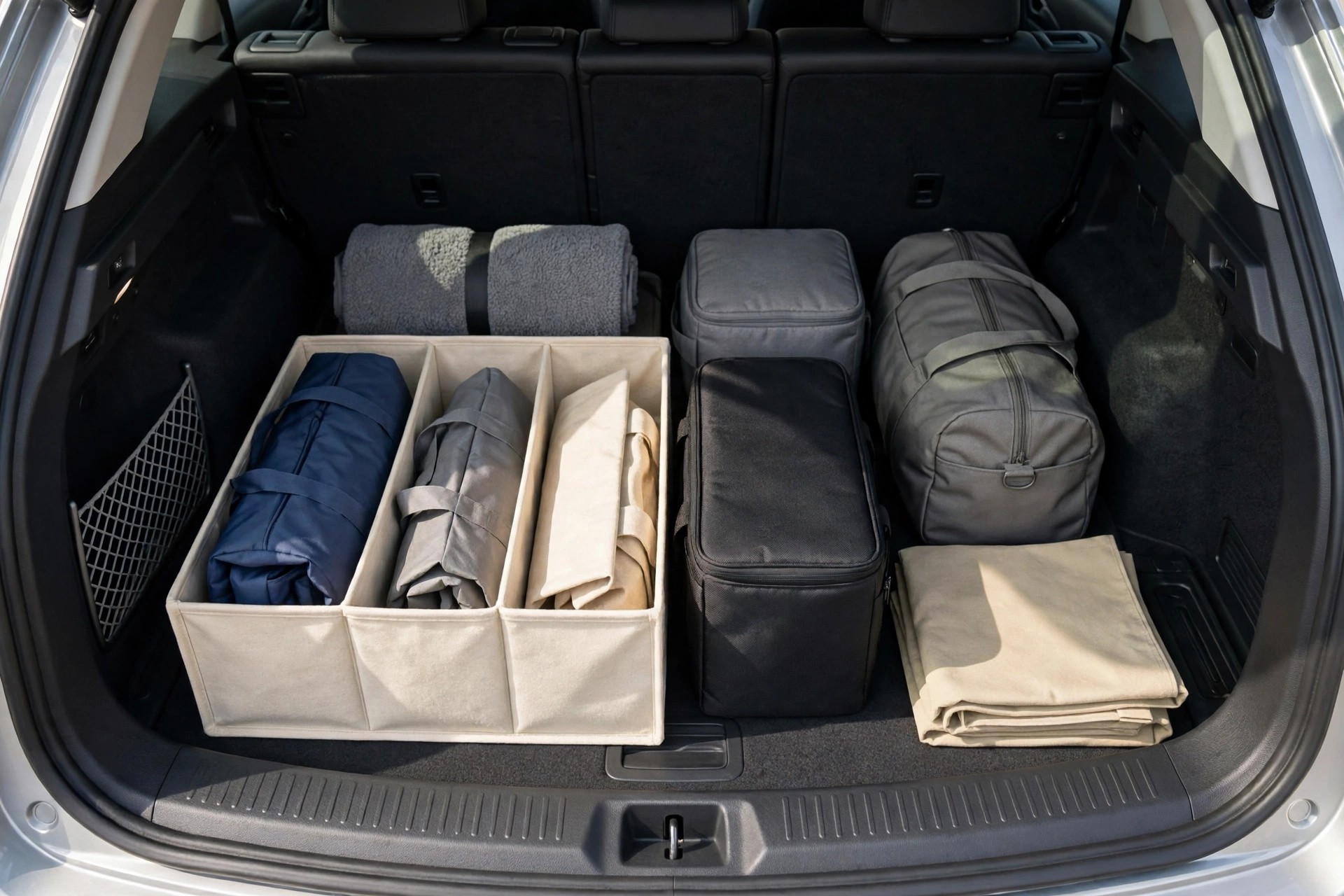
A reset restores order, but zones define what order means. Divide the trunk into permanent zones by function: daily essentials near the opening, seasonal or occasional gear deeper in, and emergency equipment in its dedicated spot. Each zone gets a container or a marked area, so returning an item means putting it in its zone, not just tossing it toward the back.
Keep the zone count small. Three to five zones is the sweet spot; more than that and the mental overhead defeats the purpose. Label zones if it helps, especially in shared family cars where everyone loads differently. And size each zone honestly: the daily zone should fit daily life with room to spare, because a zone that overflows on day one teaches everyone that zones do not matter.
The One-In-One-Out Rule
The reset handles the backlog, but the one-in-one-out rule stops the backlog from forming. Every time a new semi-permanent item enters the trunk, an old one leaves. New emergency blanket in means the expired one comes out. New sports bag in means last season’s gear goes to the garage. It is the simplest possible governor on accumulation, and it works because it attaches the decision to the moment of addition, when the trade-off is visible.
Apply the rule ruthlessly to the gray-area items: the reusable bags multiplying in the corner, the half-used bottles of washer fluid, the jackets that live in the trunk just in case. Just in case is how trunks fill up. If an item has not been used in a month and is not emergency gear, it does not live in the car. The garage, the house, or the donation bin will take it.
Building the Weekly Cadence That Sticks
The reset only works if it actually happens weekly, so attach it to an existing habit. Sunday evening after groceries, Wednesday after the car wash, whenever your week has a natural seam. Habit research is clear: new routines survive when stacked onto established ones, not when floating free on good intentions. Put it on the calendar for the first month until it becomes automatic.
Make it pleasant, not punitive. Play a favorite song, which conveniently lasts about as long as the reset should take. Involve kids by making it a game with a timer; they are often the primary entropy sources and the most enthusiastic restorers. Track streaks if that motivates you. The goal is a routine so ordinary you barely notice it, like taking out the trash, which is exactly what it is.
The Seasonal Purge: Four Deeper Resets a Year
Four times a year, go beyond the weekly reset with a deeper purge tied to the seasons. Pull everything out, clean thoroughly, and question every item: is this the right gear for the coming season? Winter means the ice scraper and emergency kit get priority; summer means the cooler and sunshade. Off-season gear leaves the trunk entirely for labeled garage storage.
The seasonal purge is also maintenance time: check the spare tire pressure, verify the jumper cables are still there, replace expired items in the emergency kit, and inspect the liner for damage. This is the moment to catch the slow problems, the fraying strap, the leaking bottle, the dead flashlight, before they matter. Before the big seasonal road trips, our pre-trip inspection checklist extends the same discipline to the whole vehicle.
The 15-minute trunk reset is not a product or a personality trait. It is a small weekly ritual, zones that make sense, a one-in-one-out rule, and a deeper purge each season. Together they do what no organizer alone can: keep the trunk organized not just on setup day, but on every ordinary Tuesday for years. Fifteen minutes a week is the cheapest storage upgrade ever sold, because it costs nothing and it actually works.
Related posts:


This is one stop in the Accessories & Gear garage. Plenty more models, guides and stories are parked in the same category.
Bookmark this guide — it will come in handy in the garage.

