
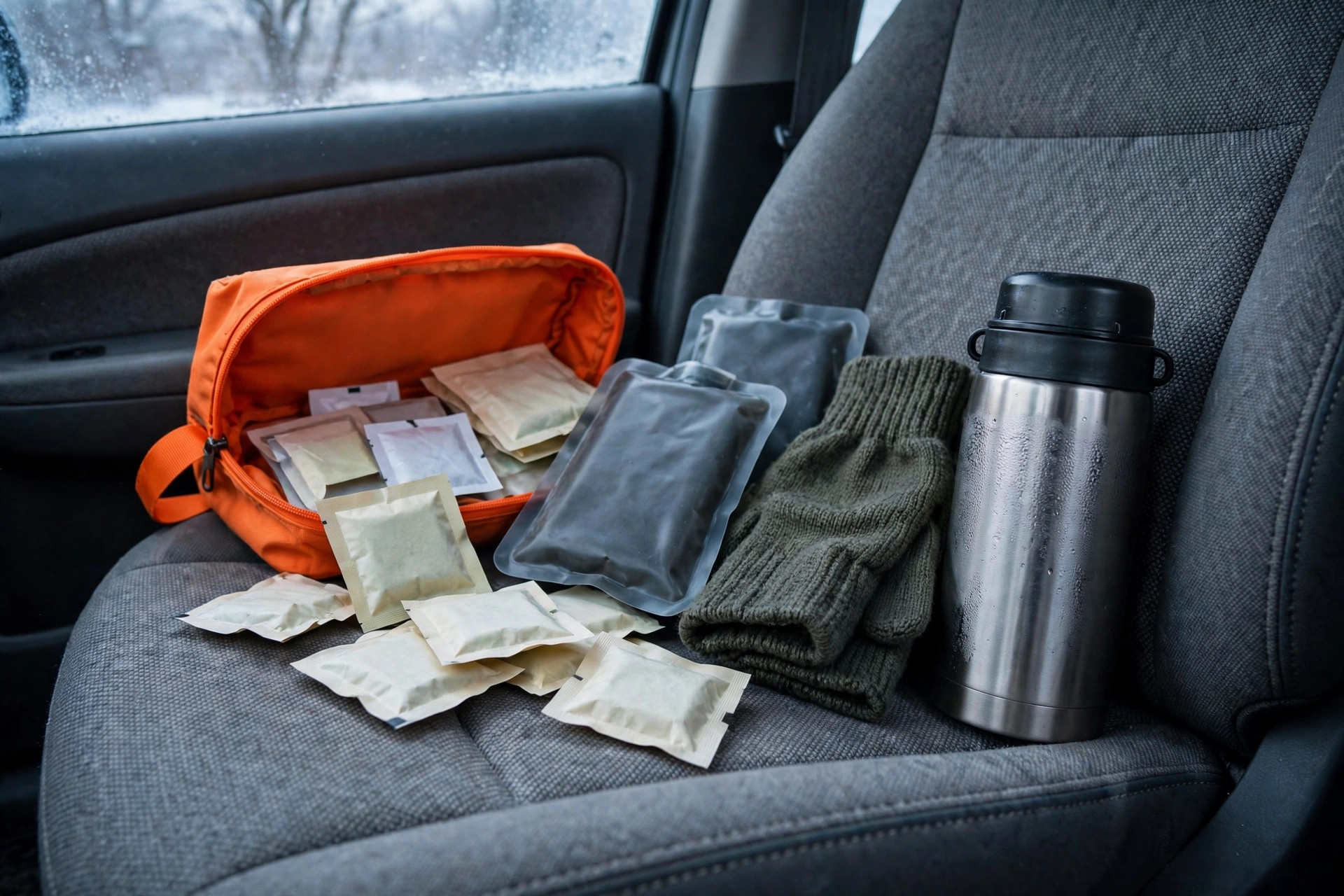
Cold kills quietly. When a car breaks down in winter and the engine cannot run, the temperature inside the cabin starts falling immediately, and within an hour a poorly equipped driver can be facing the early stages of hypothermia. Heavy coats and blankets are the foundation of winter survival, but there is a small, cheap item that punches far above its weight: the chemical hand warmer. These little packets cost about a dollar each, weigh almost nothing, and produce hours of steady heat exactly where your body loses it fastest.
This guide covers how hand warmers and heat packs work, the different types worth carrying, how to use them effectively during a cold-weather breakdown, their limitations, and how they fit into a complete winter survival strategy for drivers.
How Chemical Hand Warmers Work
The most common type, the disposable iron-powder warmer, generates heat through the controlled oxidation of iron. Tear open the outer wrapper, expose the packet to air, and the iron powder inside begins to rust rapidly, releasing heat as a byproduct. The reaction is tuned to run for six to ten hours at a comfortable temperature — warm enough to matter, but not hot enough to burn under normal use.
Reusable sodium-acetate warmers work differently: flexing a small metal disc inside the gel triggers crystallization, which releases latent heat almost instantly and produces a satisfyingly hot pack. Boiling the pack later melts the crystals and resets it. These are great for repeated use around the house, but the heat lasts only thirty to ninety minutes, which makes them a poor choice for a long roadside wait compared to disposables.
Adhesive body warmers are a third category: larger, flatter packets designed to stick to clothing over the torso. They run cooler than hand warmers but cover more area and last up to twelve hours. For a winter emergency kit, a mix of standard hand warmers and a few adhesive body warmers covers both extremity warming and core warming, which is the combination that actually prevents hypothermia.
Using Heat Packs Effectively in a Breakdown
Placement matters more than quantity. Your body loses heat fastest through the extremities and through areas where blood vessels run close to the skin, so the highest-value spots are inside your gloves, inside your boots or socks, and against the neck, armpits, and groin. A hand warmer in a jacket pocket does some good; the same warmer tucked into a glove against your palm does far more.
Do not place any heat pack directly against bare skin for extended periods, especially while sleeping or dozing. Chemical warmers can cause low-temperature burns over hours of contact, and the risk rises when circulation is already reduced by cold. A layer of sock, glove, or shirt fabric between the pack and your skin is the safe rule, and it barely reduces the warming effect.
Rationing is worth thinking about if the wait might be long. Iron-powder warmers cannot be paused once activated, but you can slow the reaction by sealing a partially used warmer in an airtight bag or zip-lock, which starves it of oxygen until you need it again. This trick can stretch a handful of warmers across a much longer wait. Keep the unopened spares in their sealed wrappers, because any air leak starts the clock early.
What Hand Warmers Cannot Do
Hand warmers are a supplement, not a survival plan. They warm small areas of the body; they do not heat a car cabin, they do not replace insulation, and they cannot reverse hypothermia once it has set in. If someone is already shivering uncontrollably, confused, or drowsy, that is a medical emergency: keep them as warm as possible, call for help, and do not rely on heat packs to fix it.
Cold also degrades the warmers themselves. Iron-powder packets stored for years in a freezing trunk may activate sluggishly, and their stated shelf life, typically three to five years, assumes reasonable storage. Rotate your stock annually, ideally when you do your seasonal kit check, and keep them in a sealed bag so a torn wrapper does not quietly ruin the whole stash.
Finally, warmers are single-purpose. They do nothing for visibility, communication, or vehicle recovery, so they belong in the kit alongside the heavy hitters, not instead of them — ideally in the same organized trunk as a proper roadside emergency tool kit. Our winter breakdown survival kit guide lays out the full layered system: insulation first, heat packs second, and a plan for signaling and sheltering third.
Building the Complete Cold-Weather Warmth Kit
A sensible winter warmth kit for the trunk costs less than a dinner out. Build it in layers:
- Insulation layer: a wool or heavy fleece blanket per regular passenger, plus a spare set of dry socks and gloves in a sealed bag, because wet extremities are the fastest route to misery.
- Heat layer: a dozen disposable hand warmers and four adhesive body warmers, sealed against air leaks.
- Shelter layer: a couple of large trash bags or a cheap poncho to block wind through a cracked window or serve as a vapor barrier over a blanket.
- Calories: high-energy snacks, because food helps your body generate its own heat.
- Communication: a charged phone and a car charger in the kit, because the ability to call for help shortens every winter emergency.
A candle in a metal tin with matches provides a surprising amount of warmth in a small cabin space, but use it with extreme care: crack a window for ventilation and never sleep with it lit, because the carbon monoxide risk from any open flame in a sealed car is real. Keep the kit secured, too — a box that slides around the trunk scatters its contents when you need them most, and our tie-down hardware comparison explains which straps keep trunk cargo put. Round everything out with the food and water a well-stocked trunk always includes, and review winter driving safety and our winter road trip guide before the season turns.
Related posts:
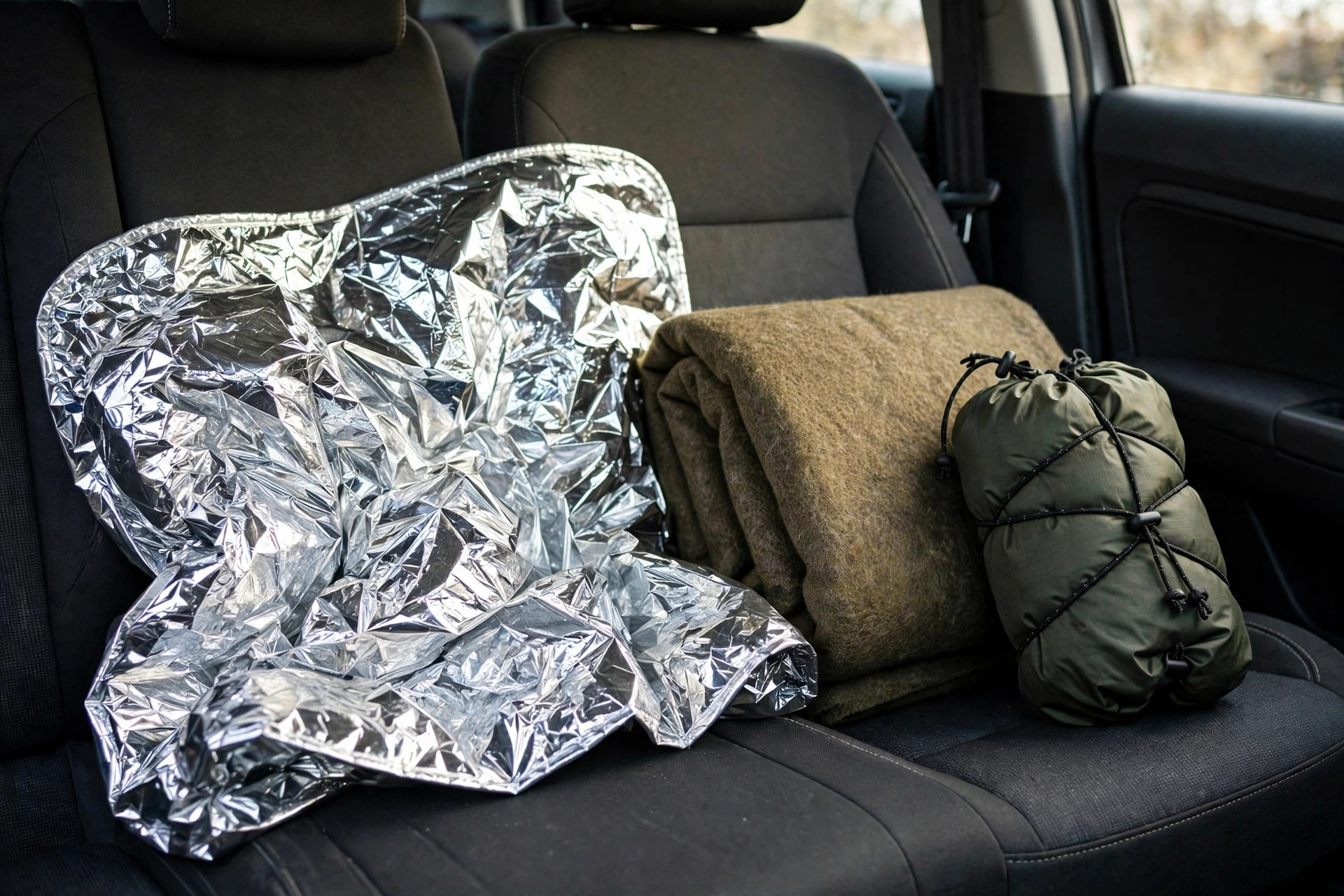

Before you roll on, check out Emergency Blankets for Cars: Mylar, Wool, and Bivvy Sacks Explained — it builds on exactly what you just read.
Share this with a fellow driver or enthusiast who needs to see it.

