
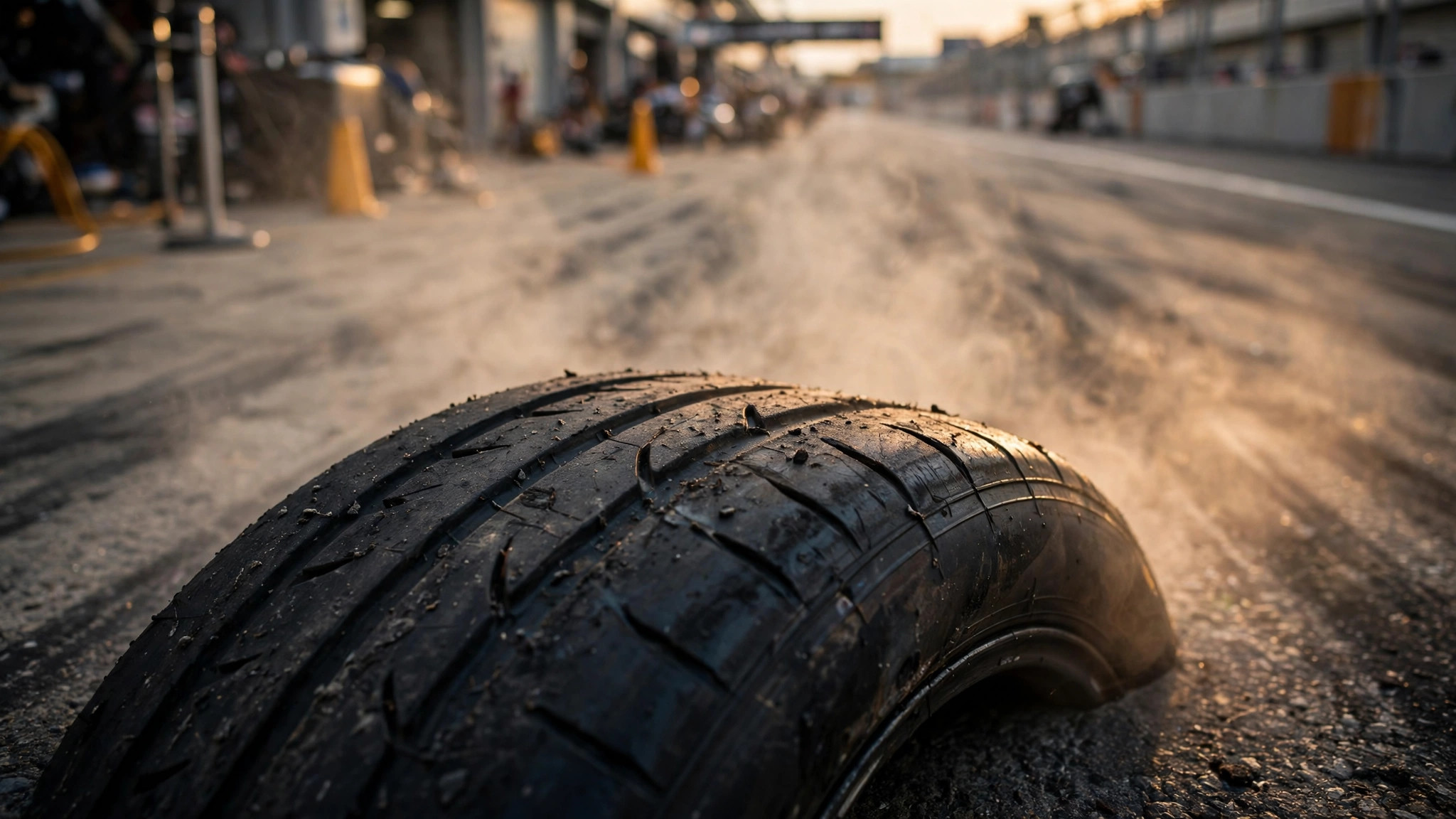
Why Tires Are Everything on Track
If you are heading to a circuit and wondering how to look after your tires while you are there, this guide is for you. It explains what pressures, heat cycles, and wear patterns do, why they matter for grip and safety, and how drivers check and adjust them in the paddock between sessions. Whether you are a beginner on summer tires or an experienced driver chasing pace, knowing when and where tires gain or lose grip is where time, money, and confidence are won or lost.
Tires are the single most important performance variable on a track day, more significant than horsepower, suspension, or brakes. Every input you make, steering, braking, accelerating, is transmitted through four contact patches each roughly the size of your hand. The tire’s grip determines how fast you can corner, how late you can brake, and how early you can apply power. A great tire on a modest car will embarrass a great car on bad tires, and experienced drivers will tell you that the best money in track driving is spent on rubber before anything else.
Track driving punishes tires in ways street driving never does. Sustained high loads generate tremendous heat, hard cornering scrubs rubber off at an alarming rate, and the combination of heat and stress ages tires far faster than mileage alone suggests. A set of tires that would last 30,000 miles on the street can be consumed in a handful of track days.
Managing that consumption, pressures, temperatures, wear patterns, and replacement timing, is a core track day skill. Drivers who manage tires well go faster, spend less, and stay safer than those who just bolt them on and hope.
Choosing Track-Capable Tires
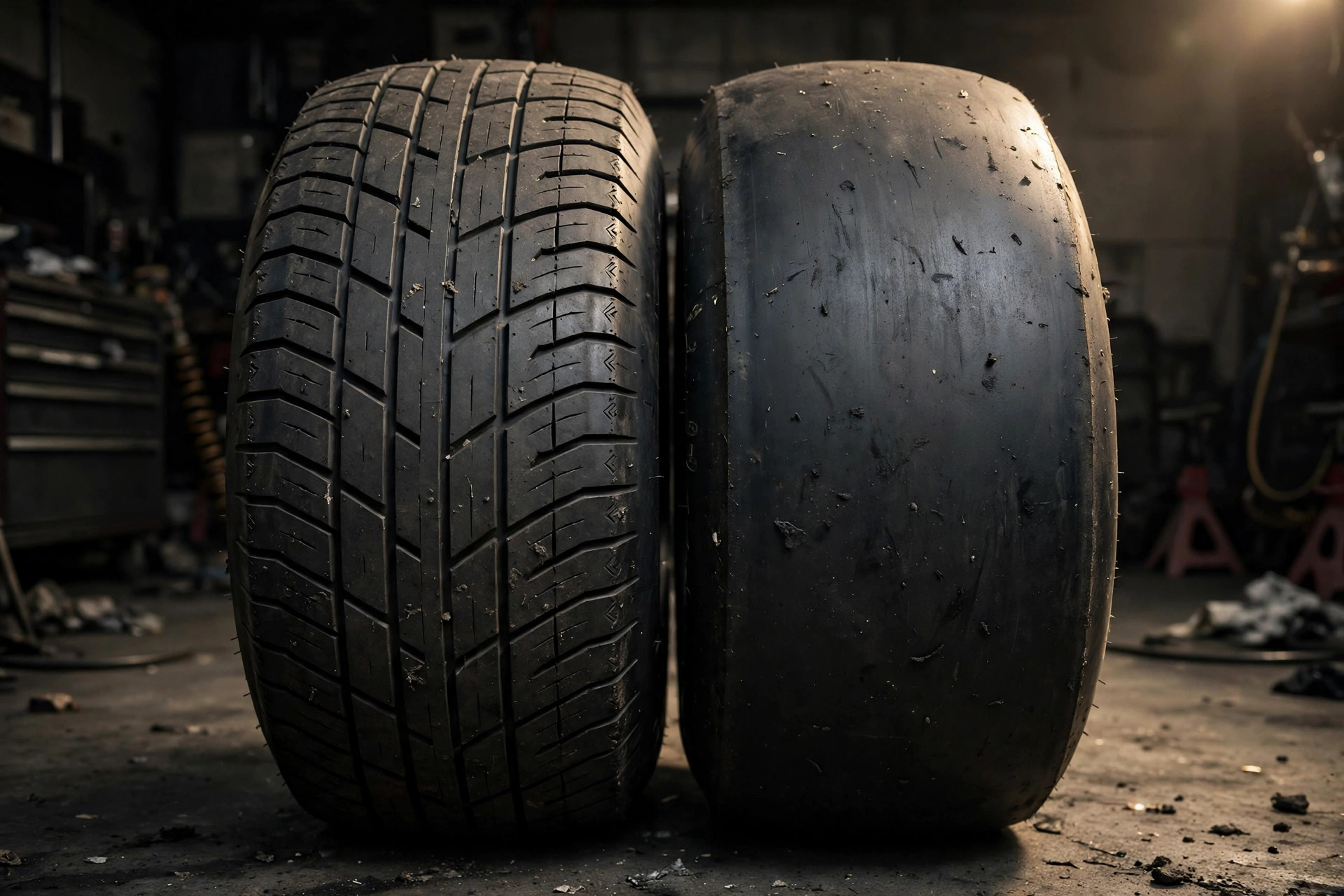
Tires exist on a spectrum from daily-driver all-seasons to full racing slicks, and choosing the right point on that spectrum depends on your experience and goals. Beginners do perfectly well on high-performance summer tires, which offer far more grip than all-seasons while remaining forgiving and communicative at the limit. They squeal progressively as they approach the limit, giving you audible warning, and they break away gently rather than snapping. This feedback is exactly what a learning driver needs.
As pace increases, drivers move to extreme-performance summer tires, often called 200-treadwear tires, which offer near-slick levels of grip while remaining street legal. These are the sweet spot for most serious track day drivers: huge grip, reasonable life, and no need for tire warmers. Full racing slicks and R-compound tires come last; they offer the ultimate grip but demand precise driving, proper warm-up, and often dedicated wheels, and they punish mistakes with sudden breakaway.
Start softer than you think you need. Learning car control on a forgiving tire builds skills that transfer upward, while starting on maximum grip masks bad habits behind adhesion. For foundational knowledge, a tire care basics guide covers the fundamentals that underpin everything here.
For wider background reading, the general overview of the tire explains the basics behind the rubber discussed here. A related example on this site is covered in 2026 Nissan Convertible Tires.
Cold Pressures vs Hot Pressures
Tire pressure is the most powerful adjustment available at a track day, and it is free. The key concept is that pressures rise as tires heat up, typically gaining 4 to 8 psi from cold to fully hot on track. The pressure that matters is the hot pressure, because that is what the tire operates at when you are driving hard. Manufacturers and experienced drivers therefore talk in terms of hot targets: you set a lower cold pressure so that the tire grows into its ideal hot pressure during the session.
Typical hot targets for performance street tires fall in the low to mid 30s psi, but the right number depends on the tire, the car, and the track. Too much pressure balloons the contact patch, reducing grip and wearing the center of the tread; too little lets the tire roll over onto the sidewall, making handling vague and wearing the shoulders. The window is narrower than most beginners expect, and a few psi makes a genuinely noticeable difference in feel.
This is why experienced drivers check pressures religiously after every session. If you need a refresher on technique, how to check tire pressure correctly ensures your readings are trustworthy.
How to Set and Adjust Pressures
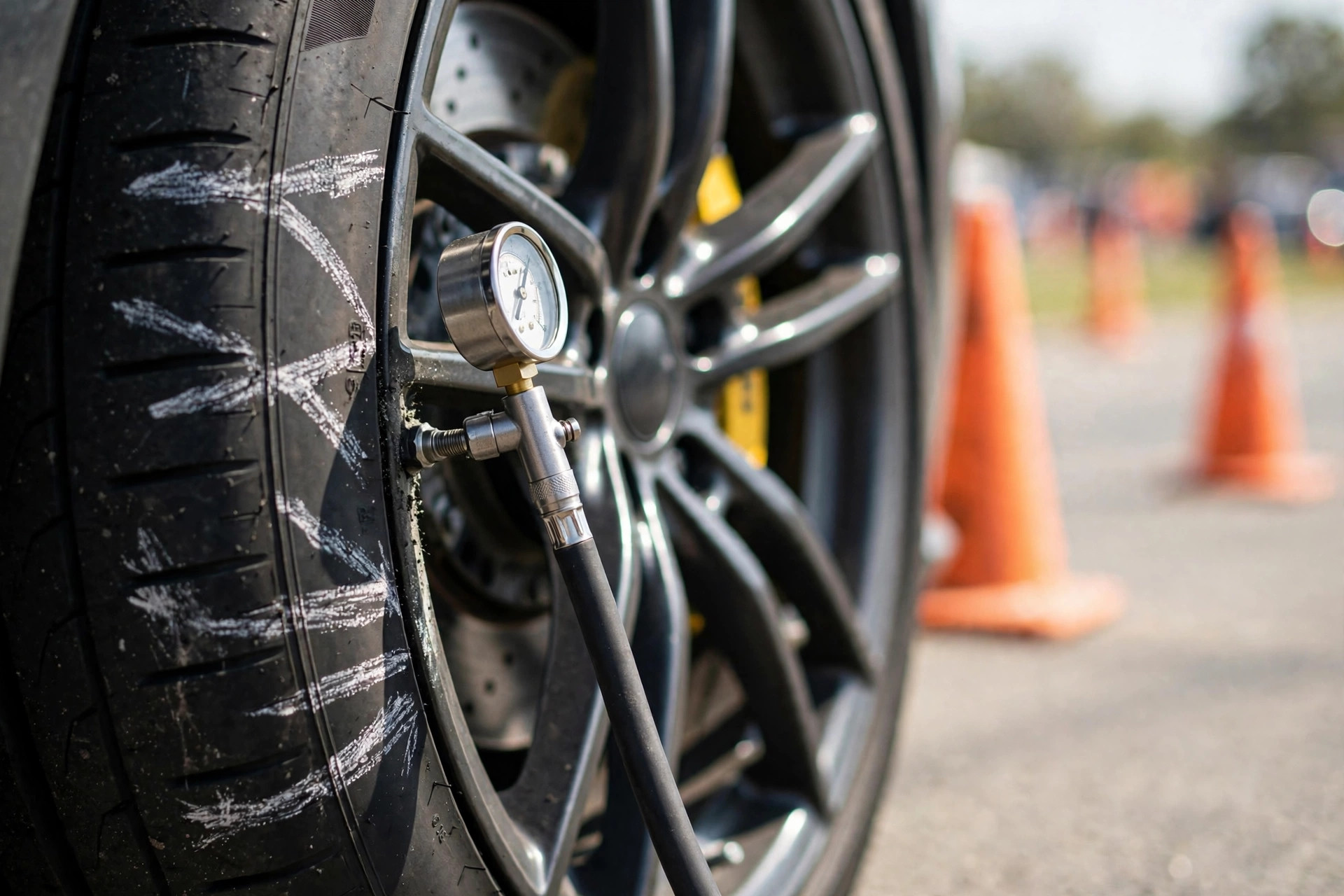
The routine is simple but must be consistent. Before the first session, set cold pressures to your starting point, usually a few psi below your hot target. Drive the session, then check pressures immediately when you pit, while the tires are still hot.
- Set cold pressures to your starting point, usually a few psi below your hot target, before the first session.
- Check pressures immediately when you pit, while the tires are still hot.
- Bleed air down to your hot target if they overshot, or note that they undershot and add air before the next session.
- Record ambient temperature, cold starting pressure, hot pressure after the session, and how the car felt.
Bleed air down to your hot target if they overshot, or note that they undershot and add air before the next session. Record everything: ambient temperature, cold starting pressure, hot pressure after the session, and how the car felt. This log becomes invaluable as conditions change through the day.
Adjust based on feel and wear, not just numbers. If the car feels vague and rolly in corners, pressures are likely low; add a psi or two. If grip feels skittish and the center of the tread is wearing faster than the edges, bleed some out.
Front-to-rear balance matters too: many cars want slightly different pressures front and rear to tune handling balance, and small changes here noticeably affect understeer and oversteer. Change one thing at a time and give it a full session before judging. For fine-tuning, dialing in tire pressure for load and wear takes these concepts deeper.
Heat Cycles Explained
A heat cycle is one full cycle of a tire heating up to operating temperature and cooling back down, and tires have a limited number of good ones. Each cycle slightly hardens the rubber compound as oils migrate and the polymer structure changes. A tire with plenty of tread can still lose significant grip after enough heat cycles, feeling greasy and unresponsive despite looking fine. This is why experienced drivers track heat cycles, not just tread depth, and why a used set of track tires with unknown history is a gamble.
You cannot prevent heat cycling, but you can manage it. Proper warm-up, bringing tires up to temperature gradually over the first lap or two rather than hammering them cold, produces more even curing and longer life. Cool-down laps at the end of sessions let tires shed heat gradually instead of baking while stationary in the paddock.
Avoid sitting in the paddock with scorching tires when a gentle cool-down lap was available. Storing tires cool, dark, and dry between events slows the aging that continues even when the tires are not being used. Temperature swings matter in storage too, as explained in guides to seasonal tire pressure and temperature effects.
Reading Tire Wear Like a Pro
Tire wear patterns are a diagnostic readout for your entire setup. Even wear across the tread means pressures and alignment are in the right window. Excessive wear on both shoulders with a pristine center means pressures are too low and the tire is rolling over.
Wear concentrated in the center means pressures are too high. Wear on only the inside or outside shoulder points to camber issues: too little negative camber wears the outside shoulder on track, while too much wears the inside.
Feathering, where tread blocks develop a saw-tooth edge, indicates alignment or driving issues such as excessive toe or aggressive trail braking. Chunking, where pieces of tread tear away, usually means the tire overheated, often from too-low pressures or too aggressive driving on a tire not designed for the heat. Graining, a rippled texture on the tread surface, appears when a cold tire is worked too hard before it is up to temperature.
Learning to read these signs lets you fix problems with pressure or technique adjustments instead of just buying new tires. A dedicated look at understanding tire wear patterns sharpens this skill considerably.
Rotation, Flipping, and Extending Life
Track driving wears tires unevenly, so rotation strategy matters. On most cars the front tires do the majority of the work, handling most of the braking and all of the steering, so they wear faster than rears. Rotating front to rear between events evens out the wear and extends the set’s useful life. Mark each tire’s position with chalk so you can track the rotation history, and always rotate in the correct direction for directional tires.
Flipping tires on the wheel, remounting them inside-out, is a common trick to even out shoulder wear from tracks that load one side heavily. Most circuits have a dominant direction, so the outside shoulders on one side take a beating; flipping moves the worn shoulder to the inside where it sees less load. This effectively doubles the life of the shoulders.
It costs a remounting fee at a tire shop, which is cheap compared to a new set of track tires. Combined with sensible pressures and smooth driving, rotation and flipping can stretch a set of 200-treadwear tires across a full season of moderate track use.
Knowing When Tires Are Done
Tires are done when they can no longer do their job safely, and that point arrives through three paths: tread wear, heat cycle degradation, or age. Tread wear is the obvious one: when the tread is gone or the wear bars are flush, the tire is finished. On track, replace them earlier than you would on the street, because a tire that is merely adequate in the rain on the highway is dangerously inadequate at track speeds. Cord showing anywhere means the tire should never have been on track in the first place.
Heat cycle degradation is sneakier: the tire looks fine but grip has fallen off a cliff. If your lap times are mysteriously slower on the same setup, or the car feels greasy and unresponsive despite good pressures, suspect dead rubber. Age is the third killer; tires older than about five or six years harden significantly regardless of tread depth, and old tires on track are a genuine safety risk.
When in doubt, replace. Tires are the cheapest insurance in track driving, and the cost of a new set is trivial compared to the cost of the crash that worn tires invite.
Tire Care Between Events
How you store tires between events affects how they perform at the next one. Store them indoors, away from sunlight, ozone sources like electric motors, and temperature extremes. Stack them or stand them upright; either is fine for short-term storage, but avoid hanging them by the wheel for long periods. Keep them clean and dry, and do not apply tire dressings or silicone products, which can contaminate the rubber and affect grip.
Before each event, inspect every tire closely: look for cuts, punctures, embedded objects, sidewall damage, and uneven wear from the last event. Check the manufacturing date code; if the tires are aging out, plan replacement before they become a safety issue. Verify that your pressure gauge is accurate, because a gauge that reads three psi high will have you running three psi low all day. Tire management is a discipline of small, consistent habits, and drivers who practice it spend less money, drive faster, and never have to wonder whether their tires are up to the task.
Related posts:
Into this kind of machine? Drag Radials vs Slicks: Choosing the Right Tire for the Strip covers a close cousin worth your garage time.
Share this with a fellow driver or enthusiast who needs to see it.

