
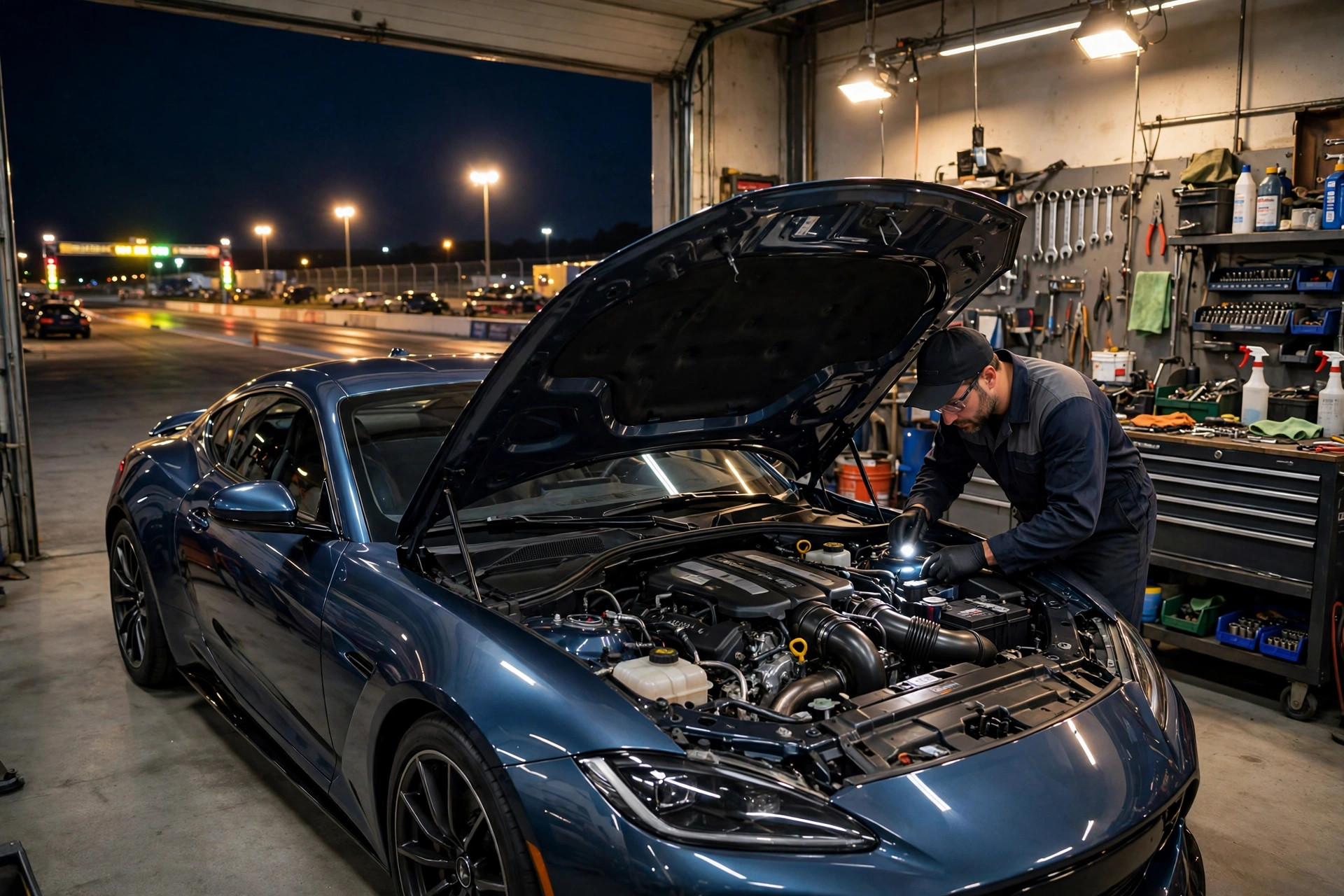
If you have never made a pass at a drag strip, a test and tune night is where to start, because it shows you what to do, when to do it, where everything happens, and how the whole evening flows without any elimination pressure. Who runs these nights ranges from daily-driver beginners to trailered race cars, and why they come is the same: to make pass after pass, learn the procedures, and collect data. Every drag racer remembers their first night: the smell of race fuel, the sound of open headers echoing off the grandstands, and the nervous thrill of rolling toward the water box for the first time. This guide walks you through the entire evening, from what drag racing practice night looks like to the last timeslip.
Unlike bracket race days, there is no elimination ladder, no dial-in pressure, and no trophy on the line at test and tune. The only competition is against your own previous best, which makes it the ideal environment to learn staging, practice launches, sort out mechanical issues, and get comfortable with the rhythm of a drag strip. Show up prepared, follow the flow, ask questions, and you will leave with timeslips, knowledge, and the bug that keeps racers coming back for decades.
What Test and Tune Night Is
Test-and-tune, often abbreviated T&T, is an open track session where drivers buy in for a flat fee and make as many passes as time and the car-count allow. Tracks typically run them on weeknights or Friday evenings, and the format is simple: go through tech inspection once, then cycle through the staging lanes all night, making a pass, collecting your timeslip, cooling down, and going again. Serious racers use T&T to test new combinations, dial in new parts, and practice; beginners use it to learn everything from scratch without the pressure of eliminations.
Expect a mix of machinery, from daily drivers to trailered race cars, and a relaxed but professional atmosphere. The track staff runs the same safety procedures as race day, the timing system is fully live, and your timeslips are just as real. Some nights are busier than others; arriving at opening usually means shorter lines and more passes. Check your track’s schedule and social media before going, since weather cancellations are common and some nights have special themes or restrictions.
A T&T night is also the perfect low-stakes introduction before you ever enter a bracket event, complementing the general preparation in a beginner’s first track day guide.
What to Bring and Passing Tech
What to Bring: The Checklist
Pack like the evening depends on it, because small missing items cause big frustrations. A practical checklist for the night includes:
- Your driver license, and the entry fee in cash as backup.
- A helmet if your car is quick enough to require one, plus long pants and closed-toe shoes, which many tracks mandate for drivers.
- Basic tools, a tire pressure gauge, a portable air pump or tank, engine oil, coolant, and a jack if you plan to swap wheels.
- A notebook or phone app for logging runs, plus shoe polish or a dial-in marker and painter’s tape for car numbers if the track uses them.
- A folding chair, sunscreen or a jacket depending on season, water, and snacks for the long evening.
The most overlooked item is that notebook or phone app for logging runs. From your very first pass, record the timeslip numbers plus tire pressure, launch RPM, weather notes, and lane, because this log becomes your tuning bible. A friend is invaluable too: an extra set of hands, a second pair of eyes on the car, and someone to film your launches from the fence line. Preparation is what separates a productive night from a frustrating one.
Passing Tech Inspection
Every car goes through tech inspection before its first pass, and the process is straightforward for a well-maintained street car. The inspector checks for fluid leaks, a securely held-down battery, lug nuts torqued and present, tires in safe condition with no cords showing, a working throttle return spring setup, and generally that nothing is falling off or about to. Convertibles may need extra scrutiny, and any car running quicker than certain thresholds faces additional requirements like a helmet, and eventually a roll bar.
Prepare before you leave home: check all fluid levels, torque your lug nuts, remove loose items from the car including the trunk, and make sure the battery cannot move. If you have done modifications, be ready to explain them honestly; tech inspectors are not trying to fail you, they are trying to keep everyone safe, and they appreciate drivers who take it seriously. Failing tech for something silly like a loose battery is embarrassing and costs you track time, so do a walk-around with fresh eyes the night before. Once you pass, you usually get a tech card or wristband for the evening, and you are free to run.
Staging Lanes, Track Flow, and Your First Passes
Staging Lanes and Track Flow
The staging lanes are the queue system, usually several parallel lanes feeding the burnout box, and learning the flow is your first task. When you arrive, ask staff or a neighboring racer which lane to join; some tracks separate by speed or by run groups. Stay with your car, keep the lanes moving by pulling forward promptly, and have your window down and helmet on as you approach the front. The starter or a track official will pair you with the car in the adjacent lane and wave you forward when it is your turn.
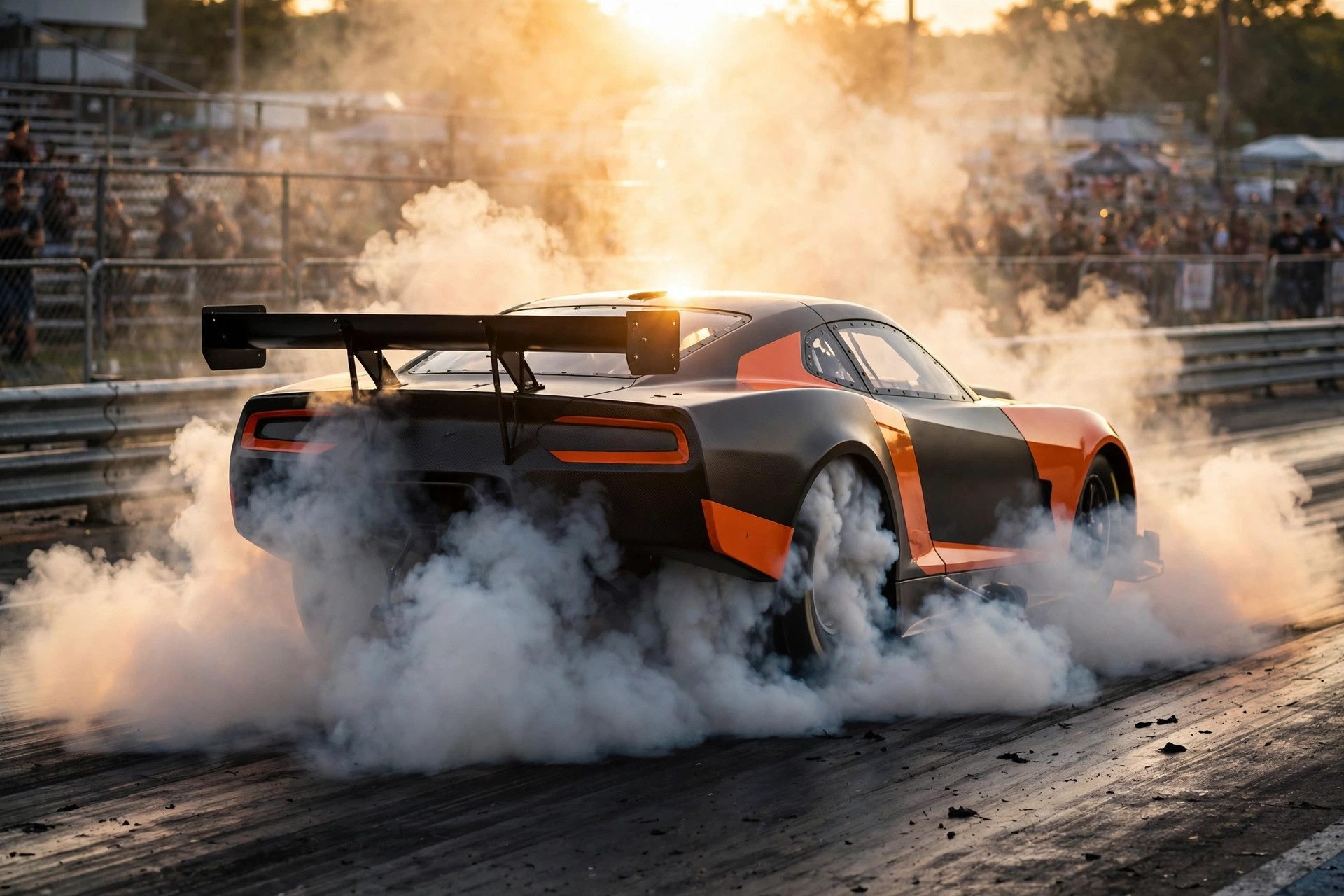
From the lanes you roll to the burnout box, do your burnout, then creep to the starting line to stage. After the run, stay in your lane past the finish, slow down using the shutdown area, and follow the return road back to the pits, which at most tracks loops you past the timing booth to collect your slip. Never turn around on the track, never stop on the racing surface, and always follow the starter’s hand signals. Watch three or four pairs run before your first pass and the whole choreography will make sense; it looks chaotic from the stands but it is a well-rehearsed routine.
Making Your First Passes
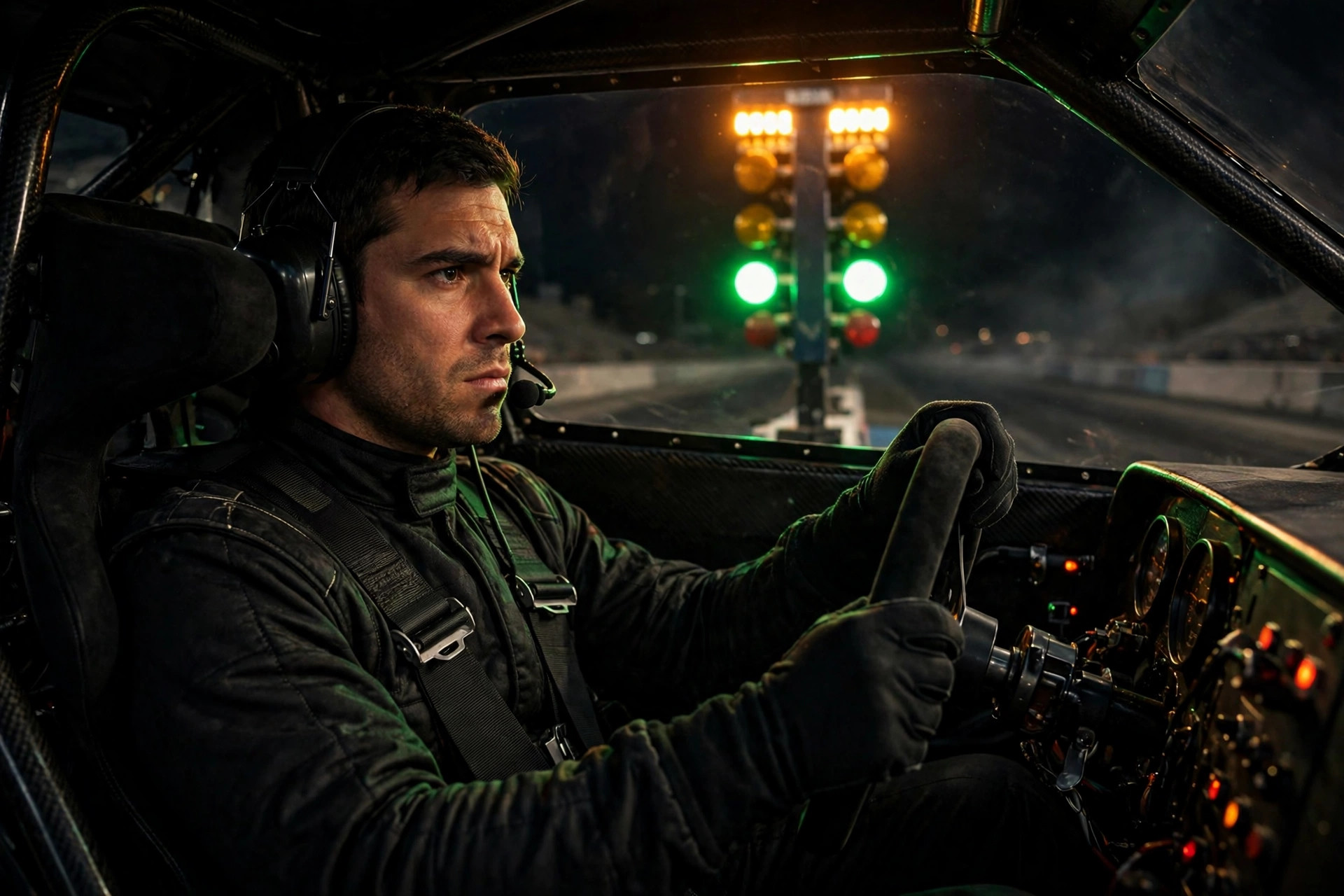
Your first pass has exactly one goal: a clean, safe run from burnout to shutdown with no red light and no drama. Do a short burnout or a cleaning spin on street tires, stage shallow, leave on the last amber rather than trying for a heroic reaction, and drive straight through the finish line without lifting early. Shift cleanly, keep both hands on the wheel, and use the full shutdown area to slow down; the brakes and the sand traps at the end exist because cars sometimes do not slow as expected, so respect the distance.
For passes two through five, add one variable at a time. Work on launch RPM in small steps, experiment with tire pressure in two-PSI increments, and practice your staging routine until it is identical every time. Do not change three things between passes and then wonder what worked; the scientific method applies at the drag strip.
If something feels wrong, vibrations, smells, warning lights, abort the run and check the car, because T&T is for testing and there is always another pass. The evening is long, the pressure is zero, and every clean pass builds the muscle memory you will need when eliminations eventually matter.
Logging Data and Track Etiquette
Logging Data From Pass One
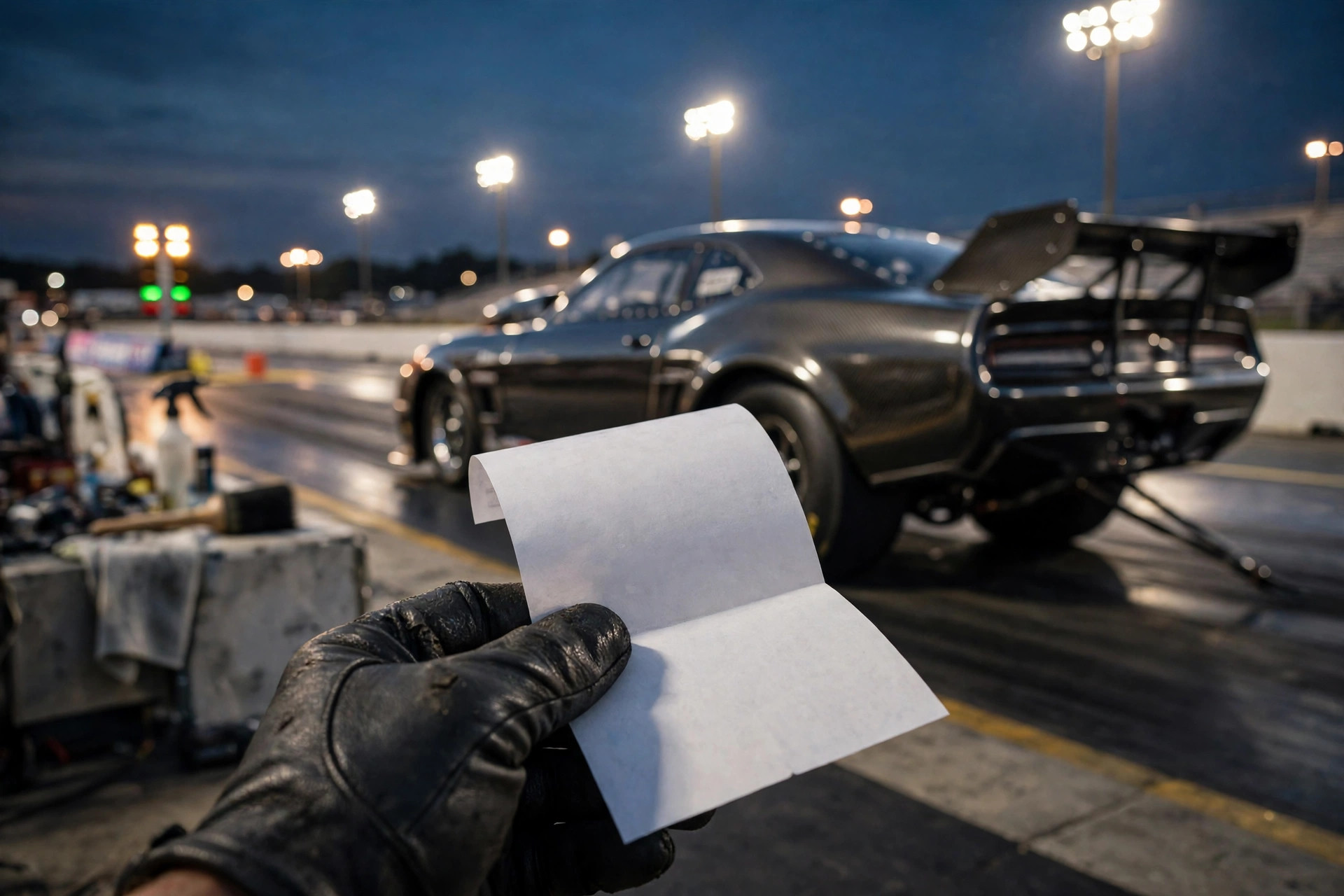
Start the logbook habit on your first night and never break it. For every pass, record the full timeslip numbers, reaction, 60-foot, increments, ET, and MPH, plus the conditions: air temperature, lane, tire pressures hot and cold, launch RPM, fuel level, and any changes you made. Within a few outings, patterns emerge that no memory can hold: your car might always run two hundredths quicker in the left lane, or pick up a tenth when the temperature drops ten degrees. This is the data that later lets you set honest dial-ins and win bracket rounds.
Pair the numbers with honest notes about your driving: red-lighted, spun, missed third gear, lifted early. The log is for you, so brutal honesty pays; the racers who write down their mistakes fix them, and the ones who do not repeat them. Photograph each timeslip as backup, since thermal paper fades, and consider a simple spreadsheet once the notebook fills.
Combining timeslip trends with occasional dyno testing data gives you the complete picture of what the engine makes versus what the chassis and driver deliver. Data is the difference between hoping and knowing.
Etiquette and Learning From Veterans
Drag strips run on courtesy as much as on rules. Do not do long burnouts past the line, do not leak fluids in the lanes, clean up your pit area, and never touch another racer’s car or equipment without asking. In the staging lanes, be ready when your turn comes; holding up the show while you hunt for your helmet is the fastest way to irritate everyone. If you break down on the track, stay in the car with your belts on until track staff reach you, unless there is fire.
The paddock is also the best classroom in motorsport. Drag racers are famously generous with advice, and a respectful question about someone’s setup will often earn you twenty minutes of hard-won wisdom. Offer to help in return, even if it is just holding a wrench, because the community runs on reciprocity. Watch the fast, consistent racers rather than the loud ones: notice their staging routine, their burnout length, how they cool the car between rounds.
Keep safety culture in mind from day one; even at casual T&T nights, the standards trace back to the same drag racing safety systems that protect professionals, and taking tech and procedure seriously marks you as a racer, not a tourist. Arrive prepared, log every pass honestly, and treat the regulars with courtesy, and a single test and tune night becomes the foundation everything else in the sport builds on.
Related posts:
Whether you wrench, drive or just admire, the Driving & Road Trips category has more miles to offer.
Save this page and send it to your car group — good tips travel.

