
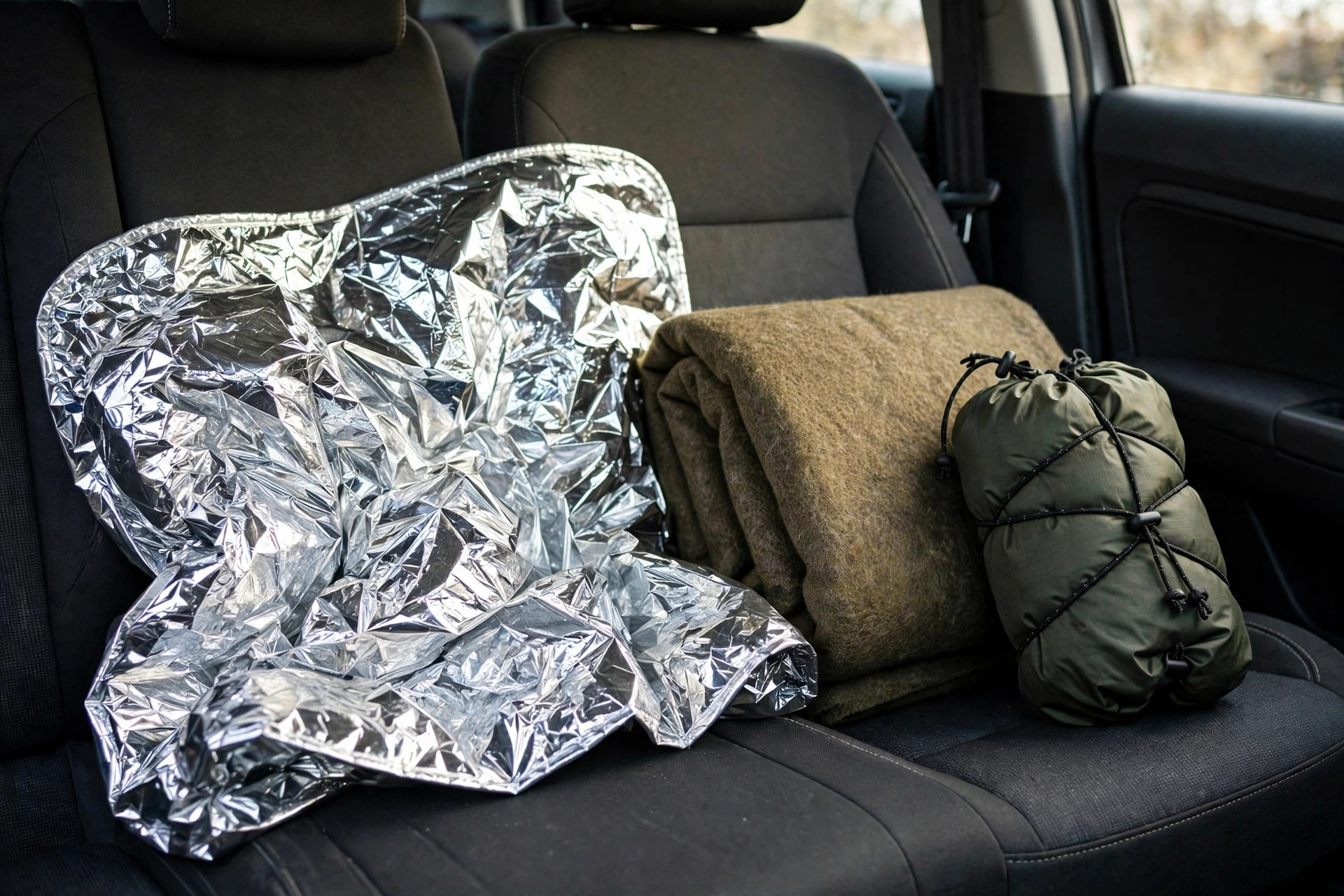
An emergency blanket is the simplest life-support device ever sold for a dollar: a sheet of metallized plastic film, folded to the size of a deck of cards, that reflects up to ninety percent of your radiated body heat back to you. It will not win any comfort awards, but in the gap between a breakdown and rescue, it can hold off hypothermia and buy you the hours you need.
Not all emergency blankets are the same, though. Mylar space blankets, wool blankets, and bivvy sacks each have real strengths and real weaknesses, and the smartest car kits carry more than one type. This guide breaks down the options, explains how to use each one properly, and shows how blankets fit into a complete cold-weather survival plan.
Mylar Space Blankets: The Ultralight Essential
The classic silver emergency blanket is a sheet of thin plastic film coated with a metallic reflective layer, originally developed for the space program. It weighs about two ounces, folds to pocket size, and costs next to nothing, which is why it belongs in every car, every hiking pack, and every emergency kit on earth. Its job is simple: reflect your radiated body heat back toward you instead of letting it escape into the cold air.
Used correctly, a mylar blanket is wrapped around you like a shawl or a loose cocoon, reflective side in, with as few air gaps as practical. It is a wind barrier and a radiant-heat reflector in one, and it genuinely works: wrapped test subjects in cold chambers show measurably slower core temperature decline. The crinkly noise and the clammy feeling are the price of admission; comfort is not the point, heat retention is.
The weaknesses are real and worth knowing. Mylar tears easily, especially at the folds after repeated use, so treat these as single-incident items and carry spares. They trap moisture as well as heat, so you will feel damp over time; vent slightly if you are sweating, since wet skin loses heat faster.
And they provide zero insulation against the cold ground, which is why the next section matters so much. For the broader winter context, see our winter breakdown survival kit guide.
Wool Blankets: The Heavy-Duty Workhorse
If mylar is the ultralight option, a wool blanket is the heavyweight champion. Wool insulates even when damp, resists fire and embers far better than any synthetic, breathes so you do not wake up clammy, and lasts for decades. Military surplus wool blankets have kept soldiers warm for a century, and a good one will outlive your car.
The trade-off is bulk and weight. A real wool blanket is the size of a bedroll and weighs several pounds, which is why many drivers skip it — a mistake in cold climates. Draped over passengers, spread on the seats as insulation from cold upholstery, or wrapped around someone showing early signs of hypothermia, a wool blanket does work that no mylar sheet can match. It is also the blanket you reach for when someone needs to sit on cold ground or lean against a cold car body.
You do not need an expensive boutique blanket. A basic eighty-percent-wool surplus blanket is affordable, nearly indestructible, and easy to find. Store it in the trunk in a compression sack or a sealed bag to keep it clean and dry, and air it out once a season. One wool blanket per two regular passengers is a reasonable rule for winter driving.
Bivvy Sacks: The Upgrade Worth Knowing About
A bivvy sack, short for bivouac sack, is essentially an emergency blanket shaped into a sleeping bag: a metallized, windproof, water-resistant cocoon you climb into. It solves the two biggest problems of flat mylar blankets — drafts and the constant battle to keep the sheet wrapped around you — by enclosing you completely with a drawstring hood around your face.
For roadside use, the bivvy’s advantage is that it works while you sleep or doze, which is exactly when flat blankets fail. Climb in fully clothed, pull the drawstring snug but leave a breathing gap, and the sack traps a warm microclimate around your body. The better models add a degree of breathability to manage condensation, though no emergency bivvy is as comfortable as a real sleeping bag; again, survival, not comfort, is the metric.
Bivvies cost more than flat blankets, typically fifteen to thirty dollars, and pack to about the size of a water bottle. For drivers who travel remote winter roads, that is money extremely well spent. Keep one per regular occupant alongside your flat mylar spares, and you have a layered system: mylar for quick wrapping and signaling, bivvy for sustained warmth, wool for heavy-duty insulation.
Technique: Getting Real Warmth From Emergency Blankets
Blankets work best as part of a system, and the order of operations matters:
- Get out of the wind: stay in the car with windows mostly closed, or shelter behind the vehicle, because wind strips heat faster than any blanket can return it.
- Insulate yourself from cold surfaces: sit on a folded blanket, a coat, or even floor mats rather than directly on cold seats or ground, because conductive heat loss to a cold surface is brutally efficient.
- Layer the blankets correctly — insulation closest to the body, reflective layer outside it. Wrap in the wool blanket first, then the mylar sheet over the top to reflect heat back through the wool and block wind; the reflective layer needs a reasonably sealed air space to work its magic.
- Protect the extremities: socks, gloves, and a hat or hood multiply the effectiveness of any blanket, and tuck mylar around your neck and shoulders rather than letting it gape open.
- Keep moving gently: isometric exercises — tensing and releasing muscle groups — generate real metabolic heat without the sweat and exhaustion of vigorous movement.
Follow that order and even humble gear performs well above its price. Our winter driving safety guide covers the driving decisions that keep you out of these situations in the first place.
Building the Blanket Kit: What to Carry and How to Store It
A complete car blanket kit for a family of four fits in a medium duffel:
- Four flat mylar blankets as the disposable base layer.
- Two bivvy sacks for sustained warmth while you rest.
- One or two wool blankets for heavy-duty insulation.
- A few large trash bags that double as ground sheets and vapor barriers.
Total cost is well under a hundred dollars, and total weight is manageable for any trunk. Storage is straightforward but worth doing right: keep the mylar blankets and bivvies in their original packaging inside a sealed zip-lock bag, since moisture and trunk abrasion degrade them over time, and put the wool blankets in a compression sack or a heavy-duty trash bag to stay clean. Strap the kit down so it stays put — our tie-down hardware showdown explains which straps suit trunk duty — and organize the space around it with the right organizer for your cargo area, as compared in our SUV vs sedan trunk organizer guide. Store the whole kit where you can reach it without fully unloading the trunk, and make sure every regular driver knows it is there.
Inspect the kit with your seasonal refresh: replace any mylar blanket whose packaging is torn, check bivvy zippers and drawstrings, and air out the wool. Connect the blanket kit to the rest of your cold-weather gear with our trunk essentials inventory, and see our guide to road-tripping with little ones if your passengers include children, who lose heat faster than adults and need extra layers.
Related posts:
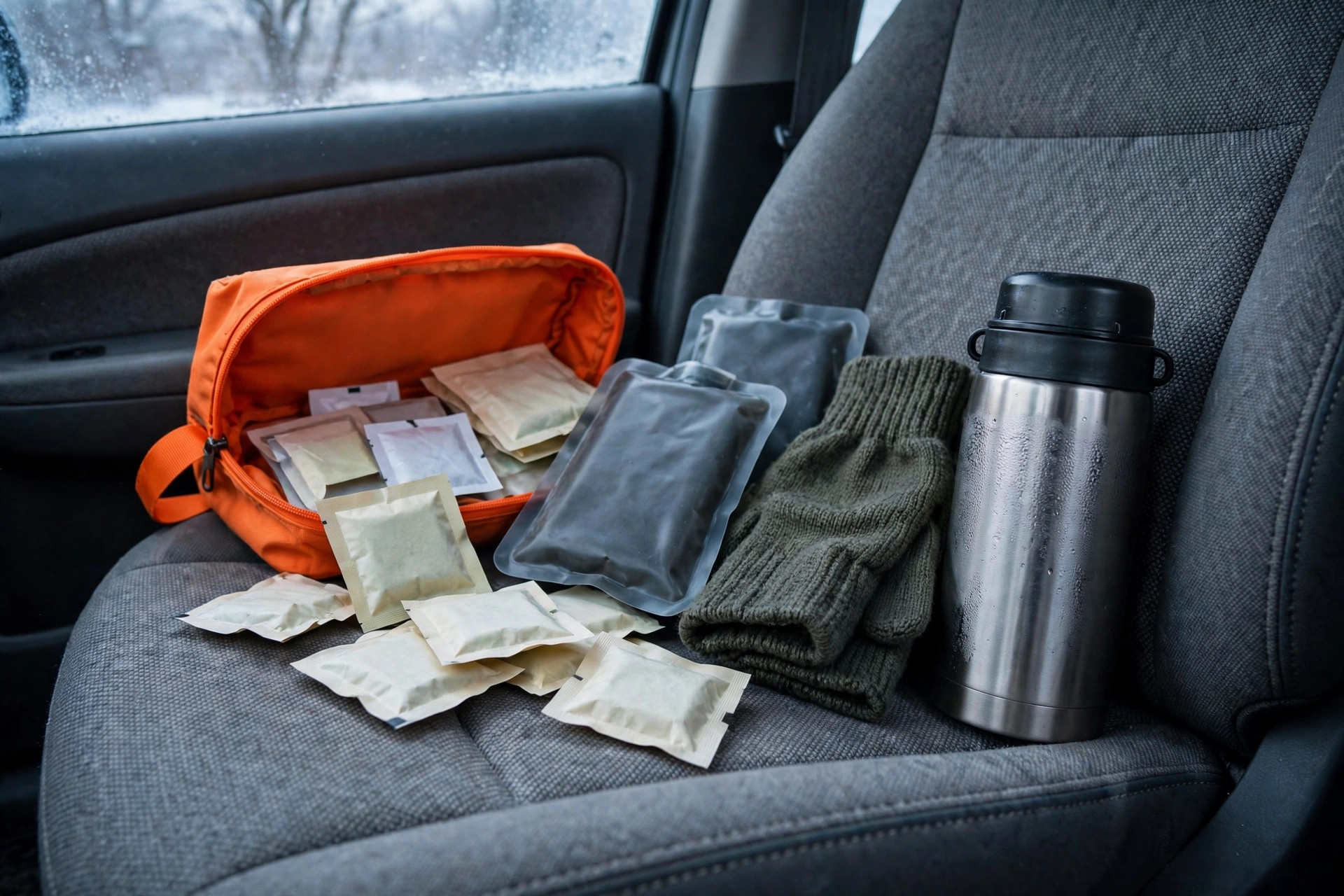

If this read fired you up, Hand Warmers and Heat Packs: Surviving a Cold Breakdown keeps the Accessories & Gear momentum rolling.
Save this page and send it to your car group — good tips travel.

