
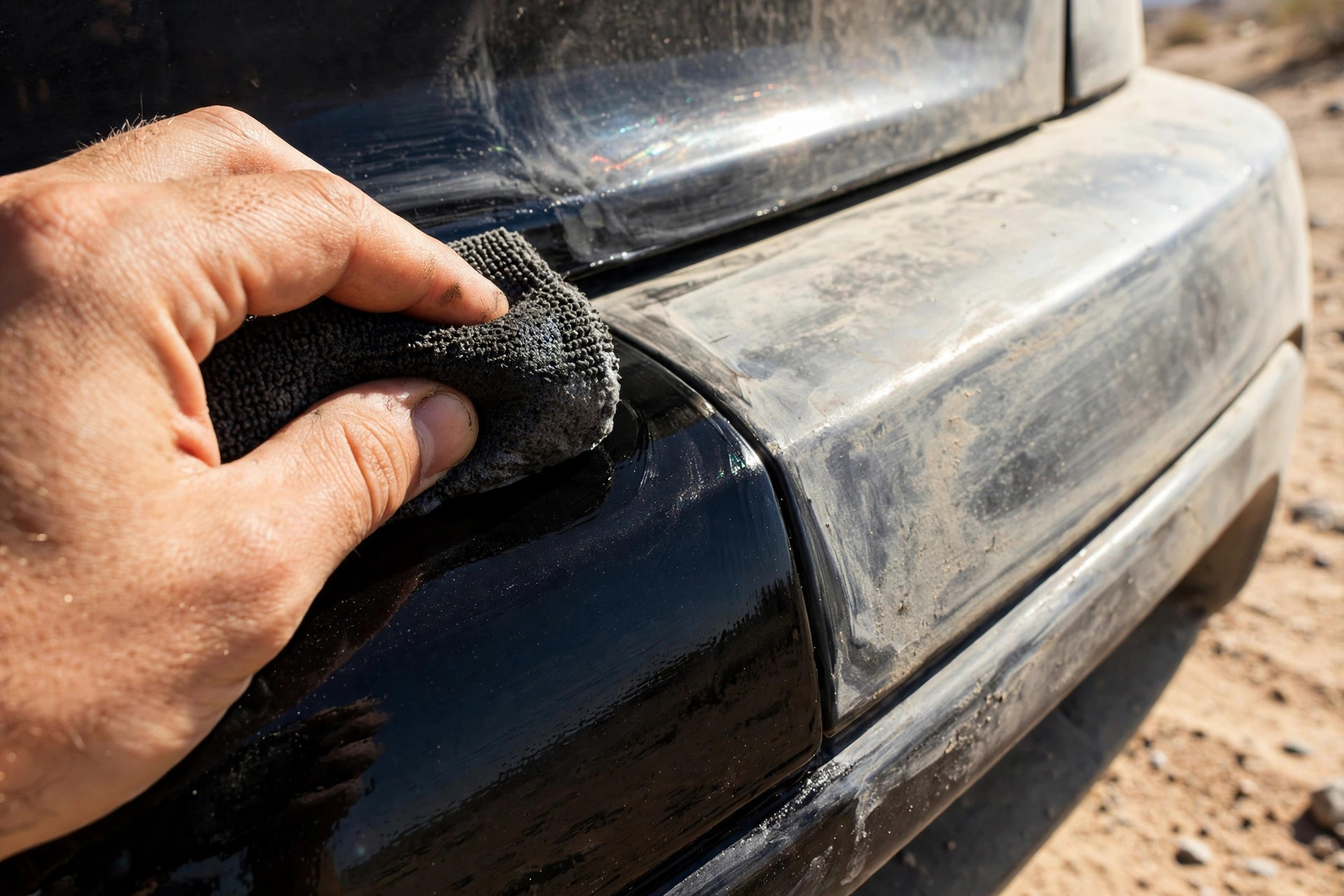
Why does a black plastic bumper that stays dark for five years in Seattle turn chalky gray in eighteen months in Phoenix? The answer is ultraviolet radiation: it is the engine of trim fading, and in high-UV climates like Arizona, Texas, Florida, and the desert Southwest, that engine runs at full throttle year-round. Heat multiplies the damage for anyone who parks outdoors in those places: surface temperatures on dark trim can exceed 180 degrees Fahrenheit in direct sun, accelerating the chemical breakdown of the plastic.
If you live where the sun is a full-time adversary, standard trim care advice needs an upgrade. This guide explains why hot climates destroy trim so fast, how to choose products that survive the punishment, and the maintenance rhythm that keeps black plastic black when the UV index rarely drops below extreme.
Why Hot Climates Destroy Trim So Fast
UV photons break the polymer chains in plastic through photo-oxidation, and the reaction rate roughly doubles with every 18-degree Fahrenheit rise in temperature. A bumper in Phoenix is not just getting more UV hours than one in Portland; every one of those hours does more chemical damage because the plastic is hotter. Add airborne dust and sand that micro-abrade the surface, monsoon-season humidity swings, and intense reflected UV off light-colored pavement, and desert trim lives about as hard a life as automotive plastic can live.
Florida and the Gulf Coast add a different accelerant: humidity plus heat plus salt air. Moisture wicks into micro-cracks in oxidized plastic and the daily thermal cycling, cool humid nights to blazing afternoons, works those cracks wider. The visible result is the same chalky gray, but the plastic underneath is often more deeply degraded, which changes which restoration methods work. Understanding the science of UV fading helps you see why climate-specific strategy matters instead of one-size-fits-all advice.
Parking and Shade: The Cheapest Protection
No product outperforms shade. A car parked in a garage or under a carport receives a tiny fraction of the UV dose of one parked on an open driveway, and the trim lifespan difference is measured in years, not months. If covered parking is not available, a quality car cover or even a windshield sunshade plus a habit of choosing shaded spots meaningfully slows the damage. The horizontal surfaces, cowl panels, mirror tops, and bumper tops, take the worst direct hit, so prioritize shading those.
Consider the orientation too: in the northern hemisphere, the south-facing side of a parked car gets the most intense sun. If you always park the same way, one side of the car fades faster than the other, which is why experienced desert detailers see cars with one gray bumper and one black one. Rotating your parking orientation when possible evens out the exposure. These are free interventions, and they multiply the effectiveness of every product you apply.
Products That Actually Survive the Heat
Heat separates real trim protection from marketing. Cheap silicone dressings can literally bake off or streak in 110-degree heat, and some low-grade products yellow or attract dust that bakes into the surface. In hot climates, skip the dressings-as-protection category entirely and go straight to products engineered for UV resistance: ceramic trim coatings with stated UV blockers, quality trim dyes for already-faded parts, and polymer sealants formulated for high-temperature stability.
Ceramic trim coatings are the standout choice for sun-belt cars because they crosslink into a hard layer that does not melt, run, or evaporate in heat the way oily dressings do. A coating rated for two years in temperate climates might give you twelve to eighteen months in Phoenix, which still beats reapplying dressing every three weeks. Ceramic trim coatings tested against dressings shows the durability gap clearly, and that gap widens as the temperature rises.
The Right Restoration Approach for Sun-Baked Trim
Sun-baked trim is often oxidized deeper than trim in mild climates, so light-touch methods underperform. A quick wipe of dressing on deeply chalked desert plastic looks good for a day and then fades unevenly, because the product cannot penetrate the thick oxidized layer. Start with real decontamination: thorough degreasing, a stiff brush on textured grain, and if the surface is heavily chalked, consider mechanical removal of the dead layer before restoring.
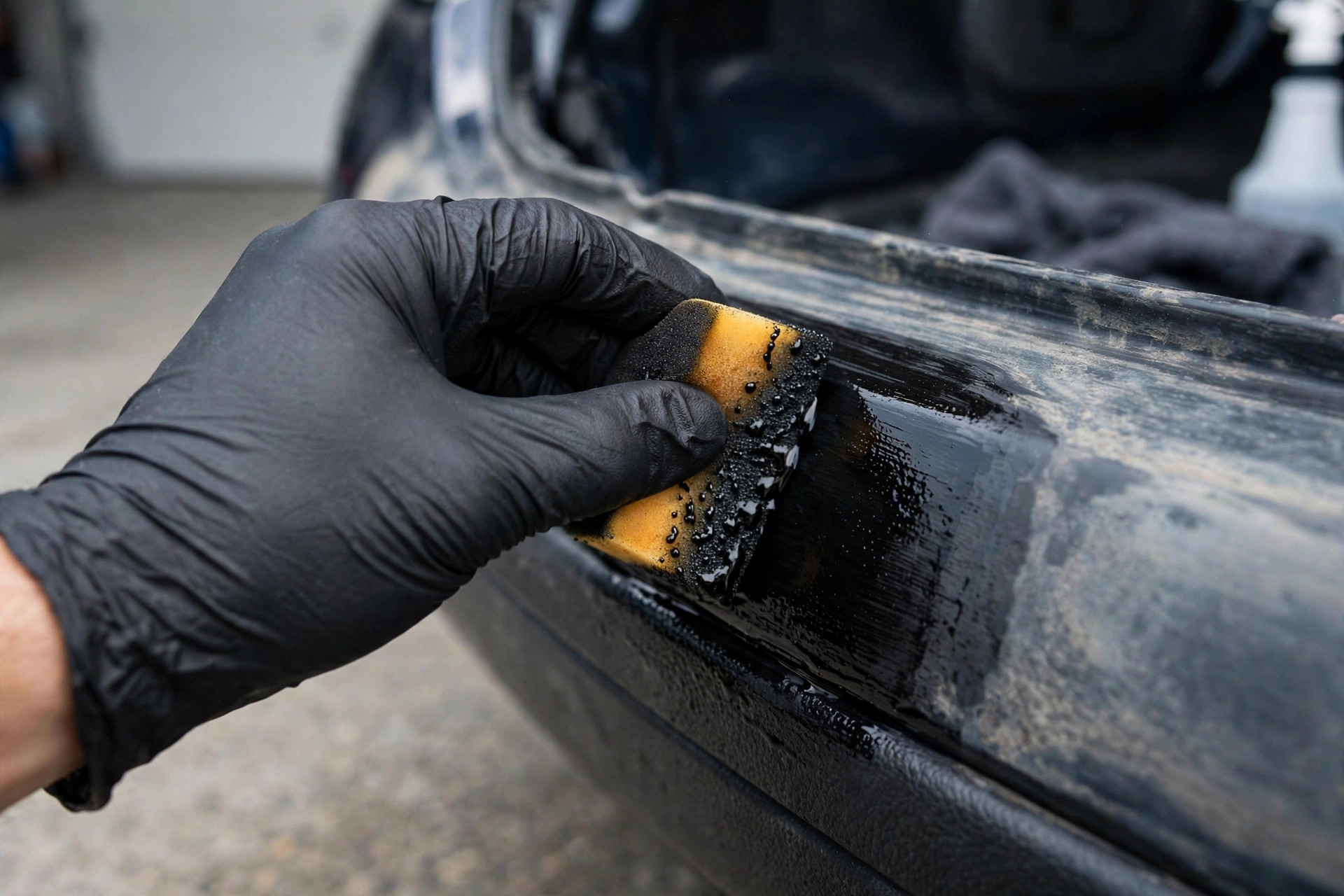
For severely sun-damaged parts, the most reliable sequence is decontaminate, restore the color with dye or a heat treatment, then seal with a ceramic coating. Each step addresses a different layer of the problem: cleaning removes the dead oxidation, dye or heat restores the color, and the coating locks it in against the sun that caused it. The full faded-trim restoration walkthrough covers the baseline process; in hot climates, just assume you need the thorough version, not the quick one.
A Maintenance Schedule for High-UV Climates
In extreme-sun regions, plan on a seasonal trim routine rather than an annual one:
- Spring: deep clean all exterior trim, inspect for new fading, and reapply or top up your UV protection before summer arrives.
- Mid-summer: a maintenance wash with a trim-safe shampoo and a spray sealant top-up on horizontal surfaces, which take the worst beating.
- Fall: full decontamination and a fresh protection layer going into the milder months.
- Winter: lighter maintenance, since even desert winters deliver meaningful UV.
The key insight is that protection in hot climates is a consumable with a shorter life, so schedule reapplication before failure rather than after. Waiting until the trim looks gray again means you are restoring, not maintaining, and restoration costs more time every cycle. A topped-up coating maintained on schedule can keep trim looking new indefinitely; a neglected one restarts the fading clock. Track what you applied and when, because real-world longevity numbers shift significantly in high-UV environments.
Do Not Forget the Interior
Cabin temperatures in parked cars routinely exceed 170 degrees Fahrenheit in desert summers, and the dashboard top sits directly under the windshield magnifying the heat. Interior plastics in hot climates fade, off-gas, and crack far faster than identical cars in mild regions. A reflective windshield sunshade is the highest-value purchase you can make: it drops dash surface temperatures dramatically and blocks the direct UV doing most of the damage.
Use interior-specific UV protectants on the dash top and door panel tops, and crack the windows slightly when safe to do so to vent the worst heat. Leather and vinyl need conditioning more often in dry heat to prevent cracking, but keep heavy dressings off textured plastic dash tops where they create glare. The interior battle is won with shade and ventilation first, products second.
Trim is only one part of car care in a hot climate, and the rest of the routine matters too. Related guides on this site include Drying and Deodorizing Wet-Dry Car Vacuums After Every Wet Pickup and Roof Racks on Panoramic Glass Roofs: Mounting Without Cracking the Glass.
When the Climate Beats the Product
Sometimes the honest answer is that a particular piece of trim has absorbed more UV damage than any product can reverse. Deep crazing, a crumbly surface that sheds material when brushed, or plastic that has gone brittle and cracked are signs the polymer itself is breaking down, not just fading. In high-UV climates this end state arrives years earlier, and recognizing it saves you from pouring product onto a lost cause.
At that point the options are dye as a last cosmetic attempt, professional refinishing, or replacement. Replacement trim on a sun-belt car should go straight into a protection routine from day one: coat it before the first summer, park in shade when possible, and maintain on the seasonal schedule above. New trim given immediate protection in a hot climate will outlast the original part by years, which is the best proof that the strategy works.
Related posts:


This is one stop in the Detailing & Car Care garage. Plenty more models, guides and stories are parked in the same category.
Bookmark this guide — it will come in handy in the garage.

