
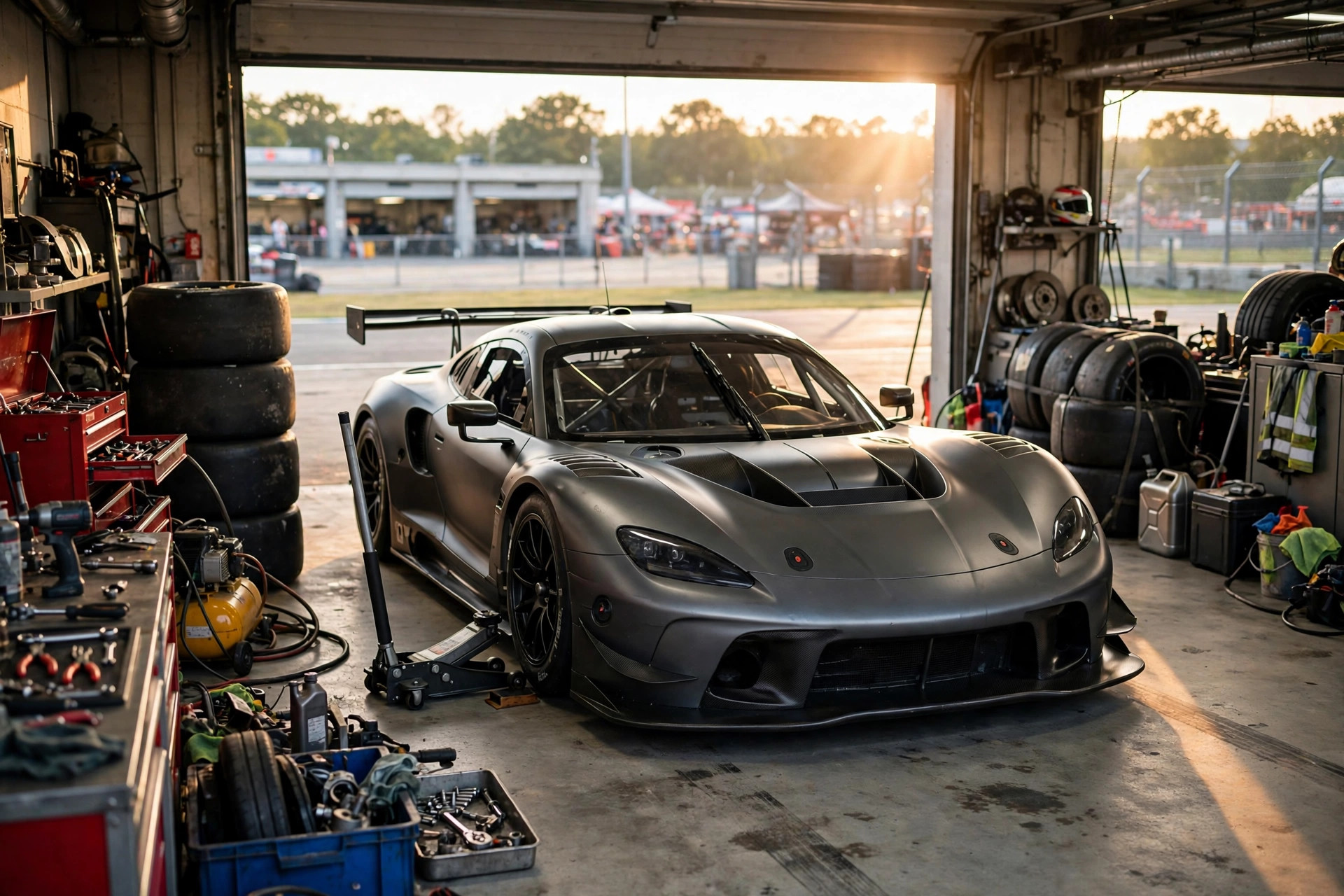
Entry Fees: The Price of Admission
If you are planning a weekend at the circuit and want to know what it will really cost before you book, this breakdown is for you. It explains where the money goes, from entry fees and tires to fuel, travel, insurance, and preparation, and how those costs change depending on the car you bring and how far you travel. Whether you run thrifty, typical, or premium, knowing who spends what, when the bills arrive, and why they add up lets you budget a full season honestly.
Entry fees are the most visible cost of a track day and the easiest to budget. A single day at a typical club HPDE event costs between $200 and $400, while premium tracks and professional event organizers charge $400 to $700 per day. Two-day weekends usually offer a discount over two single days. The fee covers your run sessions, classroom instruction, corner workers, safety crews, ambulance standby, and track rental, which is genuinely expensive; a major circuit can cost tens of thousands of dollars per day to rent, and your fee is your share of that plus operations.
Prices vary by region, track prestige, and organizer. Famous circuits command premium pricing, while smaller regional tracks offer excellent driving at lower cost. Club events through organizations like BMW CCA, PCA, or NASA are often cheaper than commercial track day companies because they are run by volunteers.
Registering early usually saves money, and some organizers offer worker discounts if you volunteer at other events. When comparing events, look at track time per dollar: an event with five twenty-minute sessions delivers more value than a crowded one with four fifteen-minute sessions, even at the same price.
Tires: The Biggest Consumable
Tires are the largest ongoing expense in track driving, often exceeding the entry fee itself. A set of 200-treadwear performance tires costs $800 to $1,400 depending on size, and aggressive drivers can consume a set in four to six track days. Beginners on street tires wear them more slowly, but even moderate track use halves tire life compared to street driving. Do the math for your pace: if you do eight events a year and go through a set and a half, tires alone cost $1,200 to $2,000 annually.
Managing this cost is a skill. Proper pressures, rotation, and smooth driving extend tire life significantly, as any tire pressure management routine demonstrates. Running a dedicated set of track wheels and tires preserves your street tires and lets you choose longer-lasting compounds for learning.
Buying used take-off tires from racers is a popular budget move; they often have plenty of life for HPDE pace at a fraction of new prices. And remember that tire cost scales with car weight and power: a light Miata sips tires while a heavy, powerful sedan devours them, which is one more reason the affordable track car is usually the light one.
Brakes and Other Consumables
Brakes are the second major consumable. A set of track-oriented brake pads costs $150 to $400 per axle and lasts anywhere from two to eight events depending on the car, the track, and your pace. Rotors last longer but still wear faster on track; budget for a set per season on a regularly tracked car.
Brake fluid should be flushed before the season and bled before events, costing little if you do it yourself. All in, brakes typically run $400 to $1,000 per year for a moderate track schedule.
Other consumables add up quietly
Other consumables add up quietly. Engine oil changes come more frequently with track use; many drivers change oil after every two or three events rather than by mileage. Transmission and differential fluids need more frequent service too. Air filters, wiper blades, and alignments wear on an accelerated schedule.
None of these are individually expensive, but together they add several hundred dollars per year. Budget for them explicitly rather than discovering the total at year’s end. Drivers who track their spending, literally, in a spreadsheet always spend less than those who estimate from memory.
Fuel: More Than You Think
Track driving burns fuel at an astonishing rate. A car that returns 25 mpg on the highway might manage 6 to 8 mpg on track, because full-throttle acceleration and high rpm are enormously thirsty. A typical track day consumes two to four tanks of fuel depending on the car and the number of sessions. At current prices, that is $100 to $250 in fuel per day just for on-track driving, before counting the drive to and from the circuit.
Fuel logistics matter too. Many tracks have no fuel on site, or sell only expensive race fuel, so plan to arrive with a full tank and bring extra in approved containers if the track is far from gas stations. Some drivers bring a transfer tank for multi-day events.
Use the octane your car requires; higher octane than specified wastes money without benefit on a stock tune. And never let the tank run low on track: fuel starvation in long corners can cause lean conditions and engine damage, so most drivers pit for fuel when the gauge drops below a quarter.
Travel, Lodging, and Food
Travel costs depend entirely on your track’s distance. Local events might cost only fuel money, while destination tracks involve real travel budgets. Towing with a truck and trailer is the serious enthusiast’s solution but brings its own costs: trailer purchase or rental, tow vehicle fuel at 10 mpg, and maintenance. Driving the track car to the event is cheaper but means driving home on worn tires and brakes if something breaks, which is why many drivers eventually buy a tow setup.
Lodging ranges from free, sleeping at the track in a tent or trailer, to $150 per night for nearby hotels during a two-day event. Camping at the track is not just cheap; it is part of the culture, with evening paddock gatherings that are half the social fun. Food costs $30 to $60 per day if you buy at the track, or far less if you pack a cooler. Add it all up and a distant two-day event can easily cost $500 to $800 in travel and living expenses alone, which is why local tracks are such a gift to regular participants.
Insurance and Safety Gear
Track day insurance typically costs one to two percent of the car’s insured value per weekend. For a $25,000 car, that is $250 to $500 per event, a significant line item that many beginners skip and many veterans consider essential. Annual or multi-event policies reduce the per-event cost substantially for frequent drivers. Whether you buy it depends on your financial exposure, but budget for it explicitly rather than treating it as an optional extra you will decide on later.
Safety gear is mostly a one-time investment amortized over years. A good Snell-rated helmet costs $300 to $600 and lasts about five years before certification ages out. Gloves, shoes, and driving suits add a few hundred more if you go beyond the basics.
A head-and-neck restraint, required by some organizations at higher levels, costs $600 to $1,000. Spread over dozens of events, gear costs fade into the background, but the initial outlay stings, so buy quality once rather than cheap twice. For context on what protection costs in the broader picture, comparing sports car insurance benchmarks helps calibrate the value of per-event coverage.
Car Preparation and Maintenance
Getting a car track-ready costs money upfront. A thorough pre-season service, fluids, brake flush, alignment, and inspection, runs $300 to $800 at a shop or under $150 in parts doing it yourself. Common first upgrades add up: track brake pads, high-temp fluid, and stainless lines might total $500 to $800; a second set of wheels with track tires is $1,500 to $2,500; basic cooling upgrades run $300 to $800. None of this is required for a first event, but most drivers accumulate it over their first season.
Ongoing maintenance between events includes the consumables above plus the occasional repair. Track driving finds every weakness: a tired wheel bearing, a weeping seal, or a worn bushing that was fine on the street will announce itself on track. Budget a repair reserve of $500 to $1,000 per year for the inevitable surprises.
The total cost of car ownership for track use meaningfully exceeds street-only ownership, a reality worth confronting in any honest accounting of performance car costs. The drivers who stay in the sport long-term are the ones who budgeted honestly from the start.
Three Sample Budgets: Thrifty, Typical, Premium
The thrifty track driver runs a cheap, light car they own outright, sleeps at the track, packs food, and skips insurance. Per event: $250 entry, $100 fuel, $50 food, plus amortized tires and brakes of maybe $150. Total per event: roughly $550, or about $4,400 for eight events a year. This is the legendary affordable track day, and it is real: thousands of drivers run entire seasons on budgets like this in Miatas, E36s, and similar cars.
- Entry fees, the most visible cost and the easiest to budget.
- Tires, the largest ongoing expense in track driving.
- Brakes and other consumables, including more frequent oil and fluid changes.
- Fuel, travel, lodging, and food for getting to and living at the circuit.
- Insurance, safety gear, and car preparation and maintenance.
The typical enthusiast drives a $30,000 sports car, stays in budget hotels, and buys track insurance. Per event: $350 entry, $180 fuel, $120 lodging and food, $400 insurance, plus $250 in amortized consumables. Total per event: roughly $1,300, or about $10,400 for eight events. The premium driver runs a $80,000 car at famous circuits with full insurance, hotels, and professional support.
Per event: $600 entry, $250 fuel, $250 travel and lodging, $1,200 insurance, plus $500 in consumables. Total per event: roughly $2,800, or over $22,000 for eight events. Same sport, wildly different spending, and all three drivers have a great time.
Smart Ways to Spend Less
The biggest lever is the car itself. Light, simple, reliable cars cost less in every category: tires, brakes, fuel, insurance, and repairs. Buying a dedicated affordable track car instead of tracking an expensive daily driver is the single smartest financial move in the sport.
Next, volunteer: many organizations discount entries for workers, and instructing eventually earns free track time. Buy consumables in bulk or during sales, share tow and lodging costs with friends, and camp at the track.
Drive smoothly to cut consumable costs; the smooth driver uses fewer tires and brakes than the ragged one at the same pace. Maintain the car yourself to eliminate labor costs, which are often half the maintenance bill. And be honest about insurance: if the car’s value justifies it, buy the policy, because one uninsured crash erases years of savings.
Comparing different approaches to car costs can spark ideas for restructuring the biggest expenses. The goal is not to spend as little as possible but to spend deliberately, maximizing seat time per dollar.
Is It Worth It?
Track days are expensive by any honest accounting, and no article should pretend otherwise. But value is not the same as cost. Drivers consistently describe track days as the best money they spend: unmatched driving enjoyment, skills that make them safer on public roads, a welcoming community, and the satisfaction of measurable self-improvement. The memories of a perfect lap, a new personal best, or a weekend with friends at a great circuit do not depreciate.
For wider background reading, the overview of motorsport puts weekends like these in their broader context.
The key is entering with open eyes. Budget the full year, not just the entry fee, and choose a level of spending you can sustain without stress, because financial stress ruins the fun faster than anything. Start thrifty, learn what matters to you, and scale up deliberately if the passion grows.
Many lifelong track drivers began with a single event in a daily driver and a borrowed helmet, spending less than a weekend vacation. Years later they will tell you it was the best money they ever spent. There is also wisdom in keeping the car’s running costs lean overall; small efficiencies like those in an improve handling on a budget guide compound over a season of events.
Related posts:


Whether you wrench, drive or just admire, the Driving & Road Trips category has more miles to offer.
Share this with a fellow driver or enthusiast who needs to see it.

